Learn
Canadian vs US recalls: Transport Canada and NHTSA
Last updated:
Why one defect can be two recalls, how Transport Canada and NHTSA campaigns differ, and how to check whether a specific vehicle is affected.
Transport Canada is the recall authority for vehicles in Canada, and NHTSA is the authority in the United States. A manufacturer that sells the same vehicle in both countries notifies each regulator under its own law, so one defect usually becomes two campaigns with two numbers, and those two can cover different models, model years and unit counts. Neither list tells you whether one particular vehicle is affected: the manufacturer confirms that by VIN.
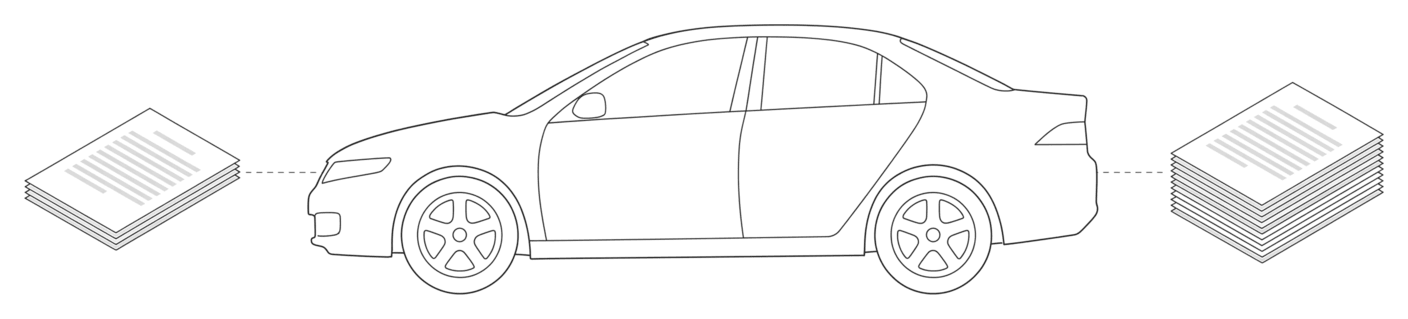
- 1Transport CanadaCampaigns under Canada's Motor Vehicle Safety Act:
authority: "tc". - 2One vehicleSold in both markets, it can appear in both registers.
- 3NHTSACampaigns under US rules:
authority: "nhtsa".
Written by Cardog. Where we describe a public authority's rules we link its own page, checked on 2026-10-26.
Who is in charge in each country
Canada. Under section 10 of the Motor Vehicle Safety Act, a company that manufactures, sells or imports a vehicle must give notice of a safety defect to the Minister of Transport on becoming aware of it, and to the current owner within the period the regulations set (Motor Vehicle Safety Act, s. 10). Transport Canada describes the result plainly: a manufacturer must issue a Notice of Defect or Notice of Non-Compliance when it finds a safety defect or a product does not comply with safety standards (Transport Canada). Transport Canada keeps a public recalls database covering recalls issued in Canada from 1970 to the present.
United States. Under 49 CFR Part 573, a manufacturer reports a safety defect or noncompliance to NHTSA not more than 5 working days after determining it (49 CFR 573.6(b)). NHTSA assigns a recall campaign number, and later reports refer to it.
The two are separate legal duties. A filing with one regulator does not count as a filing with the other.
One defect, two campaigns
A real example: a Ford integrated trailer module problem that can cause trailer lights or trailer brakes not to work. Both campaigns are dated 2026-02-20, and both carry Ford's own recall number, 26C10.
| Transport Canada | NHTSA | |
|---|---|---|
| Campaign number | 2026-079 | 26V104000 |
| Manufacturer number | 26C10 | 26C10 |
| Date | 2026-02-20 | Report received 2026-02-20 |
| Units affected | 627,267 | 4,381,878 |
| Standard named | CMVSS 108 | FMVSS 108 |
| Navigator model years | 2022 to 2026 | 2022 to 2027 |
| F-600 model years | 2022 to 2026 | 2023 to 2026 |
Sources: Transport Canada recall 2026-079 and NHTSA campaign 26V104000.
Same defect, same maker, same day. The numbers are different, the unit counts describe different fleets, and the model-year lists do not match line for line. A system that merged these into one record would have to pick one unit count and one model-year list, and would be wrong for one country either way.
How the campaign numbers look
- Transport Canada shows its recall number as the year and a sequence, for example
2026-079or2023-684(Transport Canada recall 2026-079). - NHTSA returns its campaign number as a two-digit year, a letter for the type, and a sequence, for example
26V104000(NHTSA campaign 26V104000). - The manufacturer has its own number too (Ford's
26C10above), which appears in both records.
When you cite a recall, name the authority with the number. 2026-079 means nothing without "Transport Canada".
Coverage and timing can differ
A campaign names a make, model and model-year range, but not every vehicle in that range is affected. Transport Canada's database says so directly: the problem may have been fixed in production before a given vehicle was built, the vehicle may have a different engine, powertrain or optional equipment, or it may have come from a different plant, which is why its descriptions usually begin "On certain vehicles" (Transport Canada recalls database).
Between the two countries, expect differences in:
- Scope. Models and trims sold in one market and not the other, or different model-year ranges, as in the example above.
- Counts. Units affected reflect each country's own vehicles.
- Existence. A campaign can exist in one country and have no counterpart in the other, for example when the affected version was only sold in one market.
- Dates. Each regulator records its own dates.
Vehicles imported from the United States
Canada allows a vehicle sold at retail in the United States to be imported, provided it is brought into compliance with prescribed requirements and certified before it is registered by a province (Motor Vehicle Safety Act, s. 7(2)). Transport Canada points importers to recall clearance as part of that process (Transport Canada).
For a vehicle built for the US market and now in Canada, the US campaigns are the ones written for that exact version. Check both lists, and ask the manufacturer about that VIN.
How to check one vehicle
Transport Canada's advice for a used vehicle is to consult its recalls database, use the manufacturer's VIN-based recall lookup where one exists, and contact an authorized dealer, who can say from the VIN whether any recall repairs are outstanding (Transport Canada).
Both countries require larger manufacturers to publish VIN lookups:
- Canada. Section 15.05 of the Motor Vehicle Safety Regulations requires a company designated by the Minister to publish recall information on its Canadian website through a VIN search tool, including Transport Canada's recall number and whether the corrective measures have been carried out (MVSR, s. 15.05).
- United States. Section 573.15 requires manufacturers of 25,000 or more light vehicles a year in the US to make recall information searchable online by VIN (49 CFR 573.15).
The regulator's database tells you which campaigns exist for a model year. The manufacturer's lookup tells you whether this vehicle is in one and whether it was fixed.
In the API
GET /v2/vin/{vin}/recalls (also served at GET /v2/recalls/vin/{vin}) decodes the VIN to its model year and returns the campaigns listed for that model year, scoped to a market of sale. On API version 2026-10-26, market defaults to CA: recalls and total hold Transport Canada campaigns and Environment and Climate Change Canada (ECCC) emissions notices. market=US gives NHTSA's campaigns, market=all gives every authority in one list, and include=other adds the other markets' records in otherRecalls without counting them. A caller pinned to 2026-10-21 gets every market in one list. It costs 5 credits per VIN. The guide is Recalls by VIN.
Each campaign is its own record and is never merged with the other country's:
authority:"tc"(Transport Canada),"eccc","nhtsa"and others, withauthorityLabelfor display andmarket, the market that authority belongs to.ref: the campaign's permanent key, for examplerecall:tc/2026079orrecall:nhtsa/26v104000.campaignNumber: the authority's number. Transport Canada numbers come without the hyphen (2026079); NHTSA numbers come as NHTSA publishes them (26V104000).component,defectSummary,consequenceSummary,correctiveAction,recallDate,notificationType: the campaign text and dates,nullwhere the authority's record has none.unitsAffectedandaffects: the campaign's unit count, and its affected model years, each withmodelYearRef,yearandunitsAffected.
The response around them carries resolved (whether the VIN could be matched to a model year at all), source ("observed" or "decoded"), total and asOf. Two empty answers mean different things: resolved: true with total: 0 means no campaigns are listed for the model year; resolved: false means nothing could be checked.
Matching is at the model-year level, so each campaign in the list is a possible recall for that vehicle. For a vehicle in Canada, the default CA market keeps the list to Canada's authorities; ask for market=all or include=other when you want the US records beside them. The manufacturer confirms whether a specific VIN is affected.
FAQ
Are Canadian and US recalls the same? Often for the same defect, but they are separate campaigns under separate laws, with their own numbers, scope and counts. Do not assume one implies the other.
My car is not in the Transport Canada list but is in NHTSA's. Does it need the repair? Ask the manufacturer with the VIN. The US campaign may cover a version not sold in Canada, or the Canadian campaign may be filed later or scoped differently.
Where do I check a specific VIN in Canada? On the manufacturer's VIN recall lookup, or with an authorized dealer. Transport Canada lists manufacturer lookups on its site.
Why does the Transport Canada number look different in Cardog's data?
Cardog stores it without the hyphen, so Transport Canada's 2026-079 is campaignNumber: "2026079" and ref: "recall:tc/2026079".
Where does repair status for a VIN come from? From the manufacturer. Its VIN lookup, or an authorized dealer, can say whether a campaign applies to that vehicle and whether the work was done. Cardog's recall check lists the campaigns for the model year, which tells you what to ask about.
I imported my car from the US. Which recalls apply? Possibly campaigns from both. Check both lists and confirm with the manufacturer using the VIN.
Related
Sources
Checked on 2026-10-26:
- Motor Vehicle Safety Act, S.C. 1993, c. 16 (Justice Laws): https://laws-lois.justice.gc.ca/eng/acts/M-10.01/FullText.html
- Motor Vehicle Safety Regulations, C.R.C., c. 1038, section 15.05 (Justice Laws): https://laws-lois.justice.gc.ca/eng/regulations/C.R.C.,_c._1038/FullText.html
- 49 CFR Part 573, Defect and Noncompliance Responsibility and Reports (eCFR): https://www.ecfr.gov/current/title-49/subtitle-B/chapter-V/part-573
- Transport Canada, Stay informed about recalls: https://tc.canada.ca/en/road-transportation/defects-recalls-vehicles-tires-child-car-seats/stay-informed-about-recalls-vehicles-tires-child-car-seats
- Transport Canada, The importance of having recalled vehicles repaired: https://tc.canada.ca/en/road-transportation/defects-recalls-vehicles-tires-child-car-seats/importance-having-recalled-vehicles-repaired
- Transport Canada, Motor Vehicle Safety Recalls Database: https://wwwapps.tc.gc.ca/Saf-Sec-Sur/7/VRDB-BDRV/search-recherche/menu.aspx?lang=eng
- Transport Canada, recall 2026-079: https://wwwapps.tc.gc.ca/Saf-Sec-Sur/7/VRDB-BDRV/search-recherche/detail.aspx?lang=eng&rn=2026079
- NHTSA recalls API, campaign 26V104000: https://api.nhtsa.gov/recalls/campaignNumber?campaignNumber=26V104000
If something here is wrong, tell us and we will fix it.
Was this helpful?