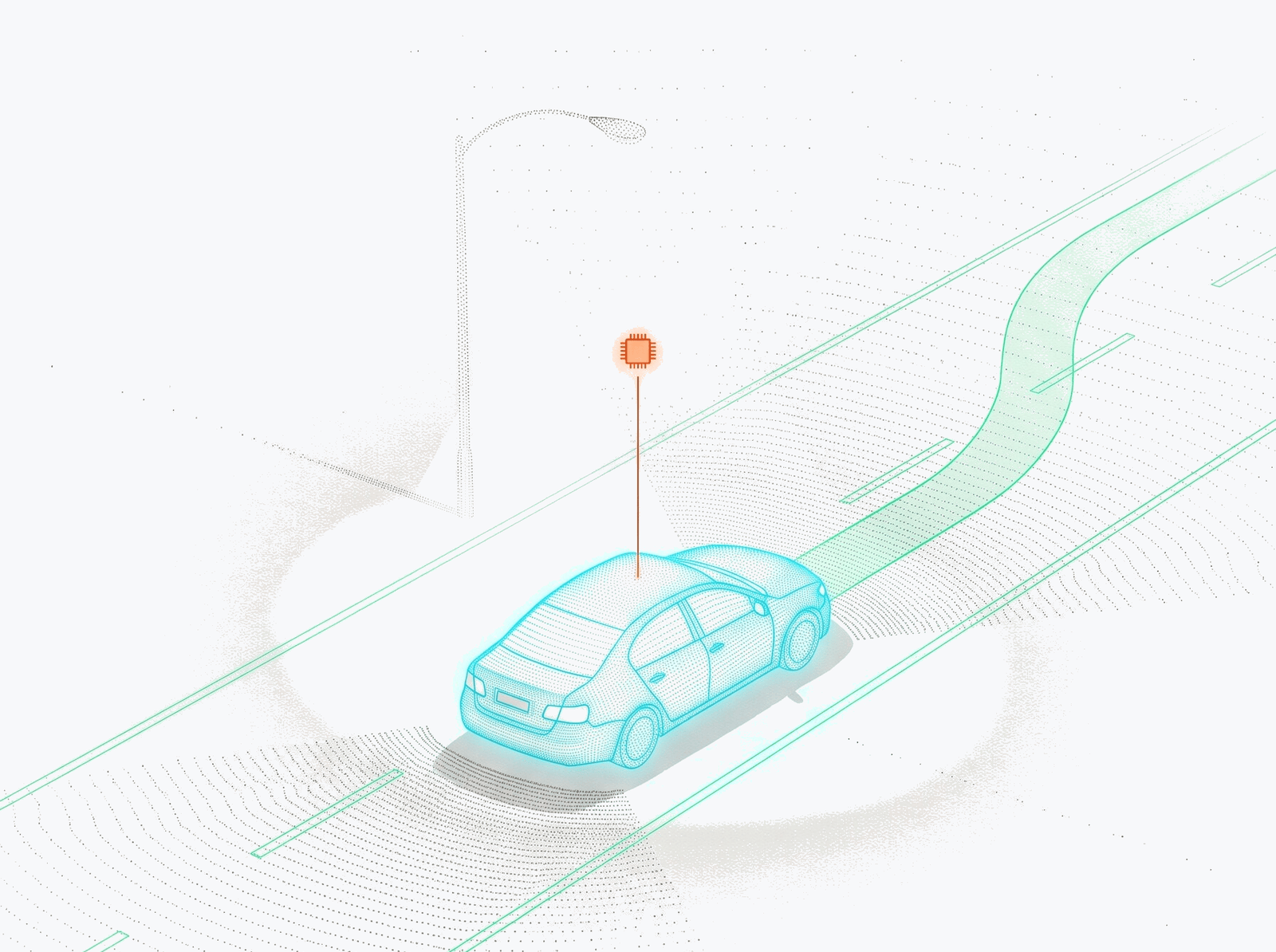
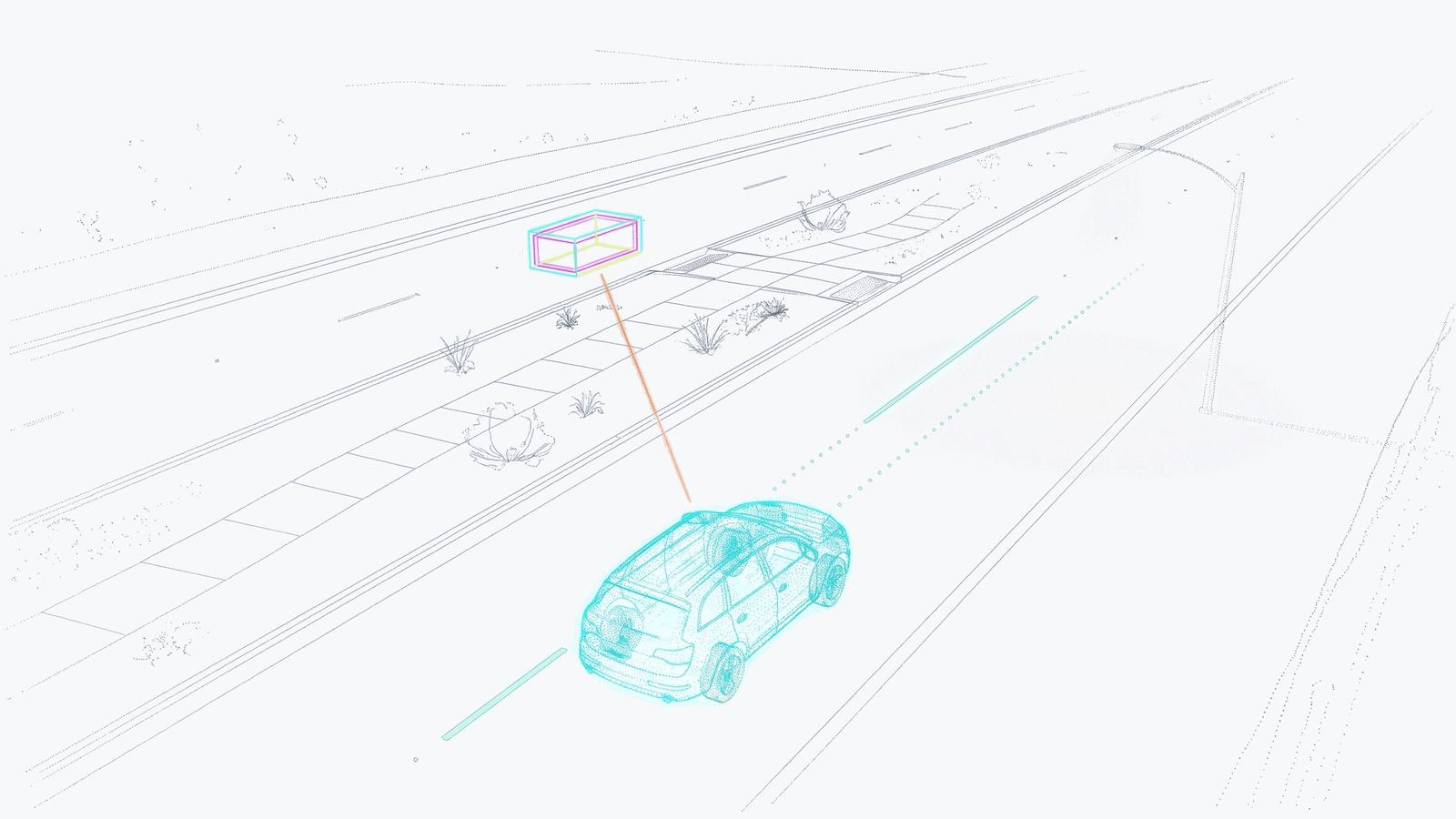
On a March night in 2018, on North Mill Avenue in Tempe, Arizona, a test car saw a woman crossing 5.6 seconds before it hit her.
It saw her the whole way. It called her a vehicle first, then an unknown object, then a bicycle. It never called her a pedestrian. Each new answer threw away her tracking history, so it never worked out where she was going. By the time it decided a collision was coming, 1.2 seconds out, it was built to hand the problem to the person in the seat rather than brake on its own.1
What the system concluded, second by second
- −5.6 s
- Vehicle
- radar, first detection
- −5.2 s
- Other
- lidar, unknown object
- −4.2 s
- Vehicle
- history discarded
- −3.8 to −2.7 s
- Flickers
- vehicle, other, vehicle
- −2.6 s
- Bicycle
- next lane, not ours
- −1.5 s
- Other
- steer around it
- −1.2 s
- Bicycle
- in our path, emergency
- −0.02 s
- Impact
- 39 mph
The car was doing 44 mph when it first detected her. Each new classification threw away her tracking history, so it never predicted her path. At 1.2 seconds it suppressed action for one second, by design. NTSB HAR-19/03, pages 15 and 16, wording condensed.
Two drivers
The person in the seat had a licence. She had a name that was printed in the newspapers, a face on a card, and a record. She was charged with negligent homicide, pleaded guilty to endangerment, and was sentenced to three years of probation.2
The thing that was actually driving had a name too. It was version 2018.071.3pl, and every car in that test fleet was running it.3 Six months later the company ran the same night again in simulation with a newer build. The newer build saw her as a pedestrian at about 88 metres, 4.5 seconds out, predicted that she was crossing, and braked in time.4
Version 2018.071.3pl was never charged with anything. It had no licence to lose. It has no record that anyone can look up. It was not suspended. It was replaced.
We licensed the machine first
When cars arrived, governments assumed the danger was the machine. Ontario began registering motor vehicles in 1903, with a speed limit of fifteen miles an hour. It licensed chauffeurs, the people who drove other people's cars for pay, from 1909. It did not require a road test to drive until 1927, and it did not add demerit points until 1959.5
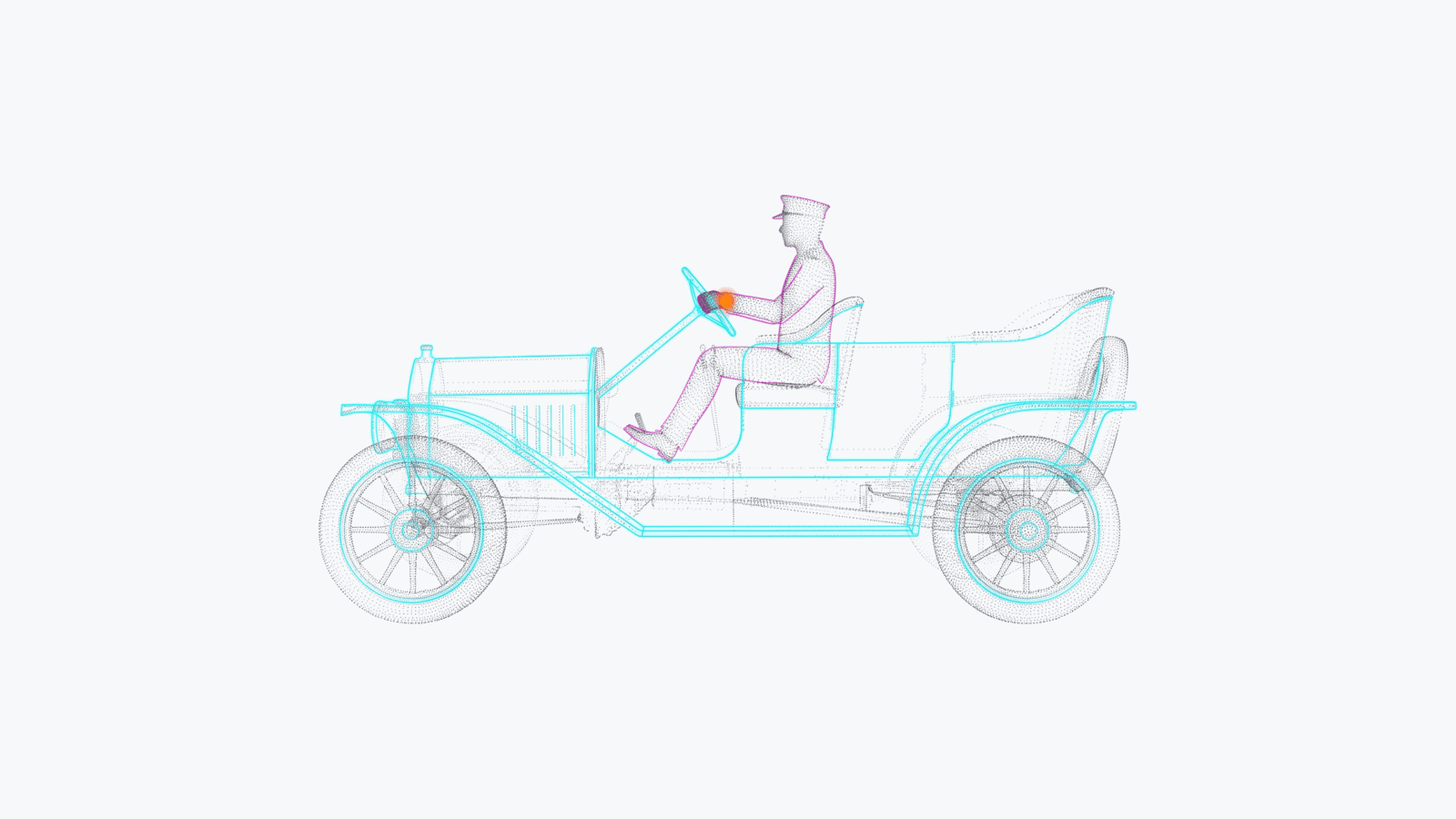
It took the province a generation to see that the danger lived in the judgment of whoever was driving, and another to build a system that remembered it. The driver's licence is easy to mistake for a card. It is really three things. A test, which says you were competent once. An identity, which binds that test to one particular person. And a record, which follows that person for the rest of their driving life, so that a society can decide how many mistakes it will forgive and when to stop.
That third part is some of the most underrated public infrastructure we have. It is why a driver who has killed someone does not quietly move to the next town and keep driving. It is how the state says: we know who you are, we know what you have done, and we have decided what happens next.
One driver, every car
An automated car turns all of this inside out.
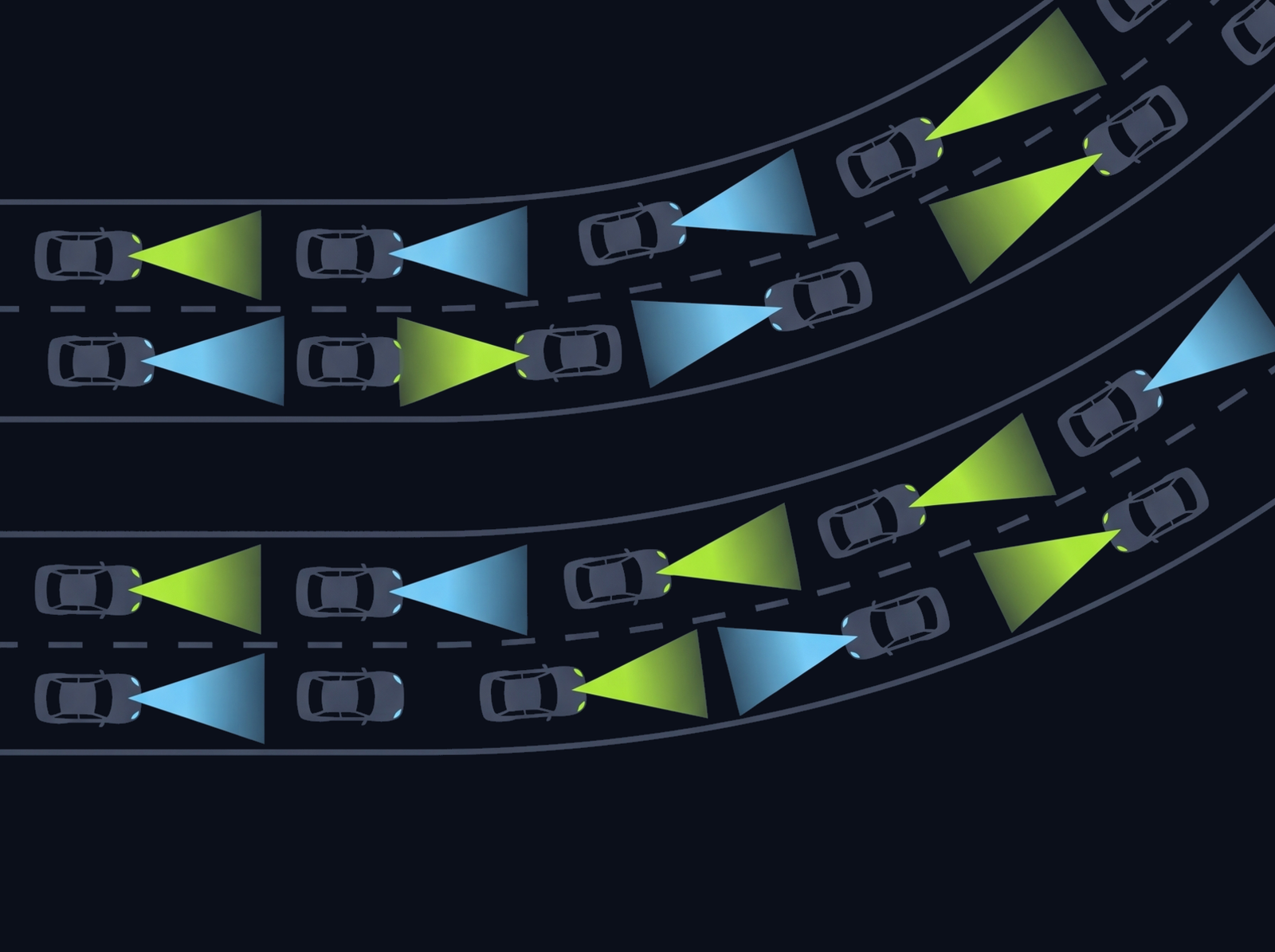
The driver is software. The same driver is in every car that runs the same version, all at once. Its mistakes are not the accidents of one bad evening. They are properties of the code, shared by every copy, waiting for the same street at the same hour. When a human driver makes a terrible mistake, one licence takes the points. When a software driver makes one, the flaw is already on the road in every car it drives.
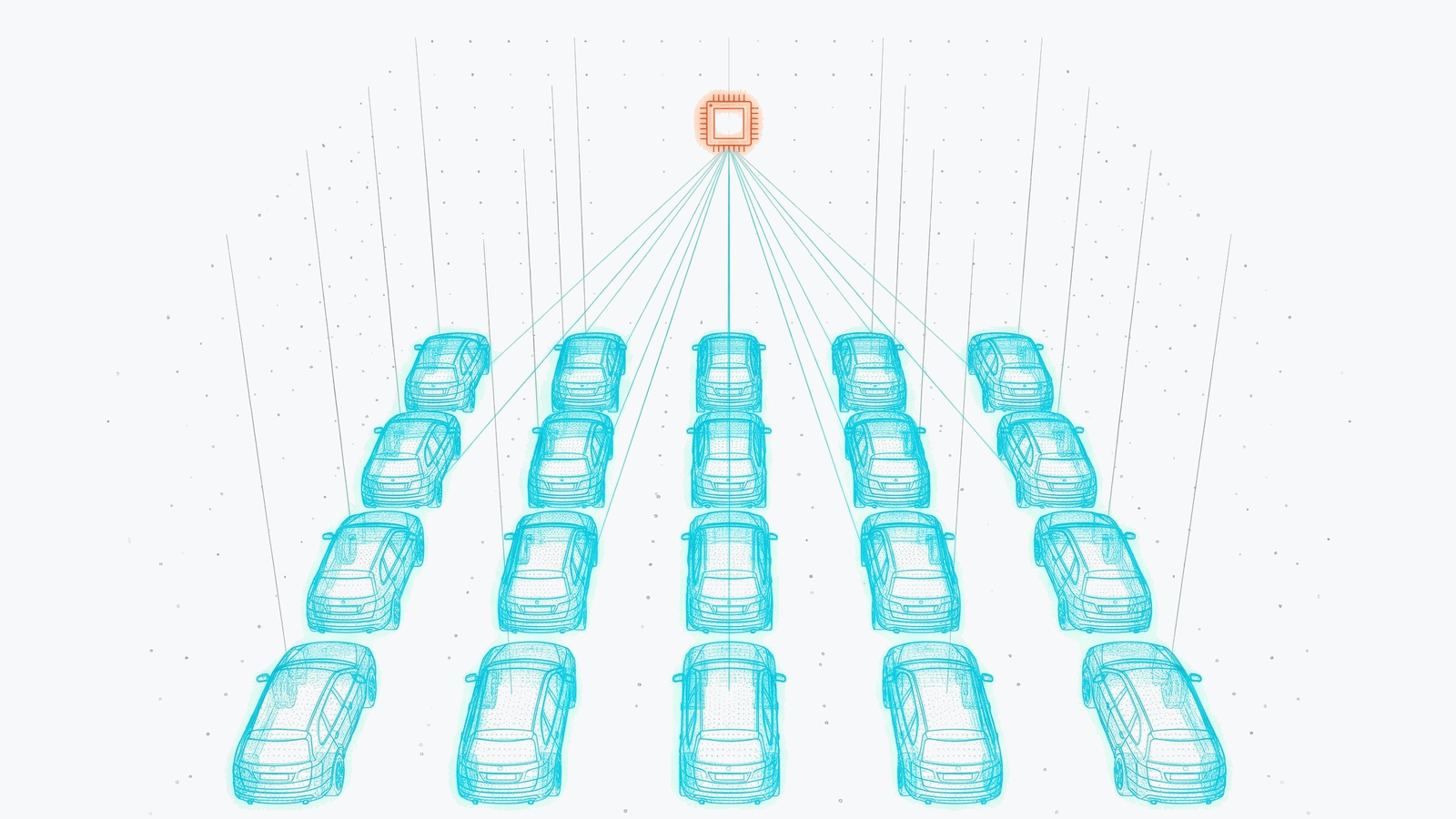
Regulators already know this, even where the rules have not caught up. In October 2023, after one of Cruise's driverless cars dragged a pedestrian in San Francisco, California's DMV suspended the company's permits. The fix came a few weeks later as a recall of all 950 of its cars, which in practice meant replacing the software in each of them.6 In 2025, another robotaxi operator filed a federal recall not against a list of VINs, the way recalls have always worked, but as equipment, scoped to software versions.7
Look at what happened there.
A recall of a software driver is a licence suspension, issued to a driver nobody ever licensed.
The unit of danger was the version. The unit of paperwork was still the car.
The test, the identity, and no record
Take the three parts of a driver's licence and ask what each one means for a driver made of code.
The test exists, or is starting to. In June 2026 the UN adopted its first global rules for automated driving systems, built around safety cases and evidence about how a system behaves.8 Countries, Canada among them, are now deciding how to bring those rules home.9
The identity exists in pieces. Germany is the clearest case: the keeper of a driverless vehicle must store its VIN together with its software version, and hand both to the federal transport authority when asked.10 Britain's 2024 law, most of it not yet in force, comes closest to the licence itself: every authorised self-driving vehicle must have a named company that answers for its continued compliance.11 Almost everywhere else, a register can tell you a car exists without telling you which driver is in it tonight. Canada's own council of transport regulators has said so plainly: "neither the New Vehicle Information Statement nor the VIN currently provides an ADS-equipped vehicle identifier."12 The UN rule on software updates keeps its register by vehicle type, so it cannot say which version a particular car is running either.13
The record does not exist anywhere. No jurisdiction we know of keeps a record that follows a driving version across its life: the cars it has driven, the incidents it was driving in, the recalls that pulled it, the version that replaced it, and why.
The record nobody kept, release 2018.071.3pl
- Installed in
- The whole test fleet
- NTSB fn. 19
- Incidents
- Tempe, March 2018
- pedestrian killed
- Licence action
- not on record
- no licence existed
- Replaced by
- September 2018 build
- braked, in simulation
- Kept by
- No one
- assembled here
Every line comes from NTSB HAR-19/03. No register holds them together.
That record is not hard to describe. Every release of a driving system gets an entry. Every car points to the release installed in it, with a date, the way a licence plate points to an owner. Every incident attaches to the release that was driving at the time. A recall becomes what it already is in substance, a suspension of that release, with the cars it reached and the cars it did not. And a regulator can ask the questions it asks of any driver. How many cars is this driver in tonight? What has it done? Which of its predecessors were pulled, and for what?
There are real difficulties, and they should be said out loud. Releases come weekly, not yearly. A car runs many programs, and deciding which of them count as the driver is a judgment someone has to make. OEMs will say their builds are trade secrets, and the list of which car runs which version should never be public, because it is a map for anyone who wants to attack a fleet. None of that argues against the record. It argues for who should keep it, and who should be allowed to read it.
The first thing in both registers
Ontario already runs both halves of this. It keeps a register of drivers and a register of vehicles, and for a century the two only had to meet at the moment of a crash. An automated car is the first thing that belongs in both at once: a vehicle with a driver installed in it.
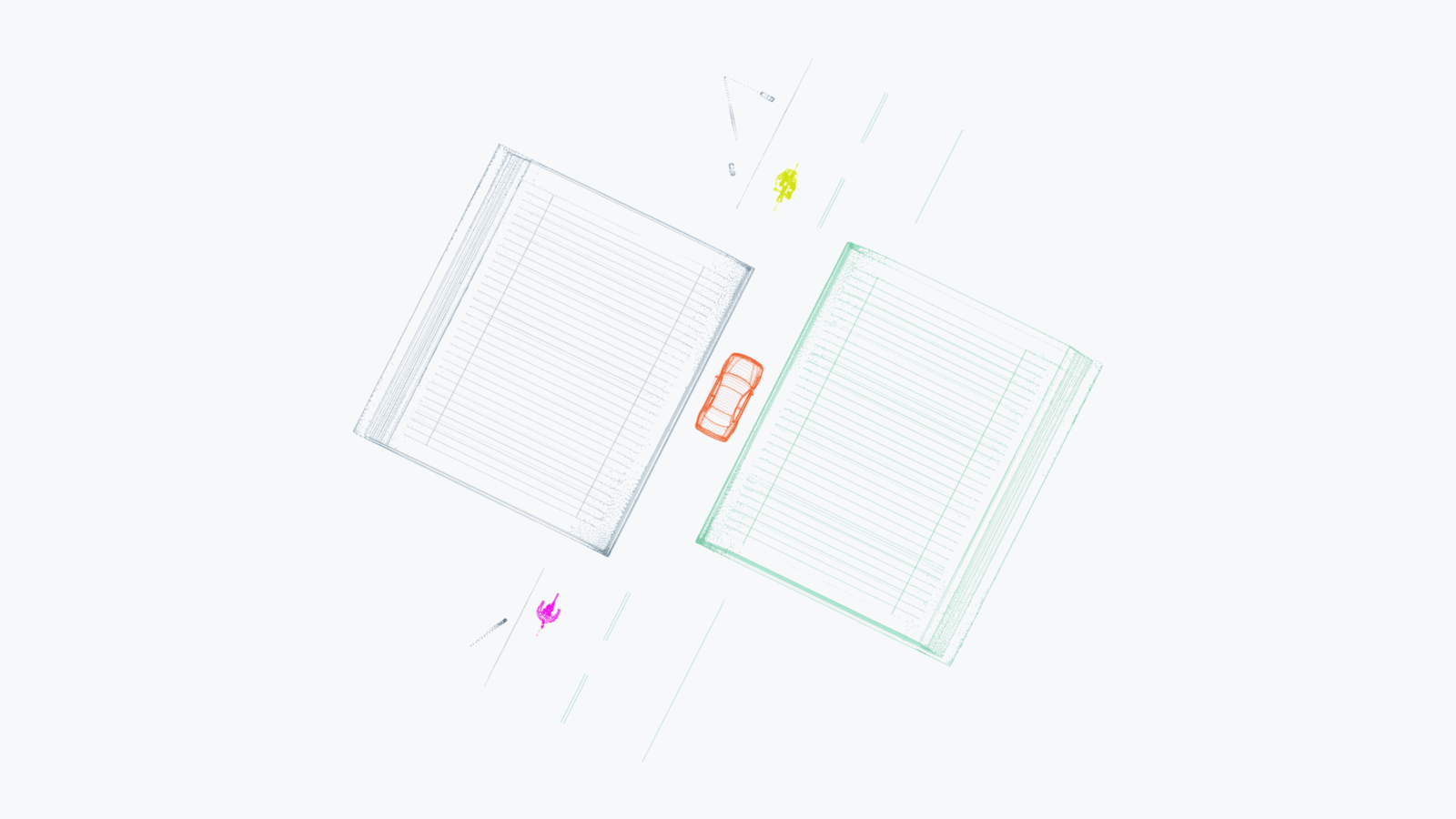
The province's automated vehicle pilot regulation is revoked on October 13th, 2027.14 Driverless ride-hail has been announced for Toronto, with riders targeted for 2028. Today the pilot asks for collisions by VIN, and for changes to a fleet only by make, model and class, and nothing at all about which software is driving.14 Whatever replaces it will decide whether the driver in that car has a name the province knows, and a record that follows it.
That is not a technical question. Ontario answered the same question once already, about people, slowly and at real cost, between 1903 and 1959. It does not need another fifty years to answer it about software.
Read it again for the driver
The investigation into that night runs to more than seventy pages and is careful and fair. It found that the person in the seat was looking at her phone, that the company's safety culture was weak, that emergency braking had been designed out of the moment it was needed.1 All of that is true.
But read it again for the driver. The thing that saw her for 5.6 seconds and never understood what it was looking at had a name and a number, and it was in every car in that fleet. The human driver has a record. The software driver does not, and never will.
The next time a driver like that makes a mistake like that, we should already know where else it is driving.
We keep records of vehicles for a living, which is how we came to notice the one record nobody keeps. The policy choices facing Ontario are set out in a longer paper, The Car Between Two Governments. This essay is also set as a print edition.
Sources
-
National Transportation Safety Board, Collision Between Vehicle Controlled by Developmental Automated Driving System and Pedestrian, Tempe, Arizona, March 18, 2018, Highway Accident Report NTSB/HAR-19/03, executive summary and section 1.1, ntsb.gov ↑ ↑
-
Associated Press, "Backup driver in self-driving Uber that killed woman pleads guilty," July 2023, via Engadget, engadget.com ↑
-
NTSB/HAR-19/03, footnote 19: "The software installed on the crash vehicle was version 2018.071.3pl. The rest of the ATG fleet of 2017 Volvo XC90 vehicles at the time of the crash used the same system," ntsb.gov ↑
-
NTSB/HAR-19/03, section 1.9.1, describing the company's simulation using a September 2018 version of the software, ntsb.gov ↑
-
Ministry of Transportation of Ontario, MTO 100 history, mto.gov.on.ca ; Martin J. Walker, "The Ontario Experience with Graduated Licensing," Transportation Research Circular 458, 1996, onlinepubs.trb.org ↑
-
CBS News, "GM recalls driverless Cruise vehicles after one of them dragged a pedestrian," November 2023, cbsnews.com ↑
-
NHTSA Part 573 Safety Recall Report 25E-034 (2025), filed as equipment and scoped to software versions, nhtsa.gov ↑
-
NHTSA, Federal Register, July 31, 2026, noting the adoption of the UN regulation and global technical regulation on automated driving systems on June 24, 2026, govinfo.gov ↑
-
Transport Canada, consultation on the UN Global Technical Regulation on Automated Driving Systems, March to May 2026, tc.canada.ca ↑
-
Germany, Road Traffic Act section 1g, gesetze-im-internet.de ↑
-
United Kingdom, Automated Vehicles Act 2024, Part 1 (authorisation and the authorised self-driving entity), legislation.gov.uk ↑
-
CCMTA, Canadian Jurisdictional Guidelines for the Safe Testing and Deployment of Vehicles Equipped with Automated Driving Systems, v2.0, February 2022, tc.canada.ca ↑
-
UN Regulation No. 156, paras 7.1.1.12 and 7.1.2.3, eur-lex.europa.eu ↑
-
Ontario Regulation 306/15, Pilot Project, Automated Vehicles, ss. 14, 15, 18, as amended by O. Reg. 268/25, ontario.ca ↑ ↑