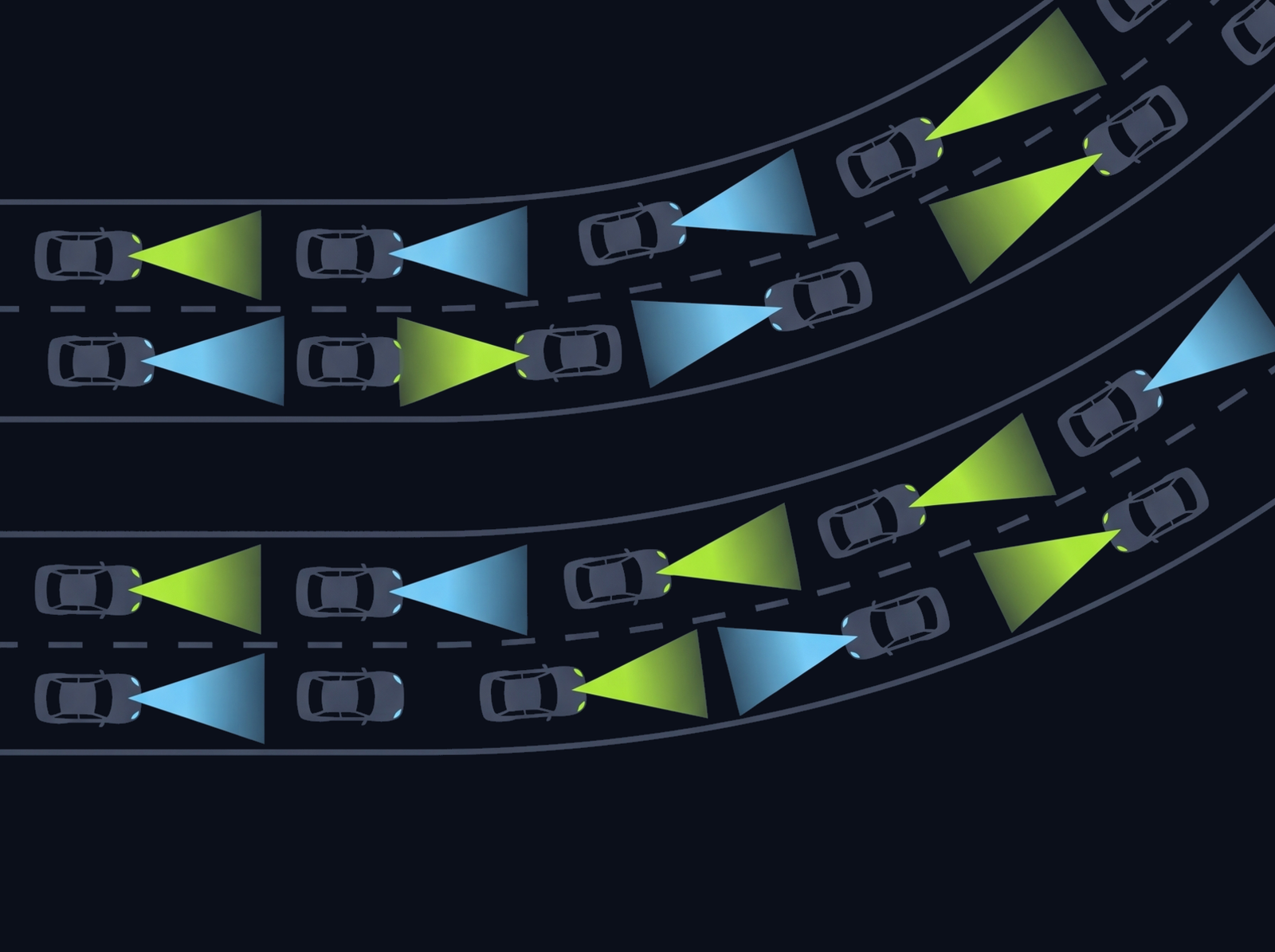
For most of history a vehicle was identified the way its owner was: by sight and by name. Nobody needed a number for a horse. It moved at the speed of a person, it stayed in its town, and the neighbours knew whose it was.
The car broke that. It was fast, it could kill, and by nightfall it could be in the next county. The state's answer was a number.
The initials that people made up
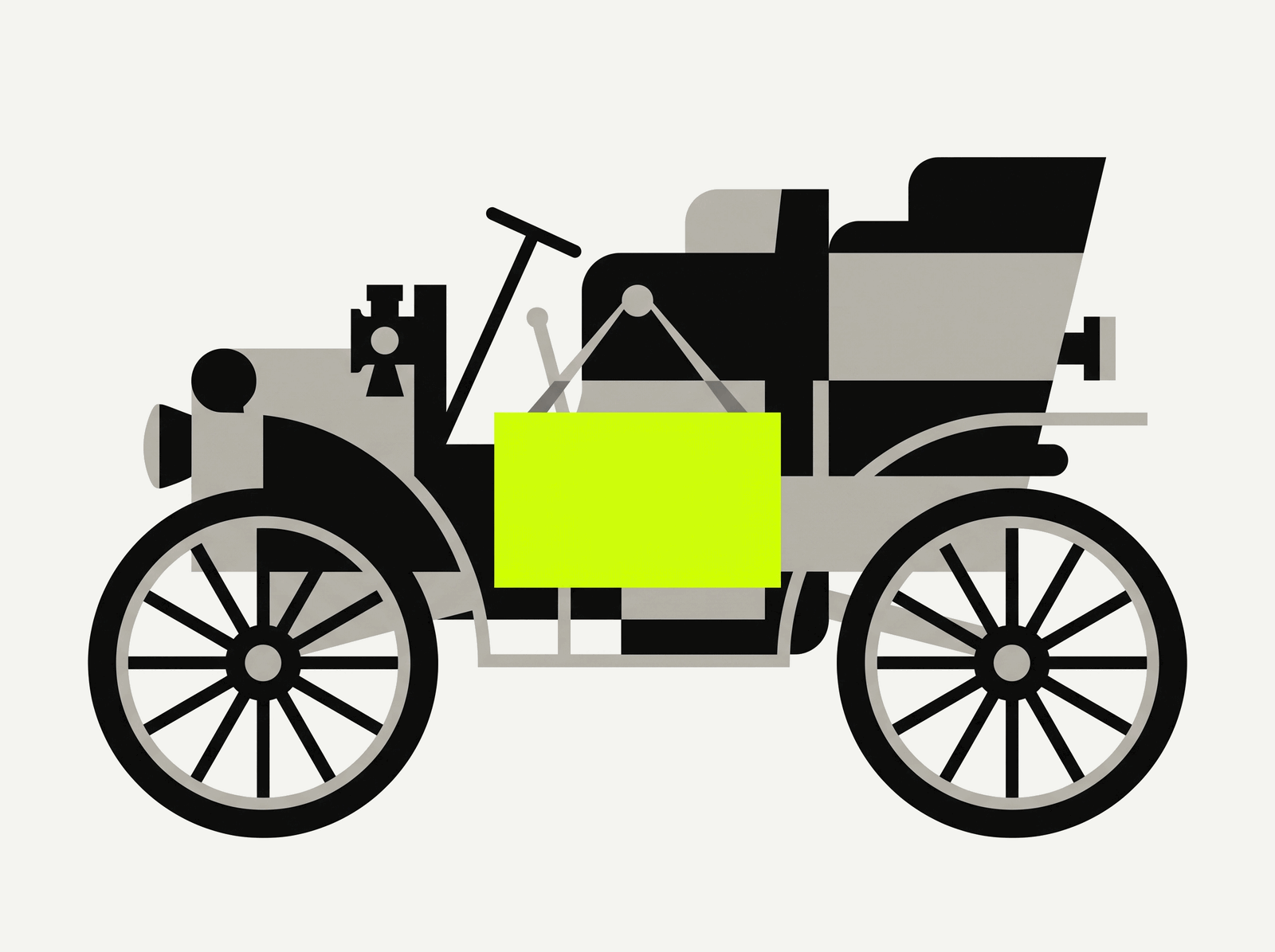
On 25 April 1901, New York became the first state to require that motor vehicles be registered. The owner paid a dollar for a certificate and put "the separate initials of the owner's name" on the back of the car, in letters at least three inches high.1 Owners made the plates themselves, from house letters riveted to leather or wood, or simply painted on.
It lasted two years. Too many owners displayed initials that were invented, or their own without registering first. In 1903 New York replaced the initials with numbers that the state assigned.1
Ontario started the same year. Owners again made their own plates until the province issued standard plates in 1911.2
The lesson came early. A mark the owner chooses can be faked. A number someone else assigns can be checked.
The number that did not travel
A plate identifies a registration, not a vehicle. It belongs to one province or state, it changes at a sale or a border, and the same characters can mean different cars in different jurisdictions. As cars began to cross borders and change hands, the plate stopped being enough.
Manufacturers began stamping their own serial numbers in the 1950s, each in its own format.3 For model year 1981, the United States fixed one format for every maker: seventeen characters, made up of a maker code, a description of the vehicle, a check digit, the model year, the plant and a serial number.4 Canada requires the same number on every vehicle under its motor vehicle safety standards.5
What made it last was uniformity, more than the rule. One format means one reader. An insurer quoting a policy, a lender securing a loan, a dealer taking a trade, a police officer checking a stolen list, and a manufacturer reaching the owners in a recall all read the same seventeen characters. Every system built for cars since 1981 assumes the number is there.
The scooter is in 1901
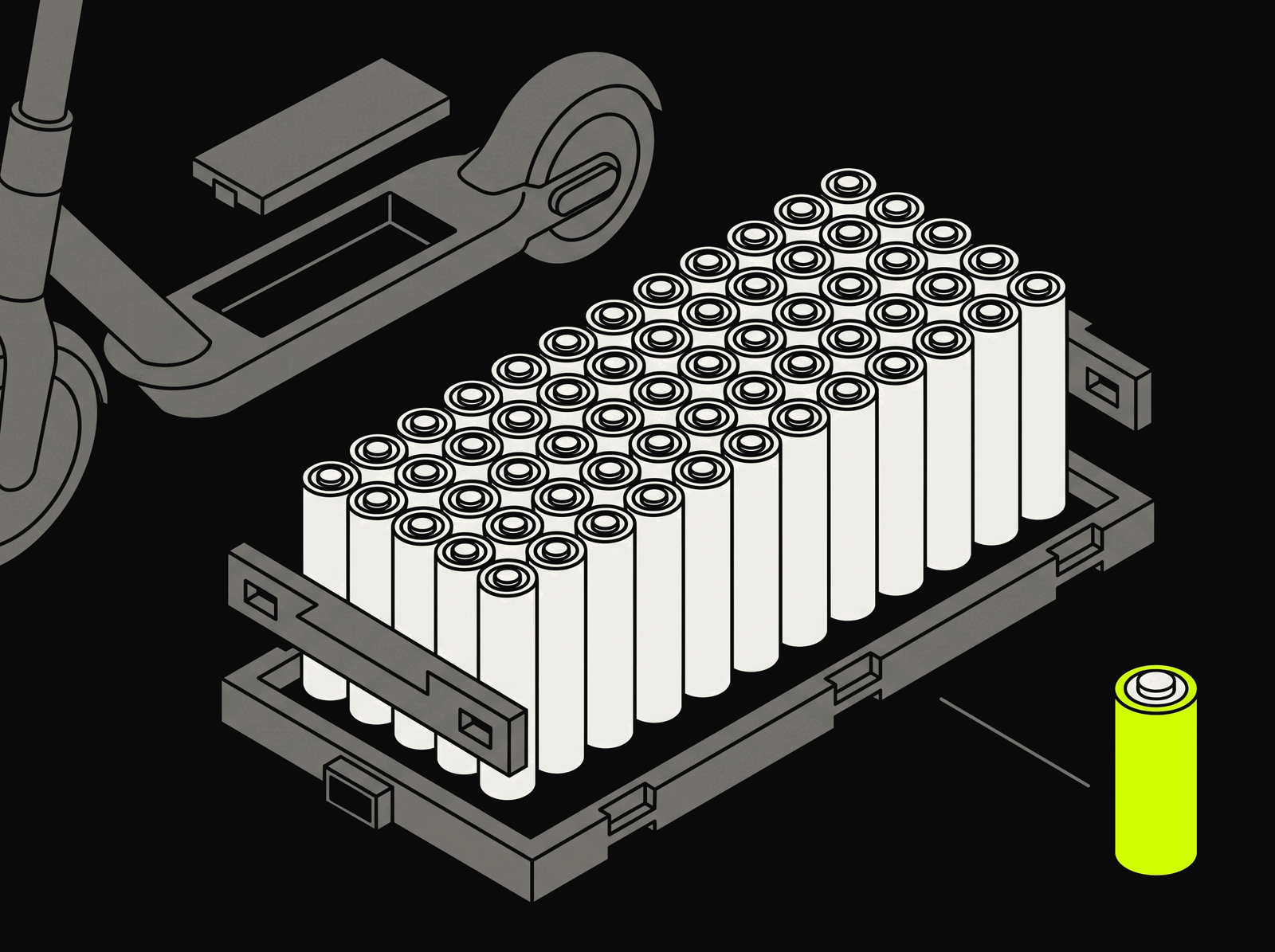
Toronto Fire counted 29 lithium-ion battery fires in 2022 and 91 in 2025. By 21 September this year it had counted 100, and by 6 October, 108. Most involve e-bikes, e-scooters and similar devices.6 Fire Chief Jim Jessop calls them "the greatest evolving fire safety risk in Canada's largest city" and has asked Ottawa for "some type of standard … for these batteries coming in."7
A standard certifies a combination of motor, battery and charger. It can only be checked on a vehicle you can point to. Ontario's e-scooter pilot sets limits on power, speed and weight and requires lights, a bell or horn, and brakes. It says nothing about identification.8 On an Ontario road today, an e-scooter carries no standard number that ties it to its maker, its battery or its certificate.
Fires are counted. Scooters are not.
What a number gives the maker
The case for a VIN is usually made by regulators. The stronger case is the maker's.
- One decode instead of a SKU table. A scooter line multiplies into variants: motor, battery capacity, charger, market, colour, year. The VIN carries the configuration in five characters. A dealer, an insurer or a parts counter decodes the number instead of keeping a copy of the maker's catalogue.
- Every system already reads it. Insurers, lenders, auction houses, police and recall tools were built around the VIN. A scooter that carries one plugs into all of them on the day it ships. Without one, each maker builds its own integration with each of them, or goes without.
- The honest brand stands apart from the copy. A maker code is assigned, not chosen, and the check digit catches most numbers that were mistyped or carelessly invented. That is the lesson of 1903, and it protects the maker who certified its packs from the one who did not.
- A recall you can aim. When one pack family is defective, a maker with a number on every unit recalls those units. A maker without one recalls everything it sold, or nothing.
- A theft report that leads somewhere. A stolen scooter with a number can be flagged, matched and returned. One without a number is just a scooter.
Even NASA took the format
The Perseverance rover carries a 17-character identification number on a name plate on its robotic arm. NASA says some of the characters were assigned by the Society of Automotive Engineers. NASA set the rest to describe the rover's destination, mission objective, number of science instruments and power source, and it compares the number to the VIN on cars on Earth.9
Only one Perseverance exists. It has one owner, and no registry covers its roads. It still took the seventeen-character format, because the format is the shared interface. A scooter maker shipping thousands of units into the sixteen municipalities that had joined Ontario's pilot by 2024 has every reason NASA had, and more.
Who already requires one

Germany has allowed an e-scooter on public roads since 15 June 2019 only if the manufacturer has fitted a factory plate and an identification number. From 1 April 2026 it went further. The number now follows the structure of a car's VIN: a maker code, a section that describes the vehicle and a serial, engraved into the frame so it cannot be removed or altered. A maker without a world maker code uses a fourteen-character form keyed to a national maker number.10 Germany has the approval and the number. It decided this year that the number should be a VIN. The Netherlands has required registration and a plate for newly approved e-scooters since July 2025, and for every approved unit since July 2026.11 New York City has required safety certification for every device sold in the city since September 2023, and the city's fire department reports that lithium-ion battery fire deaths fell from 18 in 2023 to 6 in 2024.12
What the number would look like
It would be the same seventeen characters every car in Canada carries, so any system that reads a VIN today reads this one without a change. Three characters for the maker. Five that describe the unit: device type, motor power band, speed band, battery family, and model and variant. A check digit. Then the model year, the plant and the serial.
Behind the number sits a record. It holds the certificate and the exact pack and charger the certificate covers. The pack serial is bound to the unit at manufacture and updated whenever a replacement is fitted. Later events go on the record too: the sale, a municipal registration where one is required, a recall, a fire investigation reference, a theft report.
For a maker, the cost is a number on a plate and one record per unit.
What Cardog is ready to do
Cardog reads VINs and checks recall records against them today. A light electric vehicle needs no new system: the decoder reads the number, the record holds the certificate and the pack, and the recall reaches the unit.
We have written an open working draft of the identification practice for light electric vehicles, for adoption by a standards body. It names no operator. Makers get a published practice and help applying for a maker code from the agency that assigns it. Cardog will also decode these numbers at no charge. We read VINs for a living, so we have an interest; anyone can build a decoder or a registry to the draft.
Read Working Draft 0.1 and the two-page evidence brief. Comments are open until 20 November 2026, clause by clause. Reviewers who ask to be are named in the next draft, and we hold an open review call on 29 October.
If you build scooters, sell them, insure them, or answer the call when one catches fire, and you agree that a scooter needs a number before it needs a standard, read the draft and tell us where it is wrong.
Sources
-
New York, Chapter 531 of the Laws of 1901 and Chapter 625 of the Laws of 1903, as summarised in A History of the Vehicle and Traffic Law in New York State, Seneca County. See also Vehicle registration plates of the United States for 1901. ↑ ↑
-
Vehicle registration plates of Ontario; Ontario archive, Porcelain Plates, citing Joseph P. Sallmen, Ontario License Plates: A Century of History (2003). ↑
-
NHTSA, Vehicle Identification Number Requirements, final rule, 73 FR 23367, 30 April 2008, Background: "Since 1954, American automobile manufacturers have used a vehicle identification number … The early VINs came in a wide array of configurations and variations, depending on the individual manufacturer." ↑
-
49 CFR Part 565, Vehicle Identification Number Requirements, § 565.13(b) and § 565.15. The 17-character format was required from model year 1981 by the final rule of 17 August 1978 (43 FR 36448), as recounted in NHTSA's 2008 final rule. ↑
-
Motor Vehicle Safety Regulations (C.R.C., c. 1038), Schedule IV, section 115, Vehicle Identification Number; subsection 115(3) sets the 17-character format. ↑
-
TorontoToday, Toronto battery fires up 43% as Fire Prevention Week begins, 4 October 2026 (100 incidents as of 21 September); Toronto records 108 lithium-ion battery fires in 2026, 7 October 2026; Insurance Business, Toronto's lithium-ion battery fires are up 250% since 2022, data show, 19 August 2026 (29 in 2022, 91 in 2025); Global News, Toronto lithium-ion battery fires, 9 September 2026 (micromobility devices involved in the bulk of fires). ↑
-
CP24, Toronto fire chief warns lithium-ion battery fires are the city's biggest fire safety risk, 5 September 2026; Global News, Toronto lithium-ion battery fires, 9 September 2026. ↑
-
Ontario, O. Reg. 389/19, Pilot Project: Electric Kick-Scooters; Electric kick-style scooters (e-scooters), ontario.ca, updated 12 February 2026 (pilot runs 1 January 2020 to 27 November 2029); Environmental Registry of Ontario, proposal 019-9099, 28 August 2024 ("Since the pilot program's inception, 16 municipalities have opted into the program"). ↑
-
NASA Science, Decoding the Perseverance Rover's Identification Number, published 4 April 2021, updated 8 November 2024. ↑
-
Germany, Elektrokleinstfahrzeuge-Verordnung (eKFV) of 6 June 2019, § 2(1) no. 3 and Anlage 1, sections 3.1.4 and 3.2, in force 15 June 2019. Anlage 1 replaced by the Verordnung zur Änderung der Elektrokleinstfahrzeuge-Verordnung of 30 January 2026, BGBl. 2026 I Nr. 32 (published 6 February 2026), in force 1 April 2026 (Article 5(1)). ↑
-
Rijksoverheid, Per 1 juli introductie kenteken voor bijzondere bromfiets zoals e-step, 24 April 2025; RDW, Kenteken aanvragen voor uw bijzondere bromfiets ("Vanaf 1 juli 2026 moeten alle bijzondere bromfietsen een kenteken hebben"). ↑
-
New York City, Local Law 39 of 2023, Administrative Code § 20-610 (UL 2849, UL 2272, UL 2271), in effect 16 September 2023 per the City Council, 9 October 2024; FDNY, Significant progress in the battle against lithium-ion battery fires, 8 January 2025 (18 deaths in 2023, 6 in 2024). ↑