How Does CarGurus Work? Pricing Algorithm Explained
How Does CarGurus Work? Pricing Algorithm Explained
When you're shopping for a used car online, one question dominates: am I getting a good deal? CarGurus built an entire platform around answering this question through data-driven price analysis. But how does CarGurus actually work behind the scenes?
Since launching in 2006, CarGurus has become one of North America's most popular automotive marketplaces, connecting millions of buyers with dealer inventory through its signature deal rating system. The platform aggregates listings from over 40,000 dealer partners, analyzes billions of data points monthly, and assigns each vehicle a colour-coded deal rating that instantly signals whether you're looking at a fair price.
Understanding how CarGurus works—from its pricing algorithm to its dealer integration and revenue model—helps you make smarter buying decisions. Whether you're evaluating deal ratings or considering CarGurus alternatives, this guide breaks down the technical mechanics, business model, and limitations of one of the automotive industry's most influential marketplaces.
How CarGurus Works: Platform Overview
At its core, CarGurus is an automotive listing aggregator that exclusively partners with licensed dealerships. Unlike AutoTrader which includes private sellers, every vehicle on CarGurus comes from a dealer's inventory, reducing fraud risk and providing baseline quality assurance.
The User Experience
When you visit CarGurus, you start with a simple search: make, model, location, and budget. The platform returns matching vehicles ranked by default by deal rating rather than price or distance—helping you identify vehicles priced below market value.
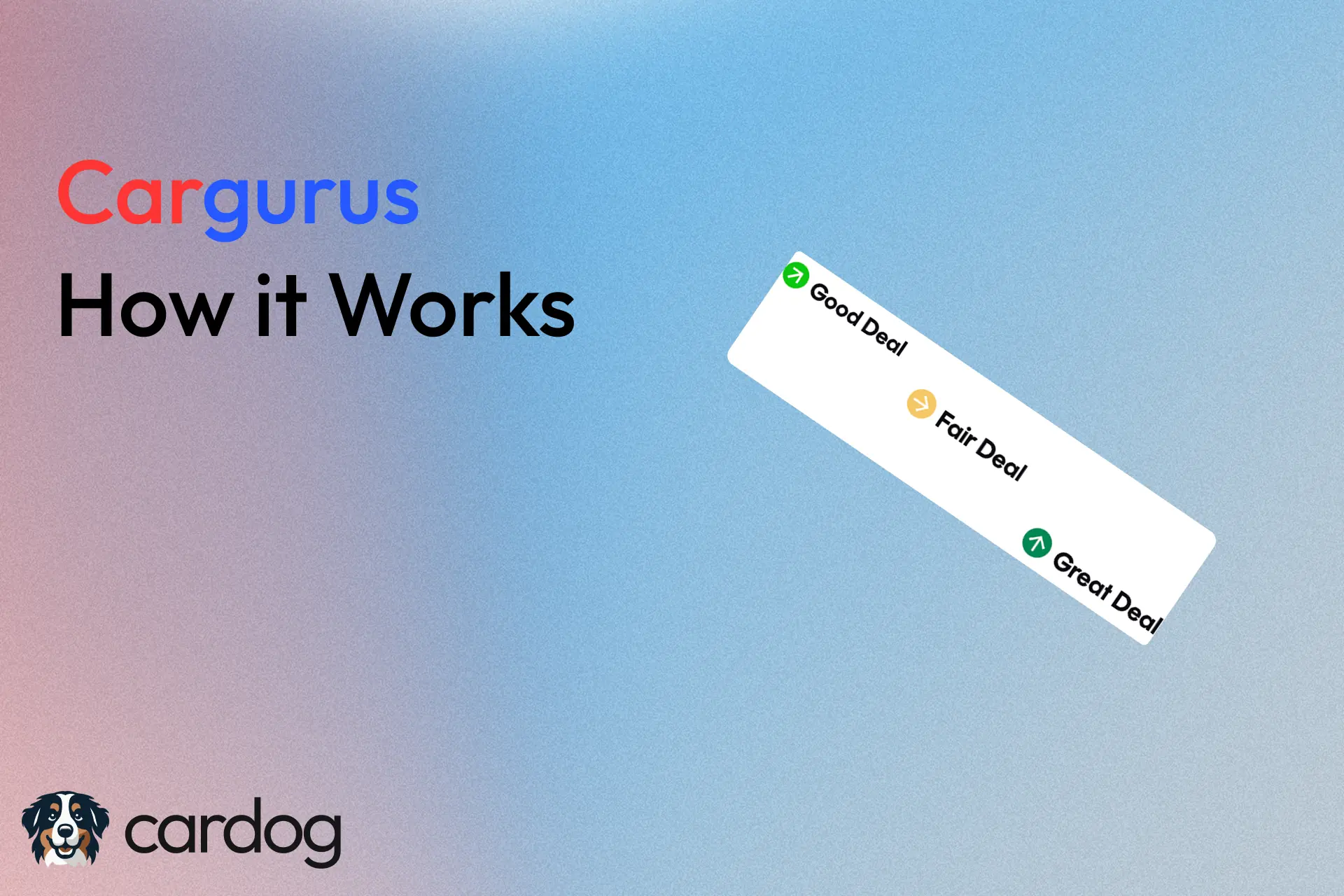
Each listing displays standard information—photos, specifications, mileage, features—but the most prominent element is the deal badge: Great Deal (green), Good Deal (yellow-green), Fair Price (yellow), High Price (orange), or Overpriced (red). These badges are generated by CarGurus' proprietary algorithm.
Looking for a specific model? Browse popular vehicles like the Honda Civic, Toyota RAV4, or Honda CR-V to see current market pricing across multiple platforms.
Once you identify a vehicle that interests you, CarGurus facilitates the connection by providing dealer contact information or allowing you to submit an inquiry directly. From there, the transaction moves offline: you contact the dealer, arrange a test drive, negotiate terms, and complete the purchase.
Data Collection and Integration
CarGurus doesn't manually collect listings. Instead, the platform integrates directly with dealer inventory management systems (DMS) and third-party data feeds. When a dealer joins CarGurus, they connect their inventory feed to the platform, which automatically syncs new listings, updates prices, and removes sold vehicles.
The platform processes data from billions of monthly site interactions, translating this information into predictive intelligence for both buyers and dealers. This massive dataset powers the consumer-facing deal ratings and dealer-side analytics tools that optimize pricing strategies.
The Deal Rating Algorithm Explained
The CarGurus deal rating system is the platform's defining feature. Understanding how it works reveals both its strengths and limitations—particularly when compared to traditional valuation tools like Edmunds and KBB.
Instant Market Value (IMV)
The foundation of CarGurus' deal rating is the Instant Market Value (IMV)—an estimated fair retail price for a specific vehicle based on analysis of comparable current and previous listings. Think of IMV as CarGurus' calculation of what a vehicle should cost in the current market.
CarGurus calculates IMV by analyzing:
-
Comparable Vehicles: The algorithm identifies similar vehicles currently listed and recently sold, matching by make, model, year, trim, and key features.
-
Mileage Adjustments: Higher mileage reduces IMV; lower mileage increases it. A 2020 Honda Civic with 30,000 kilometres should be worth more than an identical 2020 Civic with 90,000 kilometres.
-
Geographic Market Data: Pricing varies by region due to supply, demand, climate factors, and local economic conditions. Search Honda Civics in Toronto versus Vancouver to see regional price differences.
-
Options and Features: Trim levels, packages, and individual features (leather seats, sunroof, navigation) impact value. CarGurus uses VINs and dealer-provided data to factor these elements into IMV calculations.
-
Market Trends: The algorithm incorporates recent pricing movements. If used vehicle prices are rising, IMV adjusts upward; if prices are falling, IMV trends downward.
From IMV to Deal Rating
Once CarGurus calculates a vehicle's IMV, it compares the dealer's asking price to this estimated fair value. The percentage difference determines the deal rating:
- Great Deal (Green): Listed price is significantly below IMV, typically 10% or more under market value
- Good Deal (Light Green): Listed price is moderately below IMV, roughly 5-10% under market value
- Fair Price (Yellow): Listed price is close to IMV, within a few percentage points of market value
- High Price (Orange): Listed price is above IMV, typically 5-10% over market value
- Overpriced (Red): Listed price is significantly above IMV, more than 10% over market value
These thresholds aren't publicly disclosed by CarGurus and may vary based on vehicle category, price point, and market conditions. The algorithm is proprietary, meaning buyers can't independently verify the calculations—a limitation we'll discuss later.
Dealer Reputation Factor
Deal ratings aren't purely mathematical. CarGurus also incorporates dealer reputation into the algorithm, though this factor appears to have less weight than price-to-IMV ratio.
Dealer reputation is calculated based on:
- Customer reviews and ratings submitted through CarGurus
- Response rates and times to buyer inquiries
- Listing accuracy (whether dealer descriptions match actual vehicle condition)
- Sales volume and tenure on the platform
A dealer with strong reputation metrics may receive slightly better deal ratings than an unknown dealer with an identically priced vehicle, though CarGurus hasn't disclosed the exact weighting of this factor.
The Algorithm's Limitations
While the deal rating system provides useful guidance, it's important to understand what it doesn't tell you. For a detailed analysis, see Is CarGurus Accurate?
1. Condition Isn't Assessed: CarGurus assigns ratings based purely on price and specifications. A "Great Deal" might be a poorly maintained vehicle priced low to move quickly, while a "Fair Price" vehicle might be pristine with recent maintenance.
2. Hidden Fees Aren't Included: The deal rating reflects the advertised price, not the out-the-door cost. Dealer fees, documentation charges, and other add-ons can turn a "Great Deal" into an average transaction.
3. Comparative Sample Size Varies: For common vehicles like the Toyota Camry or Ford F-150, the algorithm analyzes hundreds or thousands of comparable listings. For rare vehicles, sample sizes may be too small for accurate IMV calculation.
4. Negotiation Isn't Factored: The rating assumes you'll pay the asking price. Most dealer transactions involve negotiation. A "Good Deal" might become a "Great Deal" after successful negotiation.
5. Dealer Incentives Aren't Transparent: Some dealers price vehicles aggressively to earn "Great Deal" badges, knowing this drives more inquiries. The algorithm can be gamed to some degree.
How Dealers Use the Pricing Tool
CarGurus provides dealers with a Pricing Tool that shows exactly how their listing's price impacts its deal rating. Dealers can see:
- Current deal rating based on asking price
- IMV estimated by CarGurus for the vehicle
- Next Best Deal Rating (NBDR): how much they need to reduce price to move from "Fair Price" to "Good Deal" or "Good Deal" to "Great Deal"
- Competitive positioning relative to similar vehicles in the market
According to CarGurus' 2024 dealer resources, this tool enables "strategic and competitive pricing" by showing dealers the ROI of small price adjustments. A dealer might see that reducing price by $500 moves their listing from "Fair Price" to "Good Deal," which could double their inquiry volume—a worthwhile trade-off.
This transparency benefits buyers and dealers alike: dealers can price competitively to stand out, and buyers benefit from more accurately priced inventory.
How CarGurus Sources Listings
CarGurus doesn't own any inventory or operate as a dealer. Instead, the platform functions as a two-sided marketplace connecting dealers with consumers—similar to Cars.com.
Dealer Integration and Onboarding
Dealerships join CarGurus by subscribing to one of several service tiers, with pricing based on inventory size, geographic market, and feature access. Once subscribed, dealers integrate their inventory:
1. Direct DMS Integration: Larger dealerships connect their inventory management systems directly to CarGurus, creating a live feed that automatically updates listings as vehicles are added, sold, or repriced.
2. Third-Party Data Feeds: Many dealers use inventory management providers like vAuto, Dealer Specialties, or HomeNet to distribute listings across multiple platforms. CarGurus ingests feeds from these providers.
3. Manual Upload: Smaller dealers can manually upload vehicle data and photos through CarGurus' dealer portal, though this method is less common and more labour-intensive.
Data Quality and Verification
CarGurus requires dealers to provide VIN, make, model, year, trim, mileage, price, equipment specifications, and photos. The platform cross-references VIN data with databases like Polk and Carfax to verify specifications and identify discrepancies. If a dealer lists a vehicle as having features it doesn't actually include, this negatively impacts their reputation score.
Inventory Scope
As of 2024, CarGurus aggregates listings from over 40,000 dealer partners across North America. This represents a substantial but not exhaustive slice of available dealer inventory—some dealers opt not to participate, especially smaller independent lots.
The platform focuses primarily on used vehicles, with most inventory falling within the 3-10 year age range with mileage between 30,000 and 150,000 kilometres.
Geographic Coverage
CarGurus operates across the United States (all 50 states), Canada (national coverage with strongest presence in Ontario, British Columbia, Quebec, and Alberta), United Kingdom, Germany, and Italy.
Canadian buyers access CarGurus.ca, which displays listings in Canadian dollars and focuses on Canadian dealer inventory, though some cross-border listings appear in border regions.
Dealer Integration and Revenue Model
Understanding how CarGurus makes money reveals why the platform is structured the way it is—and why dealers are incentivised to participate.
Revenue Model
CarGurus generates 87% of its revenue from dealer subscriptions, making it fundamentally a dealer-focused business where consumer attention and intent data is the product.
Primary Revenue Streams:
-
Dealer Subscription Tiers: Dealers pay monthly subscriptions based on listings, market competitiveness, and features accessed. Premium tiers offer enhanced listing visibility, analytics tools, and lead management capabilities.
-
Lead Generation Fees: When a buyer contacts a dealer through CarGurus, this generates a lead. Some subscription models charge per-lead rather than flat monthly fees.
-
Advertising Revenue: OEM manufacturers purchase advertising on CarGurus to promote new vehicle launches and incentives. In 2024, CarGurus reported "strong OEM advertising demand" as a growth driver.
-
Value-Added Products: CarGurus offers dealers additional tools beyond basic listings:
- Digital Deal: An online transaction platform allowing buyers to complete paperwork, secure financing, and arrange delivery digitally. As of 2024, Digital Deal penetration increased 105% year-over-year to 9,570 participating dealers.
- Predictive Analytics: AI-powered tools that forecast demand, suggest optimal pricing, and identify inventory turn risks.
- Competitive Intelligence: Market reports showing how a dealer's inventory and pricing compare to competitors.
Financial Performance (2024)
According to CarGurus' financial disclosures:
- Q3 2024 Revenue: $268 million
- Full-Year Marketplace Revenue Growth: 14% year-over-year
- Total Dealer Network: Over 40,000 partners
The company's growth is driven primarily by dealers upgrading to premium tiers and adopting value-added products rather than net new dealer acquisition.
Why Dealers Participate
Dealerships pay for CarGurus because the platform delivers:
1. Qualified Traffic: Buyers on CarGurus are comparison shopping with intent—evaluating specific vehicles and ready to contact dealers. This high-intent traffic converts at higher rates than general web traffic.
2. Market Visibility: Many buyers start their car search on Google, which frequently surfaces CarGurus listings in search results. By being on CarGurus, dealers gain visibility in these organic search paths.
3. Deal Rating Advantage: Dealers with competitively priced inventory earn "Great Deal" and "Good Deal" badges, which drive disproportionate inquiry volume. CarGurus' 2024 data shows that deal rating is the strongest predictor of buyer interest.
4. Analytics and Intelligence: Premium dealer tools provide competitive intelligence that helps optimize pricing, identify market trends, and maximize inventory turn.
5. Consolidation ROI: As dealers manage marketing budgets across multiple platforms, they increasingly consolidate spending with the highest-yielding online marketplaces. CarGurus positions itself as delivering superior ROI per dollar spent.
The Buyer-Dealer Dynamic
While buyers use CarGurus for free, dealers fund the platform. This creates potential conflicts of interest: CarGurus wants to serve buyers by highlighting the best deals, but it needs dealers to remain profitable subscribers.
The company navigates this by allowing dealers to compete on price rather than pay-to-win positioning, providing transparent pricing tools that encourage competitive pricing, maintaining editorial integrity around deal ratings (dealers can't pay to manipulate ratings), and focusing on long-term dealer retention by proving ROI.
This model works when dealer interests align with buyer interests—which they often do, since dealers want to move inventory efficiently and buyers want fair prices.
Pros and Cons for Buyers
CarGurus offers clear benefits for used car shoppers, but it's not the perfect solution for every buyer.
Advantages of Using CarGurus
1. Price Transparency
The deal rating system provides instant feedback on whether a vehicle is priced fairly. This is especially valuable for buyers who lack automotive expertise or don't have time to research comparable listings manually.
2. Large Dealer Inventory
With over 40,000 participating dealers, CarGurus aggregates hundreds of thousands of vehicles across North America. For buyers in major metropolitan areas, this means comprehensive selection across makes, models, and price points.
3. Dealer-Only Listings Reduce Risk
Unlike platforms with private sellers, every CarGurus listing comes from a licensed dealership. While dealer quality varies, this baseline reduces the risk of scams, stolen vehicles, or significantly misrepresented condition common in peer-to-peer sales.
4. Clean User Interface
CarGurus' design prioritizes search and comparison rather than overwhelming buyers with ads or premium listings. The interface is intuitive, mobile-friendly, and focused on helping you evaluate options efficiently.
5. Comprehensive Vehicle History Integration
CarGurus encourages dealers to include vehicle history reports directly in listings. Many listings offer free access to these reports, saving buyers the $40-50 cost of purchasing them independently.
6. National Search Capability
If you're willing to travel or arrange shipping, CarGurus lets you search nationally rather than just locally. This is especially useful for buyers seeking specific configurations, rare models, or the absolute best price regardless of location.
Limitations and Drawbacks
1. No Private Seller Access
CarGurus exclusively partners with dealers, which means you won't find private party listings. Private sales often yield better deals since there's no dealer overhead.
2. Algorithm Opacity
The IMV and deal rating calculations are proprietary. You can't verify how CarGurus arrives at its valuations, and the algorithm may not account for local market nuances, recent repairs, or vehicle-specific condition factors.
3. Advertised Price vs. Out-the-Door Cost
Deal ratings reflect advertised prices, but final transaction costs include taxes, registration, dealer fees, and documentation charges. A "Great Deal" listing can become merely average after these additions.
4. Dealer Quality Varies
Just because a vehicle is listed by a dealer doesn't guarantee quality. Some dealers specialize in high-volume, low-margin vehicles with minimal reconditioning, while others thoroughly inspect and refurbish inventory. CarGurus' dealer reputation scores help, but you still need to research individual dealers.
5. Limited Vehicle Condition Insight
CarGurus displays specifications and dealer descriptions, but you can't assess actual vehicle condition through the platform. Photos may be generic stock images rather than the specific vehicle. Always inspect vehicles in person or hire an independent inspector before purchasing.
6. Gaming the Algorithm
Savvy dealers understand how to price vehicles for optimal deal ratings. Some may price aggressively to earn "Great Deal" badges but compensate with higher fees, aggressive upsells, or unrelenting negotiation tactics.
7. No Transaction Support
Once you contact a dealer, you're on your own. CarGurus facilitates the introduction but doesn't help with negotiation, financing, paperwork, or dispute resolution.
Best Practices for CarGurus Users
To maximize value from CarGurus:
- Use deal ratings as a starting point, not gospel. Verify pricing against Canadian Black Book or similar resources.
- Research dealer reputations beyond CarGurus reviews. Check Google reviews, Better Business Bureau ratings, and ask for referrals.
- Get independent inspections for any vehicle you're serious about, regardless of dealer reputation or deal rating.
- Calculate out-the-door costs before visiting the dealer. Ask for a complete breakdown of fees in writing.
- Compare across platforms. Cross-reference CarGurus listings with other marketplaces to ensure you're seeing the full market.
- Don't limit yourself to "Great Deals". Sometimes a "Fair Price" vehicle in excellent condition is a better purchase than a "Great Deal" vehicle needing repairs.
How Cardog Differs from CarGurus
While CarGurus excels at helping buyers compare dealer pricing, it addresses just one piece of the vehicle ownership journey. For a detailed comparison, see CarGurus vs Cardog.
Cardog takes a fundamentally different approach, functioning as an AI-powered automotive companion throughout the entire ownership lifecycle rather than a transactional marketplace.
Intelligence vs. Aggregation
CarGurus aggregates dealer listings and calculates deal ratings based on comparative pricing. Cardog analyzes real-time market data from multiple sources—including platforms like CarGurus—to provide personalized recommendations based on your specific needs, budget, and location.
Ask Cardog "what's the best used SUV for a family in Vancouver under $35,000?" and you'll receive AI-orchestrated recommendations backed by actual pricing data, reliability ratings, ownership cost projections, and current inventory availability across multiple marketplaces.
Beyond the Purchase
CarGurus' relationship with buyers ends when you contact a dealer. Cardog continues supporting you throughout ownership:
- VIN-level insights: Detailed vehicle history, market valuation, and maintenance tracking for vehicles in your garage
- Ownership cost forecasting: Predictive analytics on depreciation, maintenance, and optimal selling timing
- Market intelligence: Real-time alerts when your vehicle's value changes or when similar vehicles in your area are priced below market
- Lifecycle management: Track service records, monitor recall campaigns, and receive proactive maintenance reminders
Rather than replacing CarGurus or other marketplaces, Cardog makes them more useful by helping you navigate the automotive landscape with expert-level intelligence.
Explore Cardog's AI-powered automotive intelligence