Edmunds vs KBB: Which Valuation to Trust in 2025?
Edmunds vs KBB: Which Valuation to Trust in 2025?
When you're buying or selling a car, one question dominates your research: What's it actually worth? Whether you're negotiating with a dealer, listing your vehicle privately, or browsing used SUVs in your area, you need accurate valuation data you can trust.
For decades, two names have dominated the vehicle valuation space: Edmunds and Kelley Blue Book (KBB). Both promise to tell you what a car is worth, but their methodologies, data sources, and use cases differ significantly. Understanding these differences isn't just academic—it can mean the difference between getting a fair deal and leaving thousands of dollars on the table.
In this comprehensive comparison, we'll break down how Edmunds and KBB calculate vehicle values, evaluate their accuracy and reliability, and help you decide which tool to trust for your specific situation.
Quick Verdict: Which Should You Use?
For most buyers and sellers, use both—but understand their strengths:
-
KBB excels at trade-in valuations and has broader industry acceptance among dealers. If you're trading in your vehicle or negotiating with a dealership, KBB's figures often carry more weight in those conversations.
-
Edmunds provides more detailed market context, editorial insights, and consumer-focused tools. If you're researching before you buy or trying to understand the broader market landscape, Edmunds offers deeper analysis and more transparent methodologies.
-
Real market data from platforms like Cardog shows actual asking prices and sales, which often differ from both KBB and Edmunds estimates. Similar to how CarGurus works, understanding the methodology behind each valuation tool helps you interpret their estimates more effectively.
The truth is that valuations are estimates, not guarantees. The best approach combines multiple data sources—just as you might compare CarGurus accuracy with traditional valuation tools—to build a complete picture of what a vehicle is worth in your specific market at this specific time.
Edmunds Overview: The Consumer Research Platform
Edmunds launched in 1966 as a printed guide for car buyers and has evolved into a comprehensive automotive research platform. While valuations are a core feature, Edmunds positions itself as an all-in-one resource for car shoppers, combining pricing data with editorial content, reviews, and dealer connections.
What Edmunds Offers
Edmunds provides three primary valuation types:
-
True Market Value (TMV): Edmunds' proprietary estimate of what consumers are actually paying for vehicles in a specific geographic area. TMV analyzes recent transaction data, current listings, and market trends to provide a realistic price range.
-
Trade-In Value: What you can expect a dealer to offer for your vehicle as a trade-in. This is typically lower than private party value since dealers need to account for reconditioning costs and profit margin.
-
Private Party Value: An estimate of what you could sell your vehicle for in a private sale. This is usually higher than trade-in but requires more effort to find a buyer.
Beyond valuations, Edmunds offers extensive editorial content including expert reviews, comparison tools, ownership cost calculators, and incentive information. The platform also connects users with dealers and facilitates online car shopping through inventory listings and price quotes.
Edmunds' Methodology
Edmunds relies on multiple data sources to calculate valuations:
- Transaction data: Information from actual vehicle sales across dealerships
- Dealer inventory listings: Real-time pricing from dealers nationwide
- Market trends: Analysis of supply, demand, and seasonal pricing factors
- Regional adjustments: Geographic pricing variations based on local conditions
Edmunds emphasizes their "True Market Value" branding, positioning it as consumer-focused: reflecting what buyers actually pay rather than theoretical wholesale values. Whether you're shopping for affordable sedans or budget-friendly vehicles under $25k, understanding these methodologies helps you interpret valuation estimates.
Kelley Blue Book Overview: The Industry Standard
Kelley Blue Book has been synonymous with vehicle valuations since 1926, originally published as a printed guide for car dealers. KBB's longevity and industry connections have made it the de facto standard for trade-in negotiations and lending decisions.
What KBB Offers
KBB provides several valuation categories:
-
Instant Cash Offer: A binding offer from a participating dealer or partner that you can redeem within a set timeframe. This is an actual purchase offer, not just an estimate.
-
Trade-In Value: What you can expect when trading your vehicle at a dealership. KBB's trade-in figures are widely accepted by dealers nationwide.
-
Private Party Value: Estimated selling price in a private transaction between individuals.
-
Dealer Retail Value: What you should expect to pay when buying from a dealership. This is typically the highest valuation and includes dealer reconditioning and profit.
-
Certified Pre-Owned (CPO) Value: Specific pricing for manufacturer-certified vehicles with extended warranties and additional inspections.
KBB also offers additional tools including 5-Year Cost to Own calculations, expert reviews, and Fair Purchase Price data that shows what others are paying in your area.
KBB's Methodology
KBB collects data from multiple channels:
- Wholesale auctions: Transaction data from dealer-to-dealer vehicle sales
- Private party transactions: Sales data from individual sellers
- Dealership networks: Both new and used vehicle pricing from franchise and independent dealers
- Lenders and insurance companies: Financial data reflecting actual loan and insurance valuations
KBB adjusts these data points based on vehicle condition (excellent, very good, good, fair), mileage, options, and geographic location. The platform's deep integration with industry partners means its valuations often influence actual transactions—similar to how TrueCar operates but with broader dealer acceptance.
Edmunds vs KBB: Side-by-Side Comparison
| Feature | Edmunds | Kelley Blue Book (KBB) |
|---|---|---|
| Founded | 1966 | 1926 |
| Primary Focus | Consumer research & shopping | Vehicle valuations & industry standard |
| Valuation Types | TMV, Trade-In, Private Party | Trade-In, Private Party, Dealer Retail, CPO, Instant Cash Offer |
| Data Sources | Transaction data, dealer listings, market trends | Wholesale auctions, transactions, dealer data, lenders |
| Geographic Specificity | Regional adjustments | ZIP code-specific pricing |
| Dealer Acceptance | Moderate | High (industry standard) |
| User Interface | Modern, content-rich | Clean, straightforward |
| Additional Tools | Reviews, comparisons, ownership costs | 5-Year Cost to Own, Fair Purchase Price |
| Mobile Experience | Strong mobile site & app | Strong mobile site & app |
| Best For | Research & market context | Trade-in negotiations & quick valuations |
Methodology Comparison: Where the Numbers Come From
The fundamental difference between Edmunds and KBB lies in their data collection and analysis approaches.
KBB's strength is its depth of industry relationships. With nearly a century of history and partnerships with dealers, auction houses, lenders, and insurance companies, KBB has access to wholesale transaction data that most consumers never see. This creates a self-reinforcing cycle: KBB influences transactions, then uses those transactions to validate its valuations.
Edmunds takes a more consumer-centric approach. Rather than relying heavily on wholesale data, Edmunds emphasizes retail transaction data and current market listings. Their "True Market Value" aims to answer what consumers actually pay, not what dealers think vehicles are worth.
In practice:
-
KBB trade-in values align closely with dealer offers. Walking into a dealership with a KBB estimate provides a recognized baseline for negotiations.
-
Edmunds TMV often reflects realistic private party pricing, accounting for the premium consumers pay over wholesale but less than maximum retail markups.
Neither methodology is inherently more "correct"—they answer different questions. KBB reflects industry valuations, while Edmunds reflects consumer transaction prices.
Accuracy & Reliability: Do the Valuations Match Reality?
For trade-ins, KBB has a clear advantage. Dealers across the country reference KBB trade-in values when making offers. This isn't because KBB is objectively more accurate, but because it's become the industry standard. When both parties use the same reference point, negotiations start from a common baseline.
For private party sales, both tools struggle with regional variation. A 2019 Honda CR-V might average $24,000 nationally, but could command $26,500 in high-demand metros or only $22,000 in rural areas with abundant supply. Both platforms attempt geographic adjustments but can't perfectly account for hyper-local supply and demand dynamics.
Real market analysis reveals the gaps. Comparing Edmunds and KBB estimates to actual asking prices shows:
- Dealer retail prices run 5-15% higher than estimates, especially for popular models like pickup trucks in high-demand areas
- Private party asking prices tend to align more closely with Edmunds TMV
- Trade-in offers typically match KBB values within 10%, though dealers start with lower initial offers
The key insight: valuations are starting points for negotiations, not guarantees. They're data-informed estimates that buyers and sellers use to anchor expectations.
User Experience: Getting the Information You Need
KBB's interface prioritizes speed and simplicity. You can get a basic valuation in under a minute by entering your vehicle's make, model, year, mileage, ZIP code, and condition. For users who need a quick reference number for negotiations, KBB delivers efficiently.
Edmunds offers more context and guidance. The valuation process takes slightly longer, prompting you to select specific trim levels, options packages, and condition details. In return, you get market context: pricing trends, comparable listings, and factors affecting value. For users who want to understand the "why" behind a valuation, Edmunds provides more educational content.
Both platforms offer mobile-optimized experiences. KBB's mobile interface is streamlined for quick lookups at dealerships or while browsing listings. Edmunds' mobile experience emphasizes content and research tools beyond valuations.
Additional Tools & Resources
KBB's standout features:
- Instant Cash Offer: A binding purchase offer from a participating dealer redeemable within seven days
- 5-Year Cost to Own: Projections of depreciation, fuel, insurance, maintenance, and repair costs
- Fair Purchase Price: Data showing what others in your area recently paid for the same vehicle
- Expert Reviews: Editorial content covering new and used vehicles
Edmunds' standout features:
- Long-term testing: Extended 40,000+ mile ownership tests providing real-world insights
- Detailed comparison tools: Side-by-side specs, features, and pricing comparisons
- Ownership cost calculators: Total cost of ownership projections with transparent methodology
- Dealer connection: Multi-dealer price quote tools facilitating competitive bidding
- Extensive editorial content: In-depth buying guides and automotive journalism
The differentiator is the ecosystem around valuation: KBB connects you to instant offers and transaction data, while Edmunds connects you to research and editorial insights.
Which Valuation Should You Trust?
The honest answer: neither exclusively, but both strategically.
Use KBB when:
- Trading in your vehicle: Dealers widely accept KBB trade-in values, making them effective anchors in negotiations
- Applying for a loan: Lenders often reference KBB values when determining loan amounts
- Need a quick estimate: KBB's streamlined interface delivers fast results
- Want an instant cash offer: KBB's Instant Cash Offer can provide a guaranteed floor price
Use Edmunds when:
- Researching before you buy: Edmunds' context and editorial content help you understand the broader market
- Determining private party pricing: Edmunds TMV often reflects realistic consumer-to-consumer transaction prices
- Comparing multiple vehicles: Edmunds' comparison tools and long-term testing provide deeper insights
- Learning about ownership costs: Edmunds' ownership projections help you budget beyond the purchase price
Use real market data when:
- Actually buying or selling: Check current listings on platforms like Cardog, CarGurus, or AutoTrader to see what vehicles are actually listed for in your area
- Timing your purchase: Real-time inventory levels and price trends show market dynamics that static valuations miss
- Identifying deals: Comparing asking prices to KBB/Edmunds estimates helps you spot overpriced and underpriced listings
The most informed buyers and sellers use all three approaches: valuation tools for baseline expectations, editorial research for context, and real market analysis for actionable insights. Understanding the strengths and limitations of each tool—whether it's CarGurus deal ratings or traditional valuations—helps you make better decisions.
How Cardog Uses Real Market Data
While Edmunds and KBB provide valuable estimates, they share a fundamental limitation: they're backward-looking, based on historical transactions and aggregated data. They tell you what vehicles have sold for, not what they're selling for right now.
Cardog analyzes real-time market data. Rather than relying on historical valuations, Cardog tracks actual listings, pricing trends, and inventory levels across multiple marketplaces:
- Current asking prices from dealers and private sellers in your specific area
- Market trends showing whether prices are rising, falling, or stabilizing
- Days on market indicating how quickly similar vehicles are selling
- Price positioning comparing specific listings to local market averages
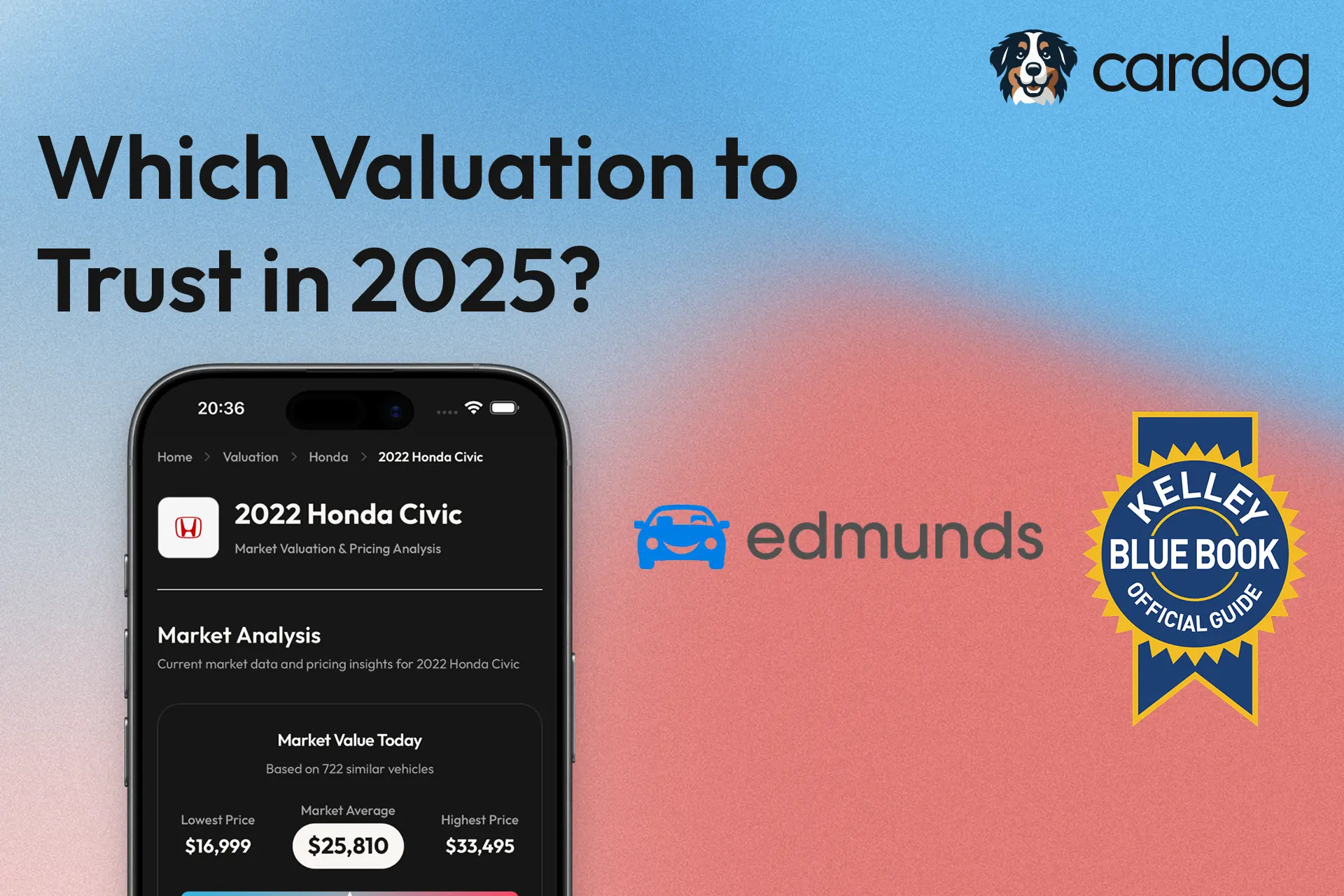
KBB and Edmunds tell you what a Honda Civic should be worth. Cardog shows you what Honda Civics are actually listed for right now—and whether those listings represent good deals based on current market conditions.
For buyers, this intelligence helps you identify underpriced listings before they're snapped up. For sellers, it helps you price competitively without leaving money on the table. Combined with KBB or Edmunds valuations, you get both the theoretical baseline and the practical reality.
Explore real market data on Cardog
Frequently asked questions