Hollin · A ride-share operator
Ride-share driver sign-up, checked from the VIN
Drivers add a car by VIN and see every rule it passes.
About 45 minutes, or 5 to clone and run.You need Node 20 or later and pnpm, a Cardog API key, some Next.jsClone the finished appgit clone https://github.com/cardog-ai/example-rideshare-vehicle-check.gitRead the build guide
The flow
Hollin, step by step
What a person does in the finished app, in order.
VIN entry
Typed, scanned, or read from a photo
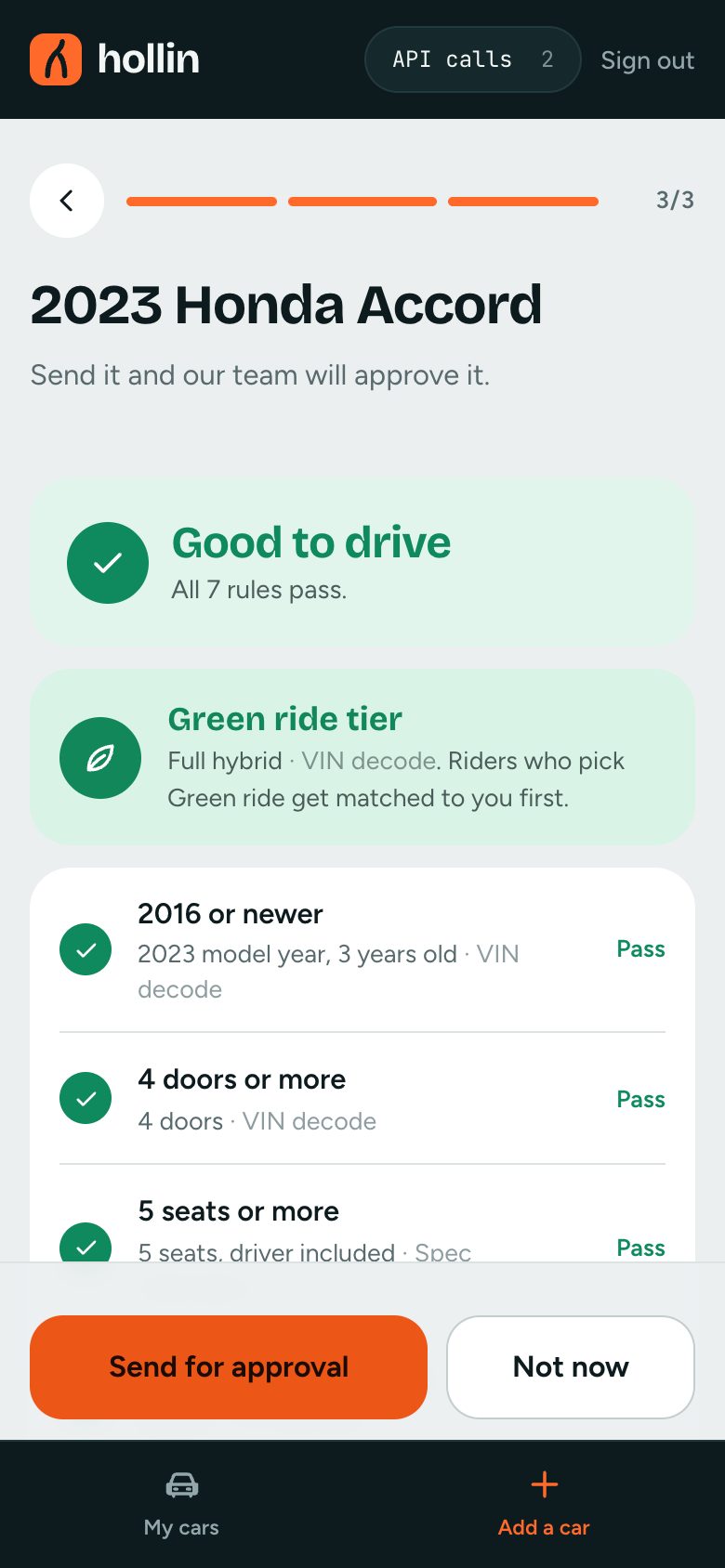
Is this your car?
The decoded car and the plates question
The check
Rule by rule, with the deciding fact
Ops review
One car, its facts and its model year's recalls
Hollin
The ops review, rule by rule
Every platform rule is checked against the VIN; only the unclear ones reach a person.
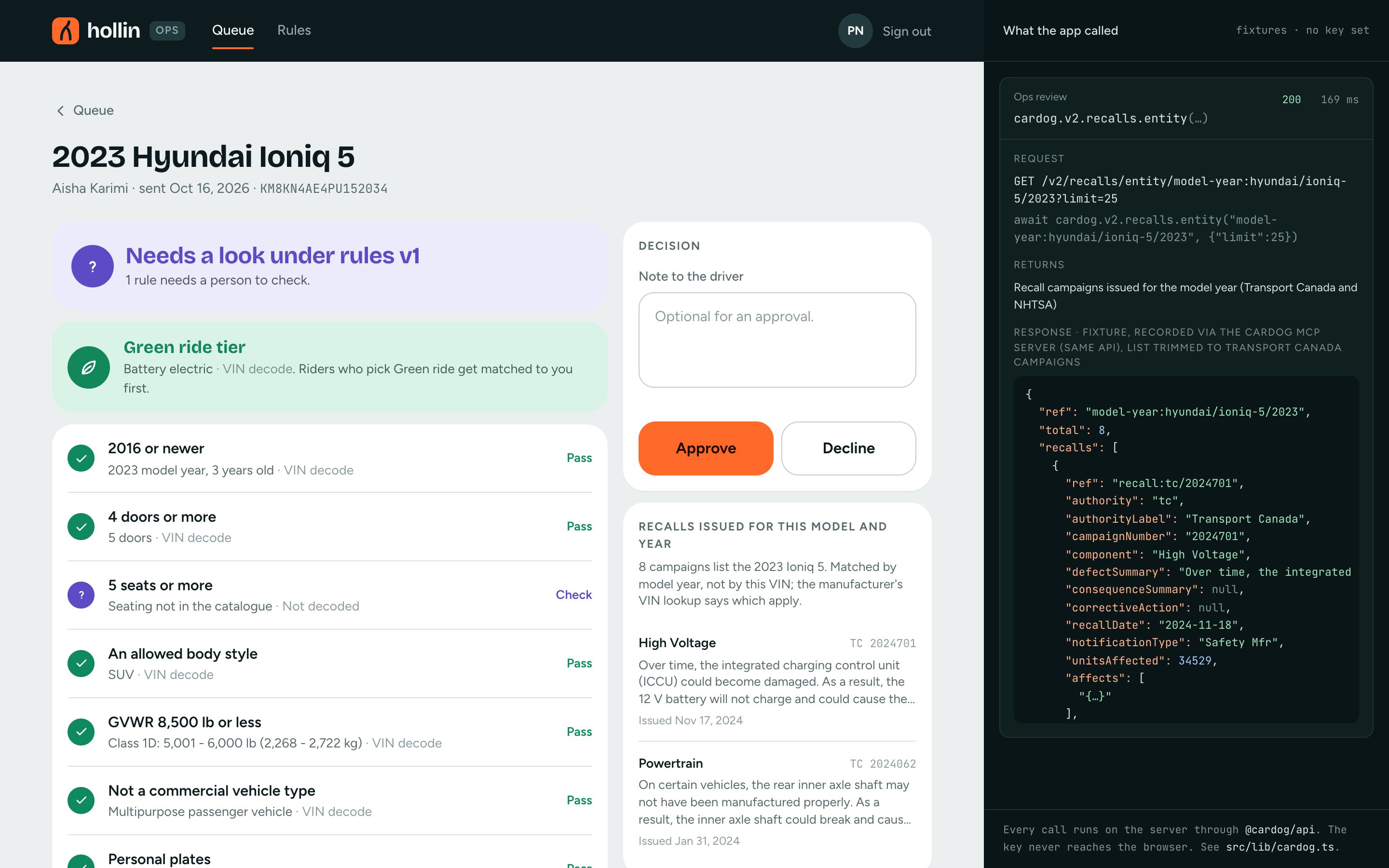
Needs a look
One rule the VIN cannot settle.
Green ride
Battery electric, so the car joins the green tier.
The rules
Age, doors, seats, body and weight, each with its source.
Built on the Cardog SDK
4 calls, one server file
Every call runs on the server through @cardog/api. The key never reaches the browser.
cardog.vin.image(base64)
Reads the VIN from a photo of the door-jamb sticker.
cardog.v2.vin.getByVin(vin)
Model year, doors, body, vehicle type, weight class and electrification.
cardog.v2.specs.sheetByBuild(nano)
Seating capacity, which a VIN does not encode.
cardog.v2.recalls.entity(modelYearRef)
Recalls issued for the model and year, for ops only.
Build it yourself
Thirteen steps, from an empty folder to a deployed container.