Orvanne Credit · A vehicle lender
Loan collateral, checked from the VIN
Borrowers add the car by VIN; the credit desk sees its value and loan-to-value.
About 40 minutes, or 5 to clone and run.You need Node 20 or later and pnpm, a Cardog API key, some Next.jsClone the finished appgit clone https://github.com/cardog-ai/example-loan-collateral.gitRead the build guide
Orvanne Credit
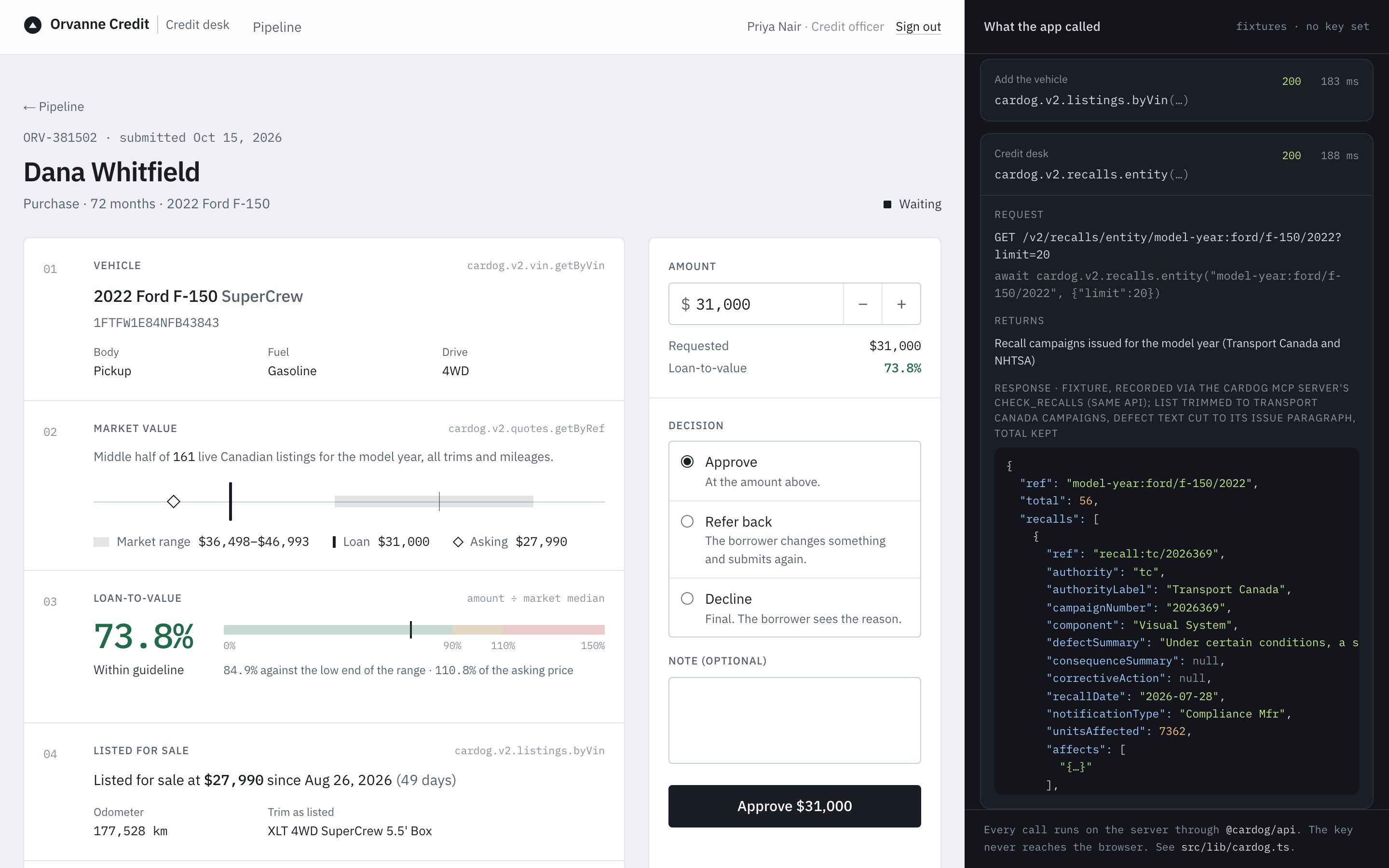
Loan-to-value against the live market
The credit desk sees the market range, the loan and the asking price on one line.
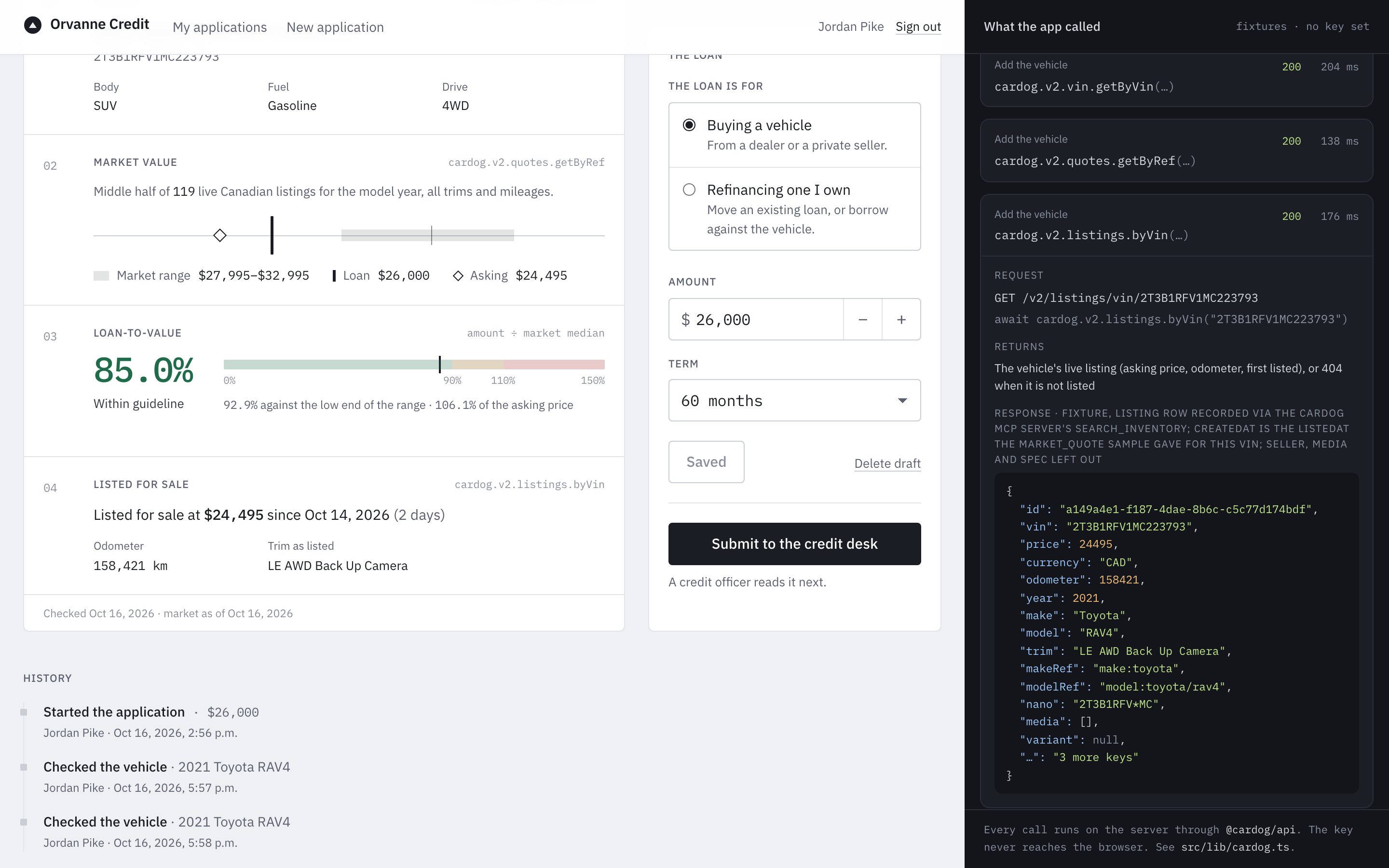
Market range
The middle half of live listings for the model year.
Loan-to-value
The amount over the market median, against your guideline.
Listed for sale
Whether this exact VIN is on the market, and at what price.
The finished app
Orvanne Credit, screen by screen
Captures from the running sample app, in the order a person meets them.
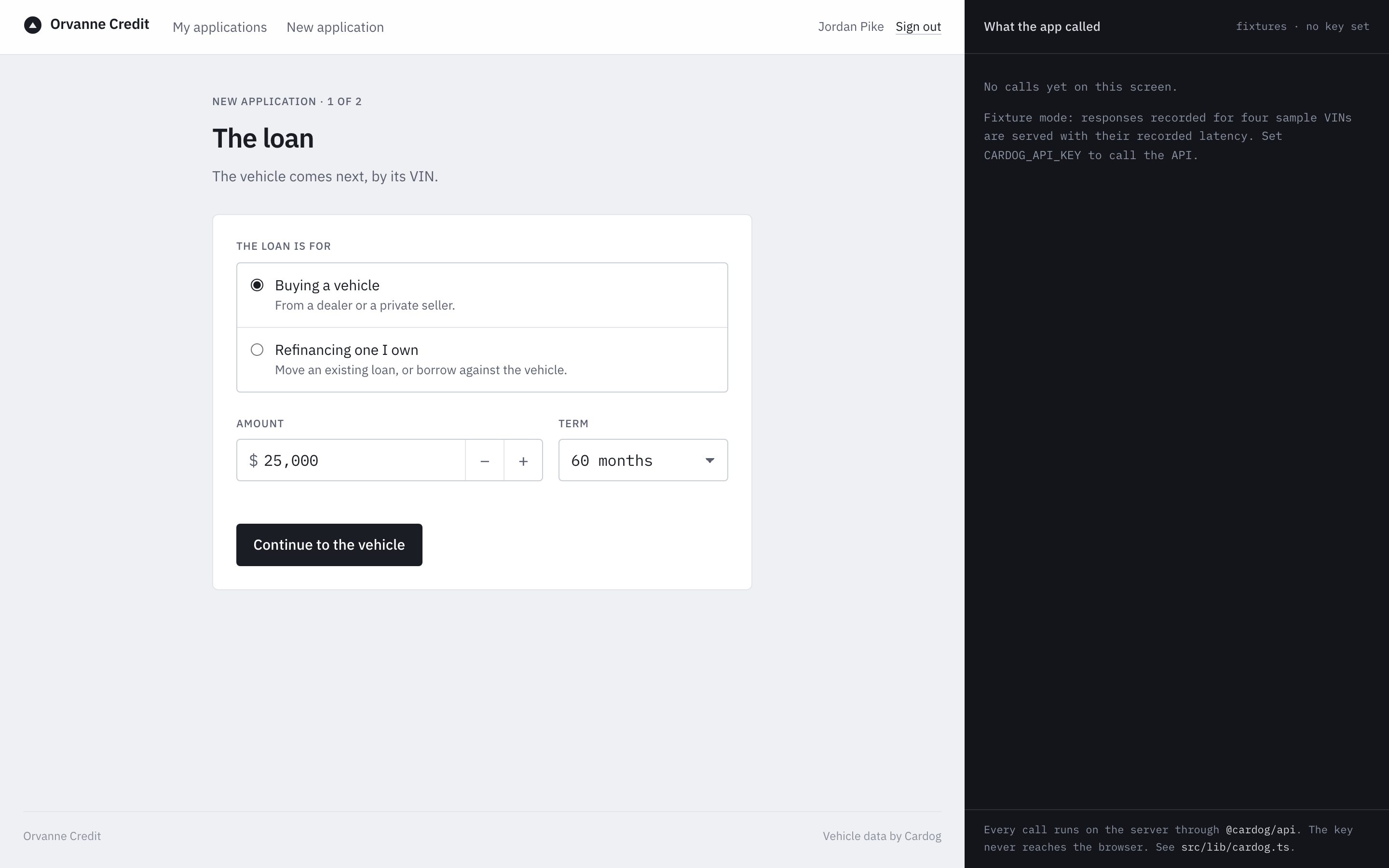
01The loan
Purpose, amount and term
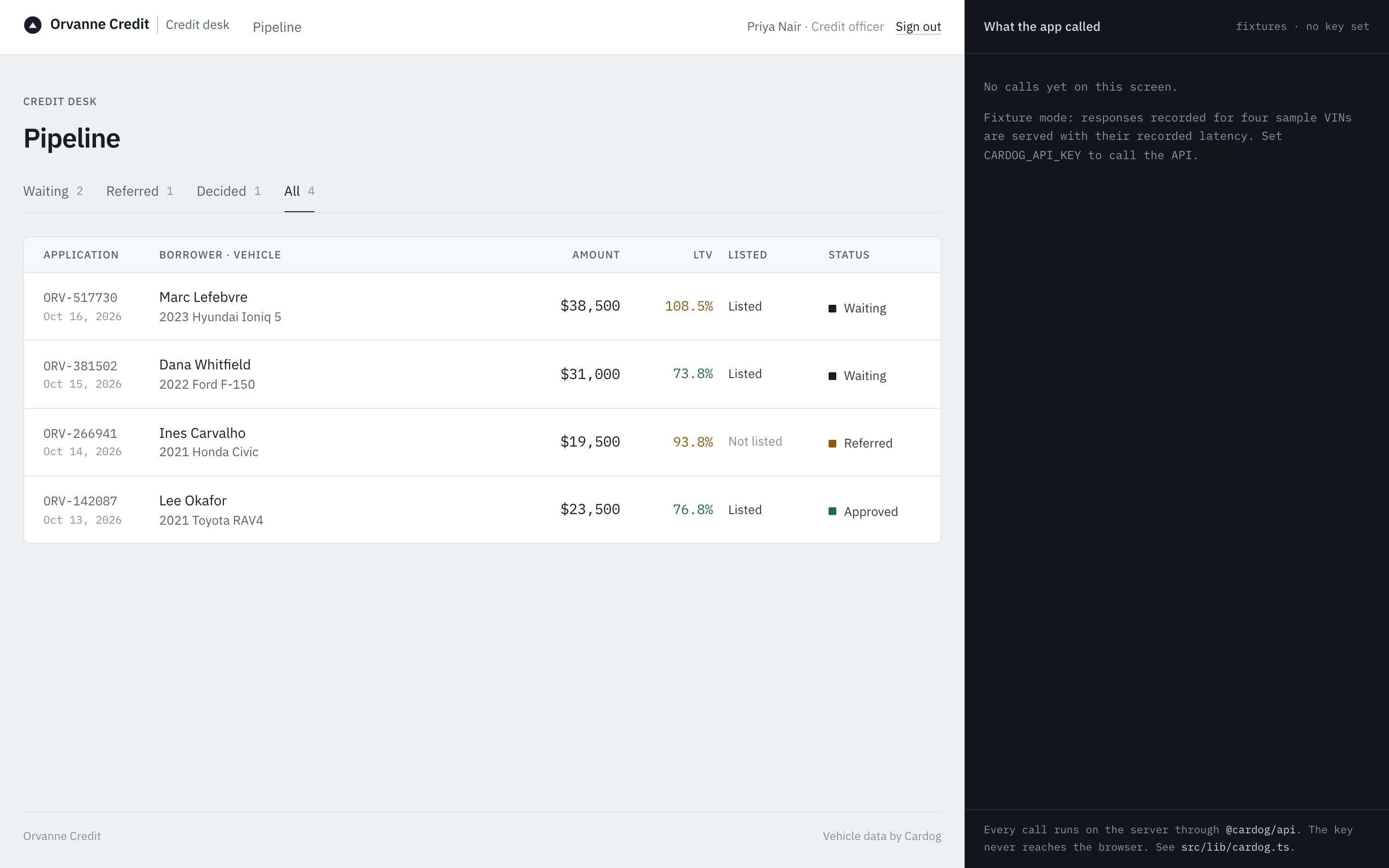
02Pipeline
Applications by status, with LTV
Built on the Cardog SDK
4 calls, one server file
Every call runs on the server through @cardog/api. The key never reaches the browser.
cardog.v2.vin.getByVin(vin)
Decodes the collateral and returns the model-year ref the next calls take.
cardog.v2.quotes.getByRef(modelYearRef)
Asking-price quartiles for the model year: the value range behind loan-to-value.
cardog.v2.listings.byVin(vin)
Whether this exact VIN is listed for sale right now, and at what price.
cardog.v2.recalls.entity(modelYearRef)
Recalls issued for the model and year, for the credit officer.
Build it yourself
Fifteen steps, from an empty folder to a deployed container.