Ottervale · An auto insurer
Total-loss valuation, built on the live market
Adjusters value a damaged car against live listings and settle with the comparables attached.
About 45 minutes, or 5 to clone and run.You need Node 20 or later and pnpm, a Cardog API key, some Next.jsClone the finished appgit clone https://github.com/cardog-ai/example-claims-valuation.gitRead the build guide
The calls behind it
What Ottervale asks Cardog
Every call runs on the server through @cardog/api. The key never reaches the browser.
| # | Call | What the app does with it |
|---|---|---|
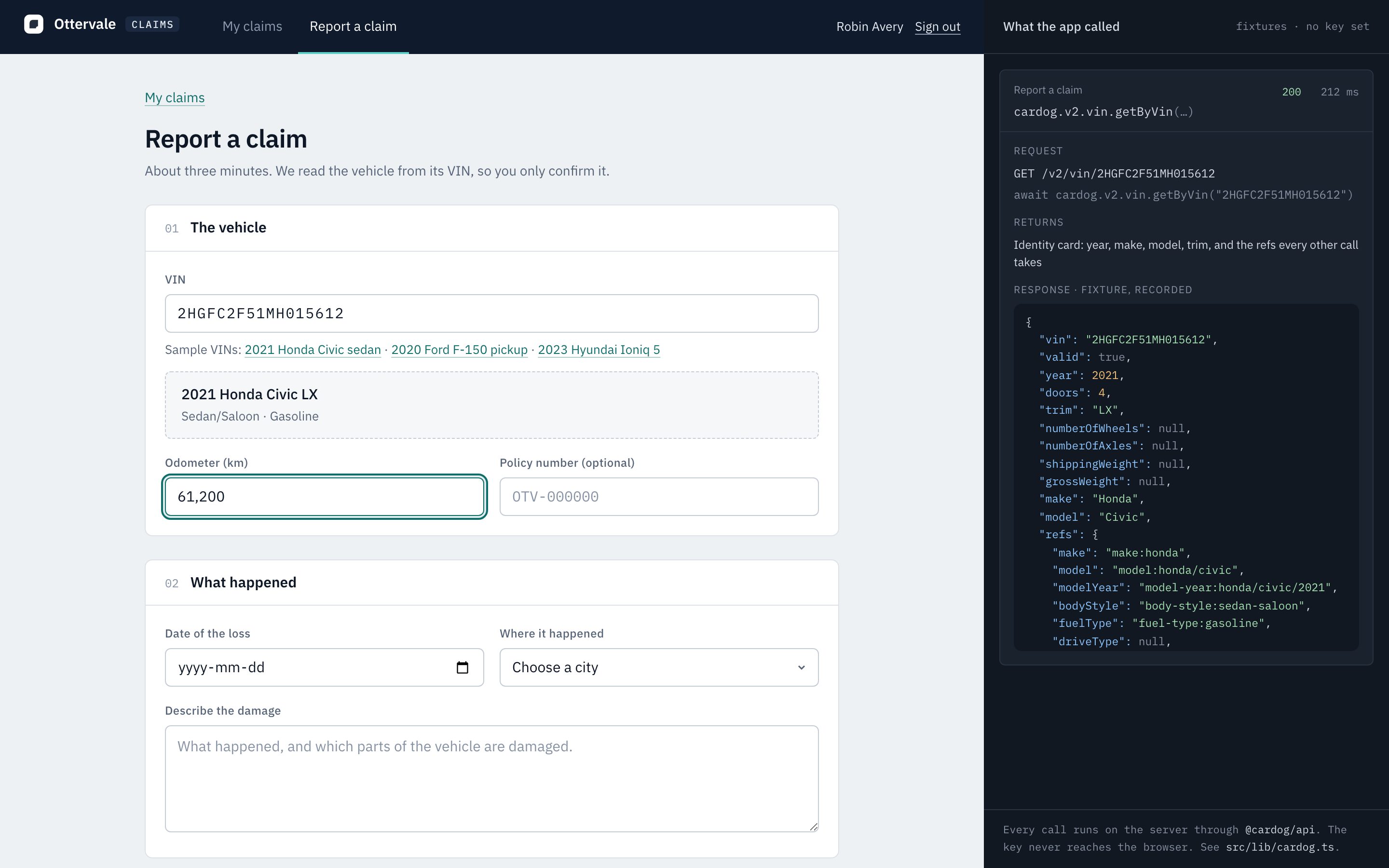
| 01 | cardog.v2.vin.getByVin(vin) | Decodes the claimed vehicle and returns the refs the other calls take. |
| 02 | cardog.v2.quotes.getByRef(modelYearRef) | Asking-price quartiles for the model year: the market range. |
| 03 | cardog.v2.listings.search({ filters, pagination }) | Live listings of the same model near the loss: the comparables. |
| 04 | cardog.v2.recalls.entity(modelYearRef) | Recalls issued for the model and year, for the adjuster. |
Ottervale
The total-loss test on one sheet
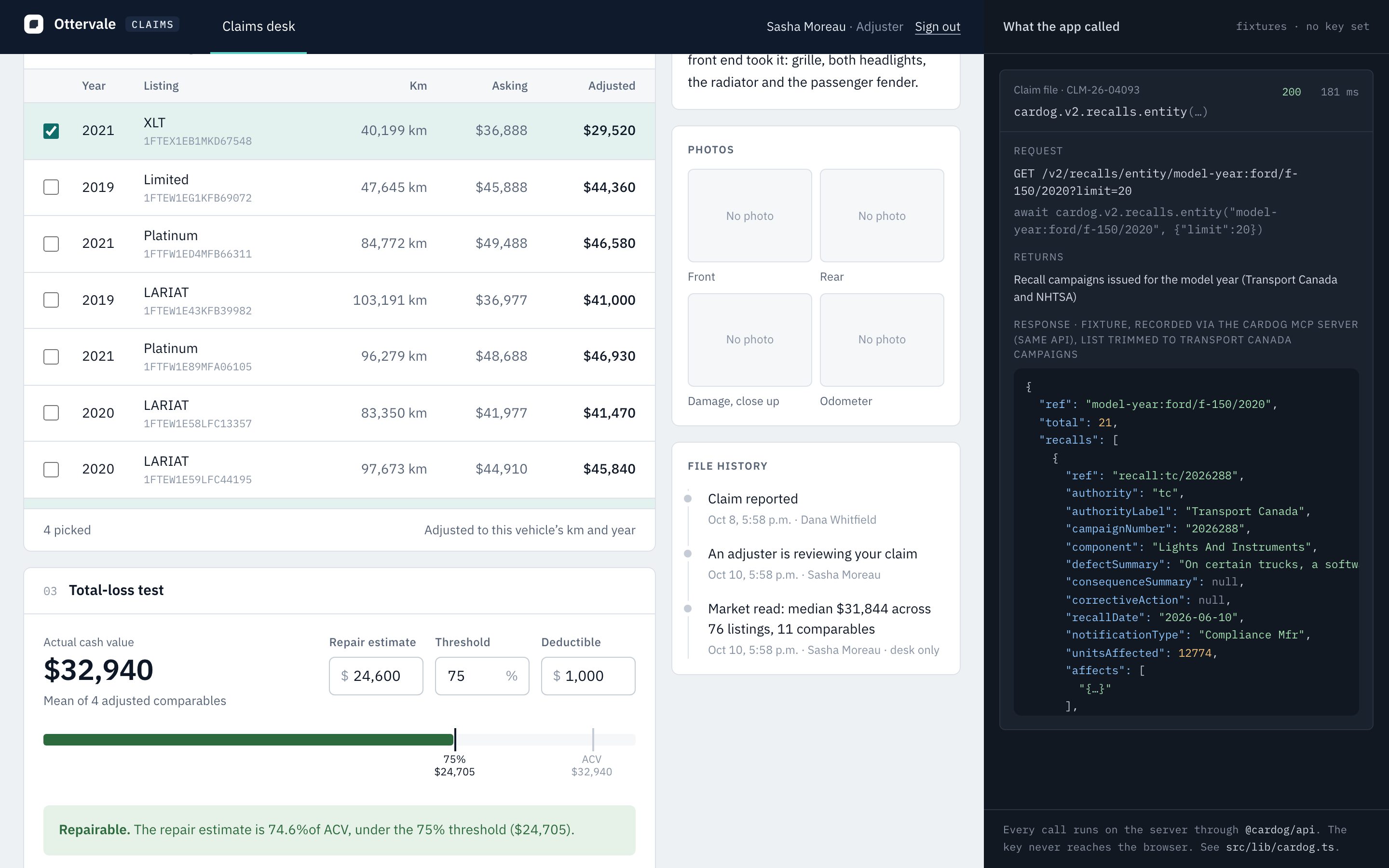
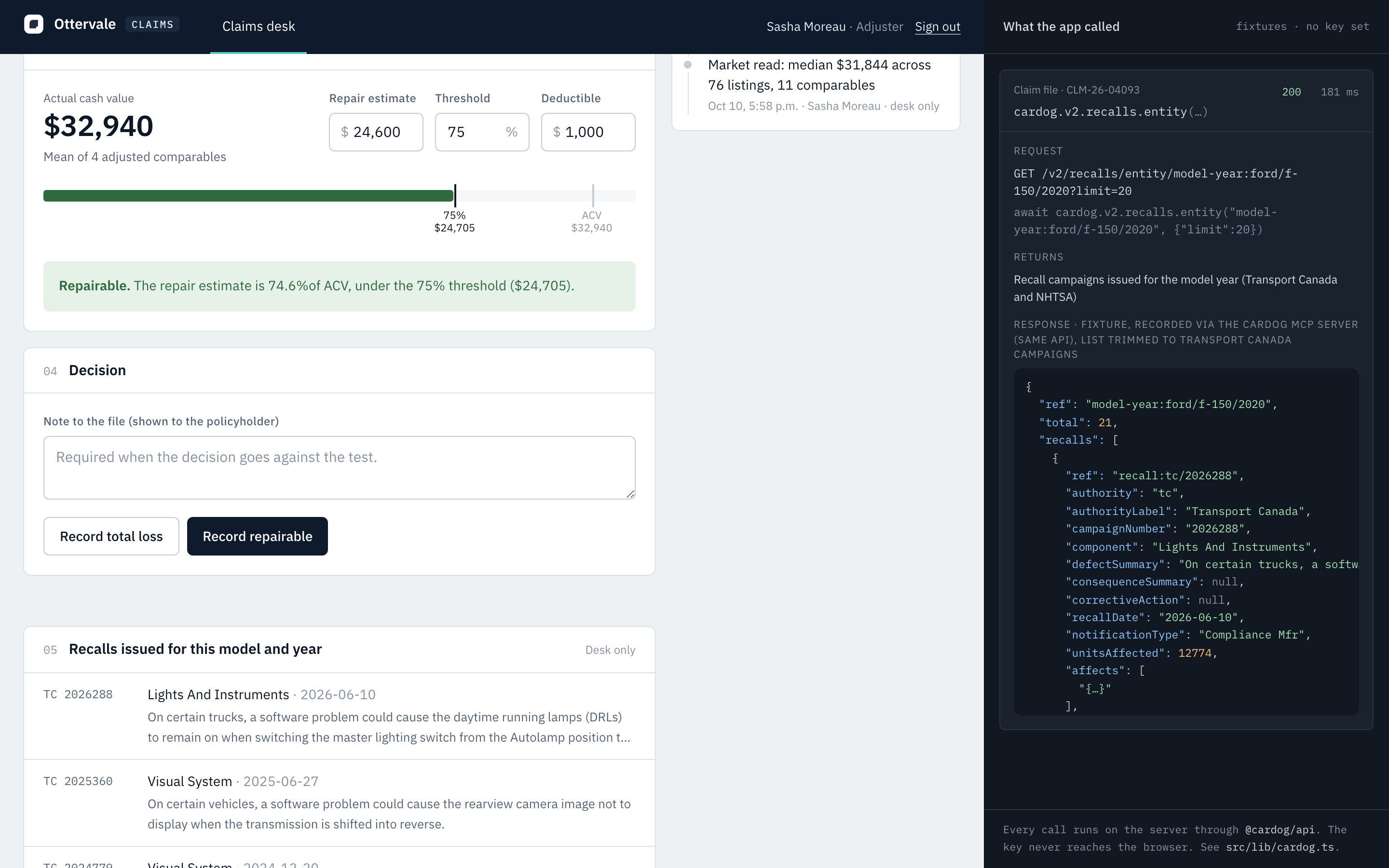
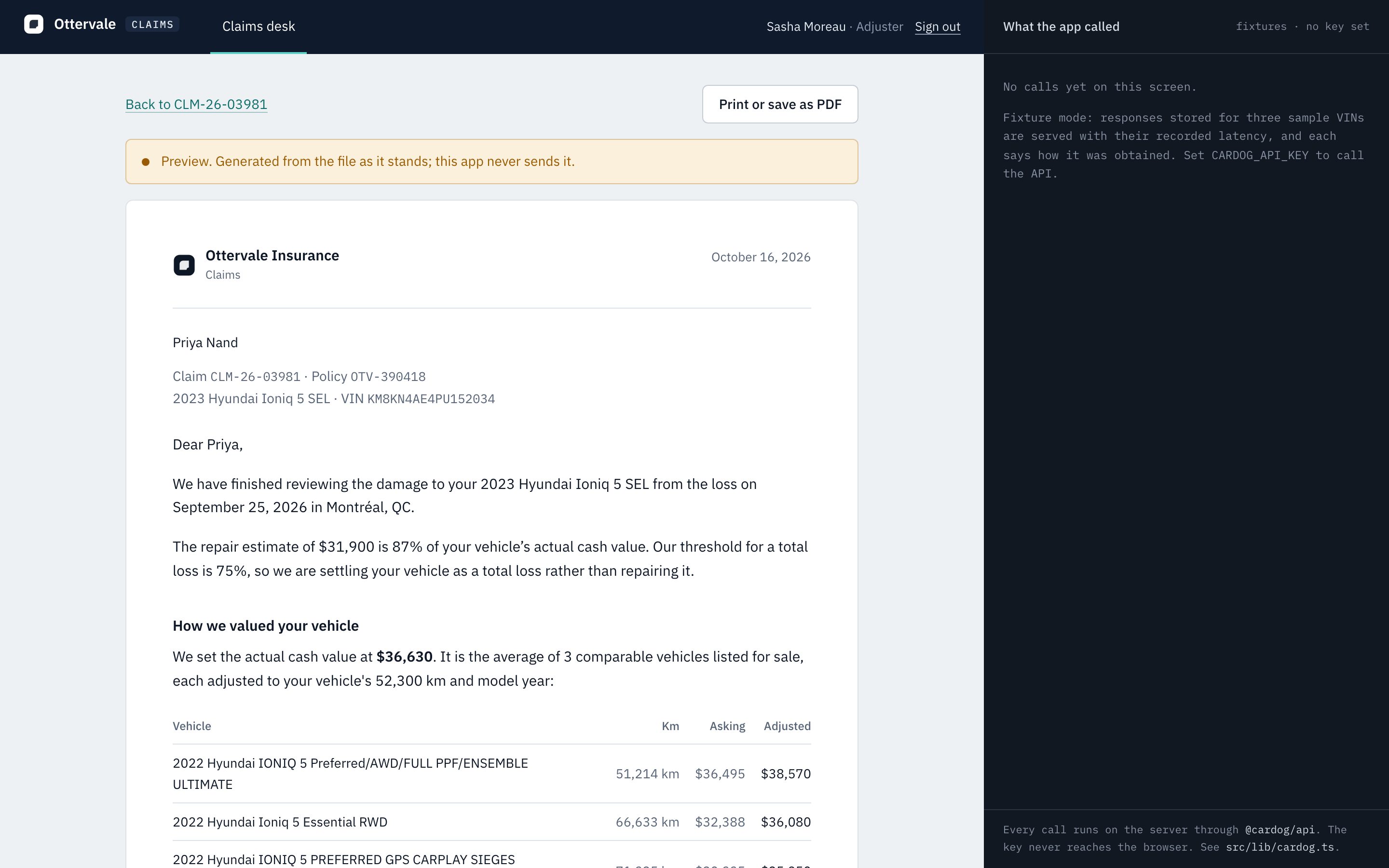
Actual cash value from adjusted comparables, set against the repair estimate.
Value from comparables
The mean of comparables adjusted to the car's kilometres.
The threshold line
The repair estimate against the share of value you set.
Recalls on the file
Issued for the model and year, on the adjuster's desk.
The finished app
What Ottervale does
Screens from the running sample app. Pick one.
Build it yourself
Fifteen steps, from an empty folder to a deployed container.