Toyota · 1988–2026
4Runner Recalls
12 known recalls affecting the Toyota 4Runner (1988–2026). Enter your VIN to check if your specific vehicle is affected, or browse by model year below.
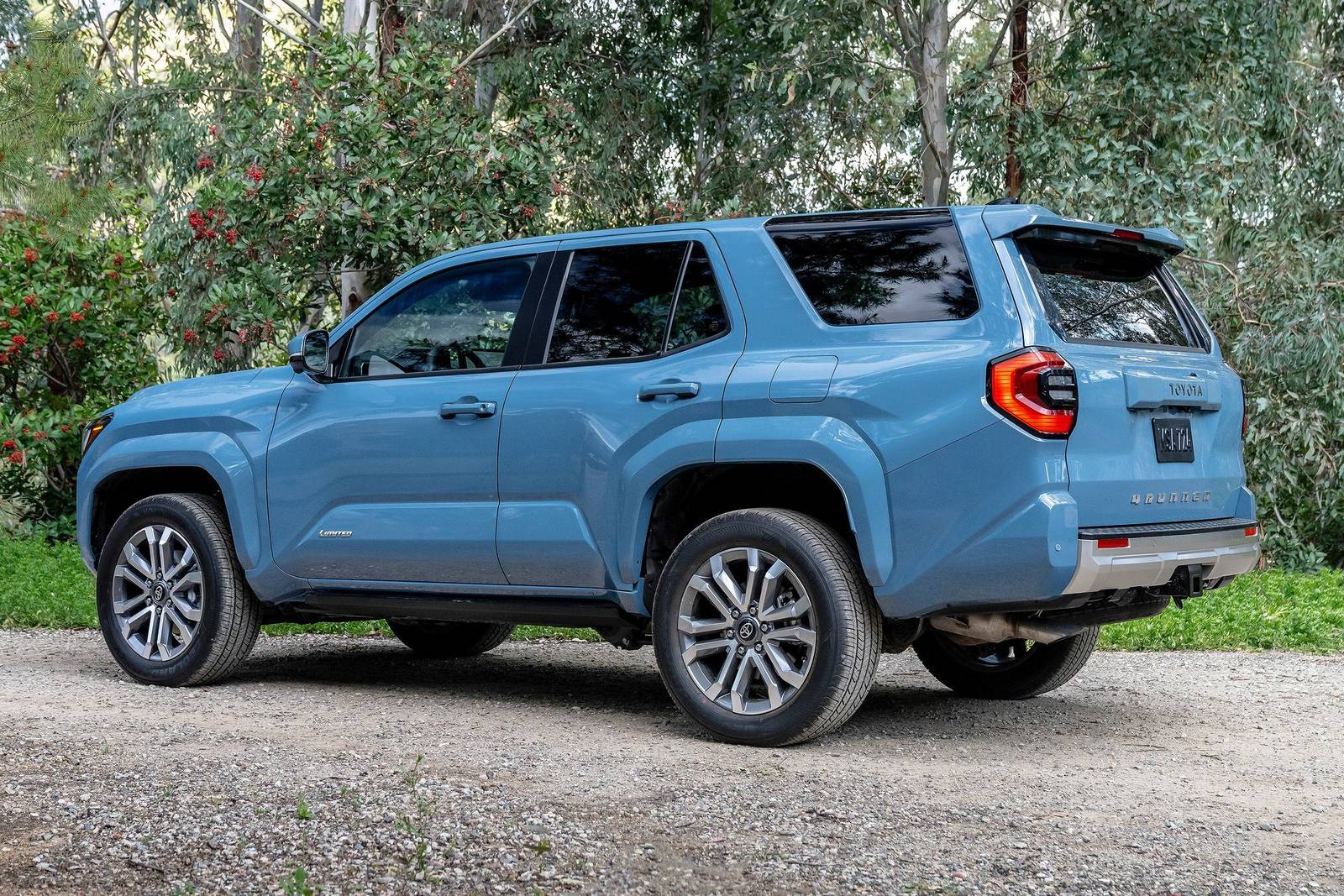
Toyota 4Runner Recalls
Summary
Issue: This recall is for certain block heater kits installed on certain vehicles or sold as accessories at Toyota or Lexus dealerships. On certain vehicles, the engine block heater cable may not have enough heat protection and could be damaged by high temperatures. If this happens, the cable could short circuit while plugged in, and cause the wiring to overheat or melt. Note: This recall only affects the following block heater/cord part numbers: C014003034 PK5A408J09 PU14000904 C014003151 PK5A408J13 PU14000905 C014000885 PK5A489J11 PU14000907 C014000888 PK5A489J22 PU14000909 C014000907 PK5A410H00 PU14000911 C014100904 PU14000900 PU14000913 C014100907 PU14000901 PU14003571 C014100911 PU14000902 PK5A489J14 PK5A408J05 PU14000903 Safety Risk: Engine block heater wiring that overheats or melts could create the risk of a fire. Corrective Actions: Toyota recommends that you should stop using the engine block heater immediately. Toyota will notify owners by mail and instruct you to take your vehicle to a dealer to disable the engine block heater. For some vehicles, the corrective actions for this recall are under development. For others, a new engine block heater cannot be installed, and the owner will receive a refund of the purchase price of the engine block heater.
Summary
Issue: On certain vehicles, the low-pressure fuel pump could fail. If this happens, then engine may run rough or may not start and the check engine light may turn on. This could also result in a sudden loss of engine power while driving. Note: This recall is an expansion of recalls SRC R95/SRC R96 and SRC RA2/SRC RA3 (Transport Canada Recall Numbers 2020-005 and 2020-088). Safety Risk: A sudden loss of engine power could increase the risk of a crash. Corrective Actions: The company will notify owners by mail and instruct you to take your vehicle to a dealer to replace the fuel pump.
Summary
Issue: On certain vehicles, the low-pressure fuel pump could fail. If this happens, then engine may run rough or may not start and the check engine light may turn on. This could also result in a sudden loss of engine power while driving. Note: This recall is an expansion of recall SRC R95/SRC R96 (Transport Canada Recall No. 2020-005) Safety Risk: A sudden loss of engine power could increase the risk of a crash. Corrective Actions: The company will notify owners by mail and instruct you to take your vehicle to a dealer to replace the fuel pump.
Summary
Issue: On certain vehicles, long-term exposure to high absolute humidity and temperature, combined with high temperature cycling, may eventually degrade the propellant contained in the passenger-front airbag. This could cause the airbag to deploy with more force than normal. If the airbag inflator ruptures, fragments could be propelled toward vehicle occupants or cause damage to the airbag assembly, preventing its proper function. Safety Risk: If the vehicle is involved in a crash requiring an airbag deployment, the airbag inflator could rupture and create a risk of injury. Corrective Action: Owners will be notified by mail and instructed to take their vehicle to a dealer to have the passenger-front airbag inflator or airbag module replaced. Note: The Canadian climate results in the propellant degrading slowly. This recall is being conducted as a precaution to address future risk. It is expected that all airbag inflators will be replaced before their function would be affected.
Summary
On certain vehicles, the electrical power cords of some dealer installed block heaters may have been improperly manufactured, causing the wires to contact each other, resulting in a short circuit. A short circuit could lead to a fire which would increase the risk of injury and/or damage to property. Correction: For vehicles where the subject block heater was approved for installation, the dealer will replace the block heater assembly with a new one of an improved design. For vehicles where the subject block heater was not approved for installation, dealers will remove the block heater assembly. In the interim, until the remedy can be performed, dealers will cut the plug end from the block heater cord to disable the block heater's operation.
Summary
On certain vehicles, the roll rate sensors in the airbag control module may improperly calibrate if the vehicle experiences a body roll motion approximately four seconds after the ignition is turned to the ‘ON’ position. If the vehicle experiences another subsequent body roll motion, the system may erroneously detect a rollover, causing both of the side curtain airbags to deploy and the seat belt pre-tensioners to be activated. Unintended airbag and/or seat belt pre-tensioner deployment, in a non-warranted (non-impact) situation, could result in injury and increase the risk of a vehicle crash causing injury and/or property damage. Correction: Dealers will replace the airbag control module with one which has improved programming.
Summary
On certain vehicles, the accelerator pedal may become stuck in the wide open position due to an unsecured or incompatible driver's floor mat. A fully depressed accelerator pedal may result in very high vehicle speeds and make it difficult to slow or stop the vehicle. This could result in a crash causing property damage and/or personal injury. Correction: Dealers will modify or replace the accelerator pedal. Note: This is an expansion of recall 2009290 for vehicles not previously included in the campaign.
Summary
On certain vehicles, if the steering wheel is repeatedly turned under conditions where high steering effort and power assist are required, for instance, when fully turning the wheel while the vehicle is stopped, a fatigue crack may develop in the steering relay rod. Correction: Dealers will replace the steering relay rod.
Summary
On certain vehicles, a manufacturing issue with the front lower ball joint could result in premature wear. If the vehicle is operated for an extended period of time in this condition, the ball joint may eventually experience excessive wear and looseness, resulting in increased steering effort, reduced vehicle self-centering and noise in the front suspension. In extreme cases, when the driver continues to operate the vehicle in this condition, the lower ball joint may separate from the knuckle causing a loss of vehicle steering control. Correction: Dealers will inspect and, if necessary, replace the front lower ball joints.
Summary
On certain vehicles, the diaphragm in the pulsation damper at the end of the fuel rail may be damaged and could leak. In the worst case, this may result in a fire if in the presence of a heat source or an ignition source. Correction: Dealer will replace the pulsation damper.
Showing 1-10 of 12 recalls
Toyota 4Runner by Year

Related Recall Checks
Check recalls for specific Toyota 4Runner model years