Why Your Next Car Might Pay For Itself
I bought a GPU off some guy on Kijiji in 2021. He wanted $1,800 for a card that retailed for $700. I sent the e-transfer before he could change his mind.
He thought he was ripping me off. Probably told his friends about the idiot who paid double for a graphics card.
That card made me $11,000.
There's a car in Vegas right now, an Ioniq, driving itself around picking up passengers. No safety driver. No remote operator babysitting it. Just a car, doing car things, except the car things now include generating revenue.
And fifteen miles away there's a dealership with the same car sitting on the lot. Same platform. Same bones. Slightly different sensor package. The dealer has it marked up $2k for the premium trim and he's annoyed it's been sitting for 18 days.
He doesn't know yet.
The thing about disruption is it doesn't announce itself. It doesn't send a calendar invite. One day you're running your business the way you've always run it and then you look up and the game changed while you were optimizing the old game.
I think about Blockbuster a lot. Not because it's a good analogy—it's overused—but because of the specific moment. There's a point where Blockbuster could've bought Netflix for $50 million. They laughed. Why would we buy a DVD mail service? We have stores. We have customers. We have the relationship.
They were right about everything except the thing that mattered.
The Hundred-Year Lie
For a hundred years a car has been a hole you pour money into. You buy it, it starts dying. Insurance, gas, maintenance, depreciation—every month it costs you and every month it's worth less. The entire financial system around cars evolved to manage this decay. Dealers move inventory fast because a car on the lot is bleeding value. Lenders structure loans around depreciation curves. Insurers price risk based on the inevitability of human error.
The car was never an asset. It was an expense you could sit in.
And then, almost without anyone noticing, someone taught the car to make money.
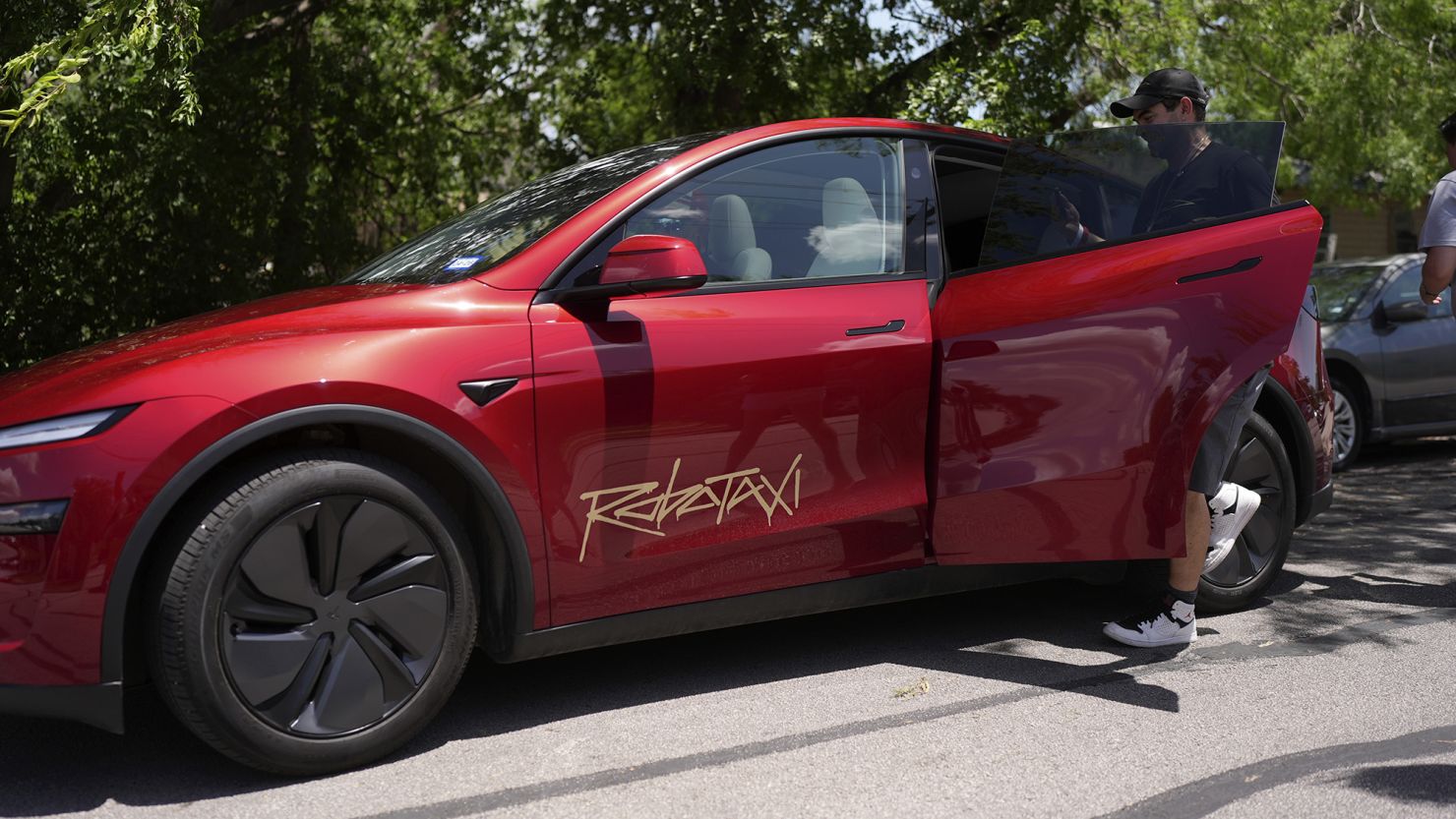
Not theoretically. Not in some pilot program. Right now. Vegas, Austin, San Francisco, Phoenix. Cars are driving themselves, picking up passengers, collecting money. The technology is not coming. It's running.
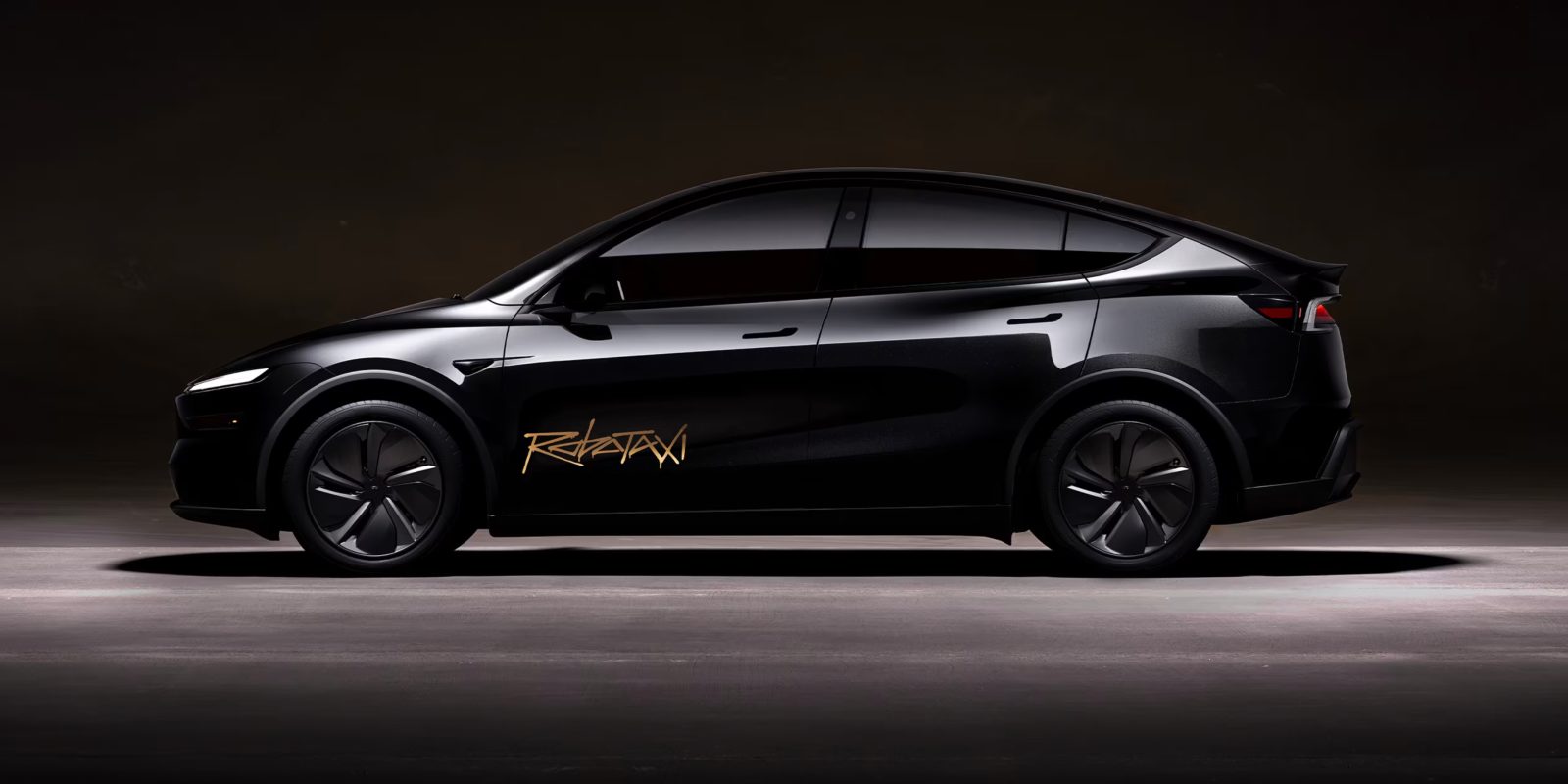 Tesla's robotaxi fleet operating in Austin, Texas. Source: Electrek
The Math That Breaks Your Brain
I keep doing the math in my head and it keeps breaking my assumptions.
Say a Model 3 costs $40k. Say it drives for whatever robotaxi network exists, six hours a day while you're at work, earns $20/hour after platform fees. That's $120 a day. $3,600 a month. $43,000 a year.
The car pays for itself in eleven months. Then it just... keeps going.
But here's where my brain starts glitching. How do you value that? It's not a $40k car anymore. It's a $40k car that throws off $40k a year. What's the multiple on that? If you valued it like a rental property at a 5 cap, that car is worth $800,000.
Nobody's paying $800k for a Model 3. Obviously. But the point is the valuation framework doesn't work anymore. We're pricing these things like depreciating appliances when they're becoming income-generating assets. The mental model is broken and most people haven't noticed.
The GPU Parallel
That Kijiji GPU haunts me.
The guy who sold it understood graphics cards. He'd probably built PCs his whole life. Knew the specs, the benchmarks, the generational improvements. He priced it based on what he knew: this is a high-end gaming card, supply is constrained, I can get double retail from some sucker who really wants to play Cyberpunk.
What he didn't understand was that the card had become something else. It wasn't a gaming card anymore. It was a money printer. The same hardware, but running different software, doing different things. He sold me a money printer for the price of a gaming card because he was pricing the object, not the capability.
The cryptocurrency mining boom of 2021 turned this into a global phenomenon. GPU prices inflated 3x over retail as miners competed for hardware. Bloomberg reported that cryptocurrency miners spent $15 billion on GPUs during the craze. The RTX 3090, which Nvidia released for $1,499, regularly sold for $3,000+ on secondary markets.
 A typical Ethereum mining rig from the 2021 boom. GPUs that retailed for $700 sold for $2,000+. Source: VICE
But here's what made it work: NiceHash. The software that abstracted all the complexity. Download the app, point your GPU at a mining pool, watch money appear. One-click wealth generation. NiceHash turned cryptographic puzzles into a passive income stream for anyone with a decent graphics card.
The dealership sitting on that Level 4 Ioniq is the same guy who sold me that GPU. They're pricing the car. Sticker plus markup plus dealer fees plus the usual bullshit. They don't understand they're sitting on a fleet of revenue-generating assets disguised as inventory.
Some will figure it out. Most won't.
The Frozen Orange Juice Problem
Here's something that should bother you: we have futures markets for frozen orange juice. Pork bellies. Wheat. Fucking lumber. There are sophisticated financial markets for concentrated citrus products.
There's no futures market for used cars.
How is this possible? Cars have VINs. Standardized specs. Regulated manufacturing. There are only so many configurations of a 2024 Camry—it's more standardized than a house. And unlike orange juice, unlike lumber, unlike literally any other commodity, a car is designed to move itself.
So why can't you trade them like real assets?
Because they couldn't move without a human. A car in Phoenix was stuck in Phoenix unless someone drove it to LA. The friction was so high that real price discovery couldn't happen. The market stayed local, fragmented, opaque. Dealers loved this—inefficiency is where margin lives.
Self-driving ends this. The car can reposition itself. If Camrys are trading higher in Texas than California, the car drives to Texas. Arbitrage becomes possible. The market becomes liquid.
And when a market becomes liquid, it becomes financialized. Derivatives. Futures. Securitization. Someone is going to package robotaxi revenue streams like mortgage-backed securities. Some pension fund is going to own a tranche of autonomous vehicle cash flows.
This sounds insane. It's going to happen within five years.
The Numbers Are Already Real
This isn't speculation. The autonomous vehicle market is operating at scale:
Waymo crossed 450,000 weekly paid rides in December 2025—a 157% increase from 175,000 rides in November 2024. They've served 14 million trips in 2025, operating across San Francisco, Phoenix, Los Angeles, Austin, and Atlanta. Highway driving capabilities are now being tested for broader expansion.
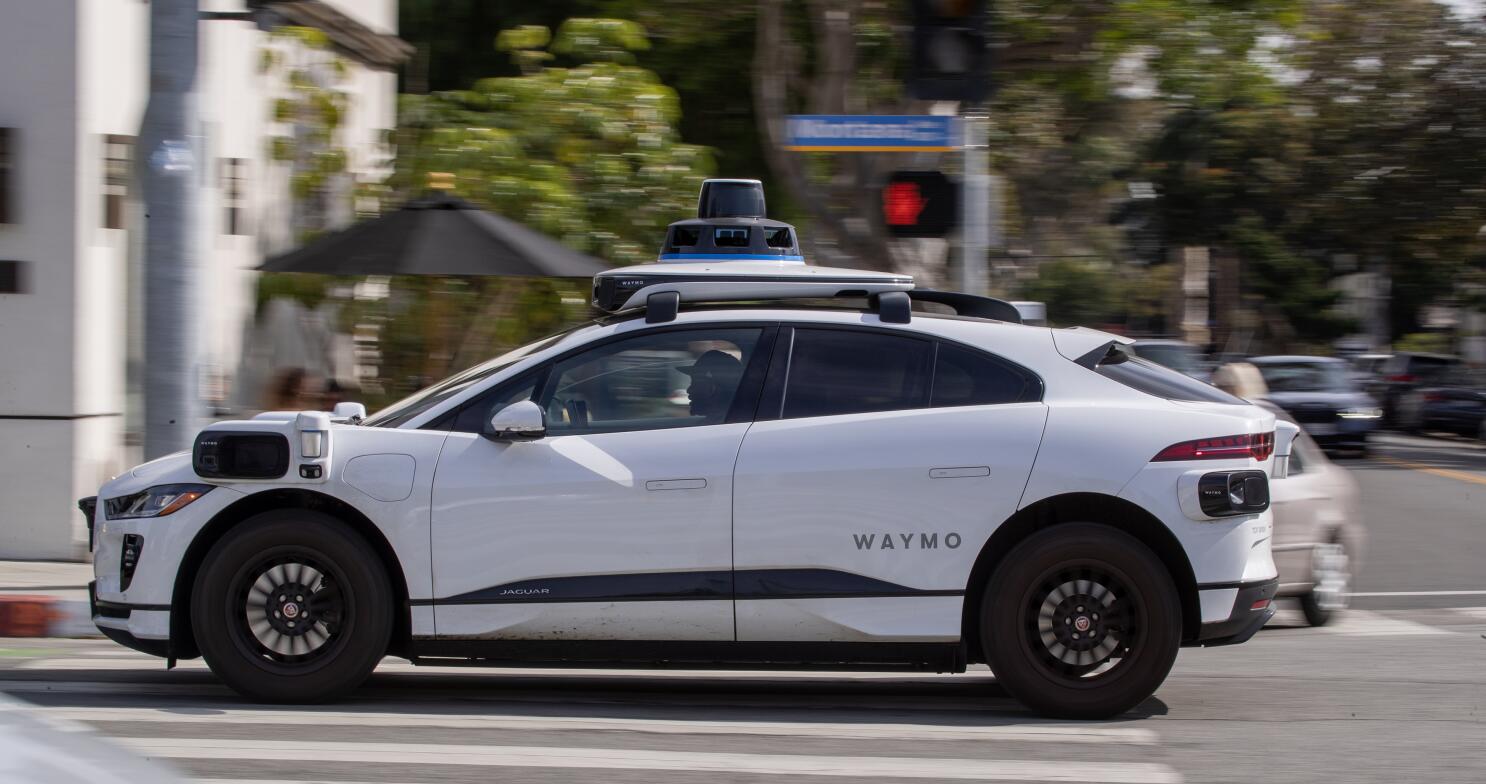 A Waymo robotaxi on the streets of Los Angeles. Source: LA Times
Tesla launched robotaxi service in Austin in June 2025, and by December had begun testing without safety monitors—a first for the company. Musk announced plans to expand to 500 vehicles in Austin and 1,000 in the Bay Area by end of 2025, with Dallas, Houston, Phoenix, Miami, and Las Vegas on the roadmap.
Hyundai's Motional joint venture is launching fully driverless Level 4 robotaxis in Las Vegas by end of 2026, using Ioniq 5 vehicles with 30+ sensors and end-to-end AI motion planning. They've already moved hundreds of thousands of consumers through their Lyft-integrated service.
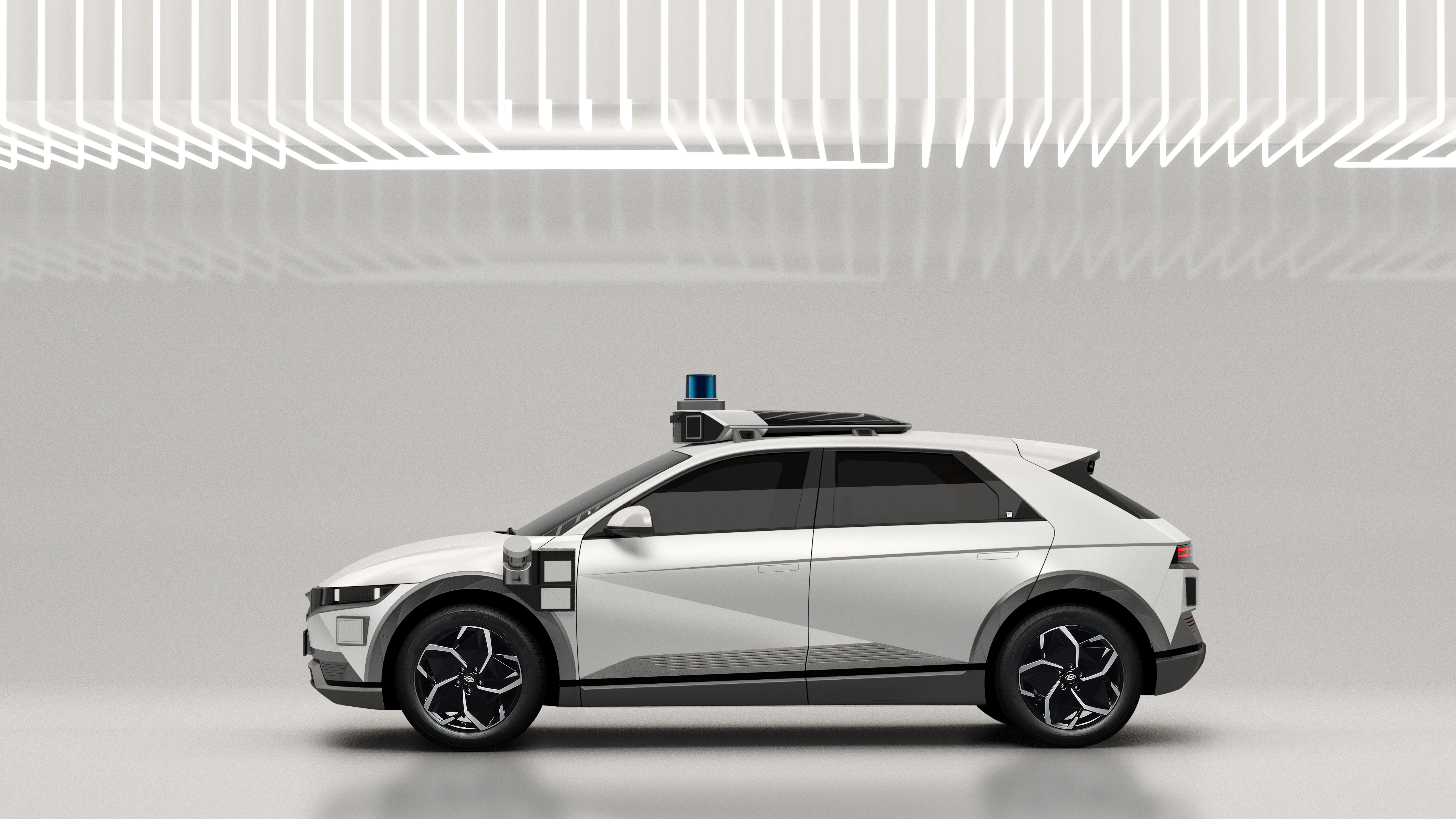 The Motional Ioniq 5 robotaxi—an SAE Level 4 autonomous vehicle approved for fully driverless operation. Source: Motional
The global automotive market is $2.75 trillion. This isn't a startup niche. This is the fundamental restructuring of one of the largest asset classes on earth.
The Dealer Awakening
Dealers are going to figure this out fast. These are not dumb people. They've spent decades optimizing every angle of extraction from car transactions. Documentation fees, market adjustments, trade-in arbitrage, F&I products. They are apex predators of the car-buying experience.
COVID proved it. Chip shortage hit, inventory dried up, and dealers didn't hesitate for a second. $10k market adjustments. $20k. $30k on a Bronco. They saw scarcity, they saw demand, they captured the spread. No hand-wringing. No concern about customer relationships. Just pure margin extraction.
When Level 4 vehicles start hitting dealer lots with 200 deposits on 15 units and aftermarket prices 50% over sticker, they're going to adapt. Fast. Some will flip them, take the quick profit. The smarter ones will pause.
Wait. Why am I selling this?
If this car generates $4,000 a month, and I have fifteen of them, that's $60k monthly. $720k a year. From cars I was going to sell for $8k gross each.
The dealership becomes a fleet operator. The lot isn't inventory—it's a stable of revenue-generating assets. The pressure inverts. Every day a car sits without earning is a day of lost revenue. The business model that rewarded fast turns now rewards holding.
Most dealers will let this drive right past them. The ones who don't will become something entirely new.
Insurance Is Fucked
Auto insurance is a business built on human chaos. Every pricing model, every risk table, every actuarial assumption is calibrated around the fundamental truth that humans are unpredictable and they crash cars.
Young men pay more because young men are idiots. Urban zip codes pay more because city driving is combat. DUI history spikes your premium because past behavior predicts future carnage.
Self-driving cars are software. They don't get tired. They don't get angry. They don't check their phone at 80mph. They do exactly what the algorithm says, every time, the same way, forever.
So what's the risk model? It's not "will this driver fuck up" anymore. It's "does version 2.4.1 have an edge case bug in unprotected left turns?"
Insurance becomes a software quality problem. And here's the thing—Tesla knows more about their software's risk profile than any insurance company ever will. They have data on billions of miles. They know exactly which scenarios cause interventions. They know when a new update makes things better or worse.
Why would Tesla let State Farm insure their fleet when Tesla can self-insure with better information? They'll cut the insurance industry out entirely. Capture the margin themselves.
The numbers bear this out. Goldman Sachs predicts self-driving cars could cut insurance costs by more than 50% by 2040 and fundamentally disrupt the $430 billion U.S. auto insurance market. Morningstar reports that autonomous vehicles could render personal auto insurance largely obsolete by 2044.
The liability shift is already being theorized. Deloitte's analysis suggests the burden of insurance will shift from human operators to commercial parties—meaning OEMs will absorb risk through product liability rather than individual policies.
Progressive, Geico, State Farm—these companies are the Blockbuster of the 2030s and they don't know it yet.
The Lending Math Breaks Too
Auto loans are structured around depreciation. Bank gives you $40k, knows the car will be worth $25k in three years, structures the loan to stay ahead of the decay. If you default, they repo and recover. The math works because everyone agrees cars lose value.
What happens when they don't?
What happens when the collateral is cash-flowing? When the car generates more than the payment? When the "asset" is actually an asset?
The loan structure has to change. This isn't consumer debt anymore. It's equipment financing. Business lending. The lender should be underwriting the revenue potential, not just the borrower's credit score.
I can see something like: you put down a bond against the vehicle's earning potential. Payments come partially from the car's revenue. The lender has a claim on cash flows, not just the collateral. Early payoff costs more if the vehicle is outperforming.
The consumer-commercial distinction collapses. Your personal car is also your income stream. The financing has to reflect that.
The Platform Question
Here's what keeps me up: who builds the NiceHash?
Because that GPU I bought off Kijiji was useless without software. I could've stacked ten cards in my basement and had nothing but expensive space heaters. NiceHash was the thing that made it work—download the app, point your hardware at a mining pool, watch money appear. One-click complexity abstraction.
That's what made mining go mainstream. Not the hardware. The software layer that let normies participate.
Autonomous vehicles need this. Right now if you have a Tesla with FSD, you can't just flip a switch and start earning. The network doesn't exist. The regulatory framework isn't there. Tesla's building it, but it's not shipped.
The second someone builds the dead-simple interface—register your car, set your hours, money appears—this market explodes.
Tesla will build their own. Closed ecosystem, 25% take rate, only works with Teslas. The Apple model.
But what about everyone else? BMW, Hyundai, Ford, Mercedes—they're all working on autonomy. They're all going to want their own networks. And they're all going to build mediocre software because car companies are not software companies no matter how many times their CEOs say "software-defined vehicles" on earnings calls.
Someone will build the aggregator. The platform that works across OEMs. The Android to Tesla's iOS.
Uber's right there. They already have the demand side—riders, routes, pricing. They sold their autonomy unit but they could partner with every OEM who doesn't want to build their own stack. Become the default infrastructure layer.
Or it's someone new. Some startup that sees the gap.
Whoever builds this will be worth more than Ford within a decade.
The Regulatory Wildcards
None of this happens uniformly. Level 4 approval is jurisdiction by jurisdiction.
Nevada and Arizona are already permissive—that's why Waymo and Hyundai are there. Texas doesn't require permits for driverless testing, which is why Tesla chose Austin. California has regulations requiring multiple permits for fully driverless commercial operation.
This creates geographic arbitrage. A Level 4 vehicle is worth dramatically more in Vegas than in NYC. Dealers in permissive states see the premium first. Vehicles migrate to where they can legally operate.
Greater China is projected to lead, with over 23% of new vehicle sales reaching Level 3-5 autonomy by 2036. Europe and North America are expected to remain below 5% but show upside potential.
Eventually this normalizes, but the transition period is chaos. Fortunes will be made by people who understand the regulatory map better than others.
The Inversion
So here's where we land:
A hundred-year-old asset class is inverting. Cars stop being costs and start being income. The financial infrastructure—dealers, lenders, insurers—built on assumptions of depreciation and human risk has to rebuild from the ground up.
The GPU parallel is almost too clean. Hardware becomes productive. Prices explode. Institutions scramble. A software platform layer emerges and captures most of the value. Early movers who understood the shift get generationally wealthy.
But here's why this is bigger than crypto: cars are a $2.75 trillion market annually. Cryptocurrency was always speculative—tokens with value because people agreed they had value. Vehicle productivity is real. People actually need transportation. The demand side is guaranteed.
Somewhere in America, there's a dealership with a self-driving car on the lot. The sales guy doesn't know what it is yet. The finance manager doesn't understand the implications. The owner is thinking about floor plan interest and days-on-lot metrics that will be obsolete in three years.
But that car, sitting quietly under the fluorescent lights, is a preview of a completely different future. One where the asset earns. Where the lot becomes a fleet. Where the loan becomes a bond. Where insurance becomes a data feed.
What To Do About It
If you're buying a car in the next 2-3 years, the calculus is different than it's ever been.
Check autonomy roadmaps. Which manufacturers are closest to Level 4? Which vehicles have the sensor packages that matter? A car that can eventually earn is worth more than one that can't.
Watch the regulatory map. Where you live determines what your car can do. Arizona, Texas, Nevada are ahead. California is opening. New York will take a decade.
Understand the platform play. When the "NiceHash for cars" emerges—and it will—early participants will capture disproportionate value. The car itself might matter less than which network it can join.
Think about depreciation differently. If a vehicle can generate income, the depreciation curve changes. High-utilization vehicles might hold value longer if their earning potential offsets wear.
The transformation is already happening. The car in Vegas knows it. The dealership down the street doesn't.
That gap is the opportunity.
Track vehicle values and market data at cardog.app. The market is about to get very interesting.
Sources
- Waymo crosses 450,000 weekly paid rides - CNBC
- Tesla starts testing robotaxis in Austin with no safety driver - TechCrunch
- Motional to launch fully driverless Level 4 robotaxis in Las Vegas - Autonomous Vehicle International
- GPU prices and cryptocurrency mining - Priceonomics
- GPU mining and the $15B hardware boom - Wikipedia
- Self-driving cars may slash insurance costs 50% - Goldman Sachs via IBKR
- Autonomous vehicles could render personal auto insurance obsolete by 2044 - CBT News
- Autonomous vehicles and insurance industry predictions - Deloitte
- Global automotive market size - Mordor Intelligence
- Waymo 2025 Year in Review - Waymo
- Tesla robotaxi expansion plans - Teslarati
- Hyundai Ioniq 5 robotaxi details - Motional