industry
The Lotus Eletre Just Dropped 50% in Canada — Here's What That Means for Luxury EVs
The Lotus Eletre Just Dropped 50% in Canada
Here's something that doesn't happen often in the luxury car market: a 50% price cut overnight.
The Lotus Eletre—a 600+ horsepower electric SUV built in Wuhan, China—was priced at over $300,000 CAD when Canada's 100% tariff on Chinese EVs was in effect. Under the new 6.1% tariff-quota system announced in January 2026, that same vehicle drops to approximately $156,000 CAD. Lotus Tech confirmed the Eletre's planned retail price is expected to be revised down approximately 50%.
That's not a sale. That's not a promotion. That's what happens when trade policy reshapes the competitive landscape of an entire market segment.
The Tariff Math
When Canada imposed a 100% surtax on Chinese-made EVs in 2024, the Lotus Eletre effectively doubled in price before reaching Canadian showrooms. The vehicle's US MSRP of $107,000 USD became over $300,000 CAD after the 100% tariff was applied.
The new 6.1% tariff changes everything:
| Component | 100% Tariff Era | 6.1% Tariff Era |
|---|---|---|
| US MSRP | $107,000 USD | $107,000 USD |
| CAD conversion (1.42) | $152,000 CAD | $152,000 CAD |
| Tariff | $152,000 (100%) | $9,270 (6.1%) |
| Shipping & compliance | ~$5,000 | ~$5,000 |
| Final MSRP | ~$309,000 | ~$166,000 |
The vehicle didn't change. The engineering didn't change. The factory didn't change. Only the trade policy changed—and with it, the Eletre's position in the Canadian luxury market.
What Is the Lotus Eletre?
The Eletre is Lotus's first SUV and their first vehicle designed for volume production. If that seems strange for a brand known for lightweight British sports cars, it's because Lotus is now owned by Geely—the Chinese automotive conglomerate that also owns Volvo, Polestar, and significant stakes in Mercedes-Benz and Aston Martin.
The Eletre is built at a dedicated facility in Wuhan, China, on Geely's Sustainable Experience Architecture (SEA) platform. It shares components with the Polestar 3, Volvo EX90, and Zeekr 001—all premium EVs targeting the same luxury crossover segment.
The Numbers
| Variant | Power | 0-100 km/h | Battery | Range (WLTP) | US MSRP | Est. CAD (6.1% tariff) |
|---|---|---|---|---|---|---|
| Eletre | 603 hp | 4.5 sec | 112 kWh | 600 km | $107,000 | ~$166,000 |
| Eletre S | 603 hp | 4.5 sec | 112 kWh | 600 km | $110,000 | ~$170,000 |
| Eletre R | 905 hp | 2.95 sec | 112 kWh | 490 km | $178,500 | ~$276,000 |
| Eletre Carbon | 905 hp | 2.95 sec | 112 kWh | 490 km | $232,900 | ~$360,000 |
The base Eletre produces 603 horsepower from dual motors—more than a Porsche Cayenne Turbo. The R variant hits 905 horsepower, putting it in hypercar territory while seating five and offering a full-size SUV cargo area.
Range is equally impressive: the 112 kWh battery provides up to 600 km WLTP. Even accounting for real-world conditions and Canadian winters, you're looking at 450+ km of usable range—enough for most buyers to forget about range anxiety entirely.
Technology and Features
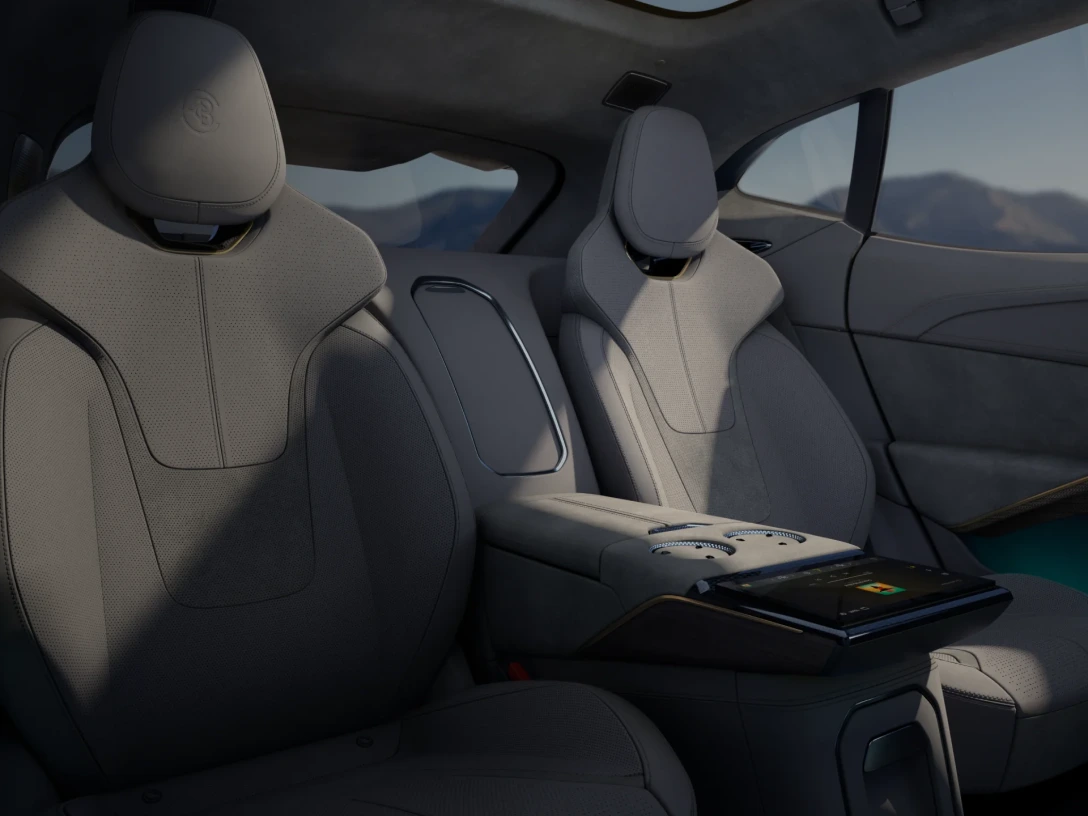
Lotus packed the Eletre with tech that would be expected in vehicles costing twice as much:
- Active aerodynamics: Deployable rear spoiler and front air intakes adjust automatically for efficiency or performance
- 5G connectivity with over-the-air updates
- LiDAR sensor array: Four LiDAR units for advanced driver assistance (standard on S and R)
- Air suspension with adaptive damping across five modes
- Lotus Driving Simulator: Track-tuned driving dynamics from the Chapman engineering team
- EP9 Mode (R only): Unlocks maximum power with a unique interface borrowed from Lotus's NIO EP9 electric hypercar project
The interior is driver-focused but luxurious: a 15.1-inch OLED touchscreen, Kevlar accents, configurable ambient lighting, and available Brembo carbon-ceramic brakes on the R variant.
The Competitive Landscape Just Changed
At $309,000 under the 100% tariff, the Eletre was essentially unsellable in Canada—nearly double the price of a Porsche Cayenne Turbo for a brand with no SUV heritage.
At $166,000 under the new tariff, the Eletre becomes a genuine competitor. It's still premium-priced, but now it's in the same conversation as the vehicles it was designed to compete against.
| Vehicle | Starting Price (CAD) | Power | Range |
|---|---|---|---|
| Lotus Eletre | ~$166,000 | 603 hp | ~600 km |
| Lotus Eletre R | ~$276,000 | 905 hp | ~490 km |
| BMW iX xDrive50 | $105,000 | 516 hp | 476 km |
| Mercedes EQE SUV | $89,900 | 402 hp | 459 km |
| Porsche Cayenne | $93,900 | 348 hp | N/A (ICE) |
| Porsche Cayenne E-Hybrid | $108,900 | 463 hp | 47 km (EV) |
| Porsche Cayenne Turbo | $168,900 | 621 hp | N/A (ICE) |
| Porsche Cayenne Turbo E-Hybrid | $198,900 | 729 hp | 45 km (EV) |
The base Eletre offers more power than a Cayenne Turbo, more range than any competitor, and now prices within striking distance of its German rivals. The Eletre R's 905 hp puts it in a class of its own—there's simply no direct competitor with that power output in SUV form.
For buyers who couldn't stomach $300K+ for the Eletre under the old tariff, $166,000 is a different proposition entirely—especially when you're getting hypercar performance with SUV practicality.
The Fine Print: Lotus's Existing Canadian Presence
Here's where the Eletre has an advantage over other Chinese EVs entering Canada: Lotus already has a dealer network.
The brand has maintained a small but dedicated presence through specialty dealers in major Canadian cities. These dealers currently sell the Emira—Lotus's (likely final) combustion sports car—and many have been preparing for the Eletre since it was announced.
This means:
- Established service infrastructure
- Trained technicians familiar with Lotus vehicles
- Warranty support through existing channels
- Parts supply chains already in place
For buyers hesitant about servicing Chinese-built EVs, the Lotus badge and established dealer network reduce the risk significantly. You're not buying from an unknown brand—you're buying a Lotus from a Lotus dealer who happens to sell a vehicle made in China.
Other Premium Chinese EVs on the Horizon
The Eletre isn't the only premium Chinese EV that could benefit from Canada's new tariff structure. Several other brands are positioning for Canadian entry in 2027-2028, though most face greater challenges than Lotus.
Zeekr (Geely)

Zeekr is Geely's premium EV brand—think of it as the performance division. Two models are likely candidates for Canada:
Zeekr 001 — A striking "shooting brake" (wagon/fastback) with 536 hp, 100 kWh battery, and 0-100 km/h in 3.8 seconds. In China, it starts around $45,000 USD. Canadian pricing would likely land around $65,000-75,000 CAD.
Zeekr 7X — A premium SUV directly competing with the BMW iX. Features a 75-100 kWh battery and up to 510 hp in dual-motor configuration. Expected Canadian pricing: $70,000-90,000 CAD.
Zeekr's advantage: Geely could leverage its Volvo/Polestar dealer network for distribution. The brand is already approved for sale in Europe and has begun deliveries in several markets.
Xiaomi SU7
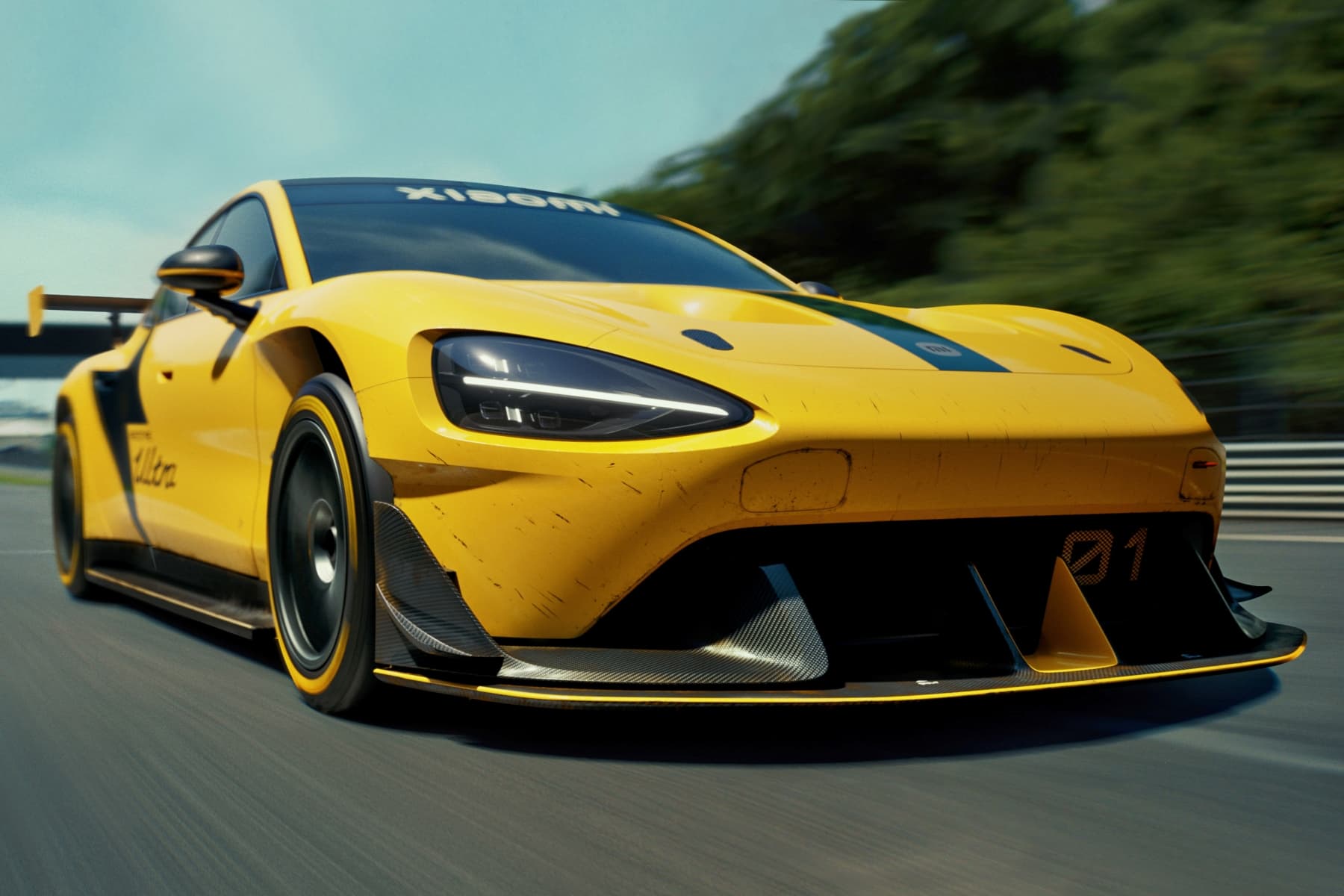
Yes, that Xiaomi—the smartphone company. Their first car, the SU7, launched in China in 2024 and immediately became one of the most anticipated EVs in the world.
The standard SU7 offers 299 hp and 700 km range from a 101 kWh battery. But the variant that would turn heads in Canada is the SU7 Ultra:
- 1,548 horsepower from a tri-motor setup
- 0-100 km/h in 1.98 seconds — faster than a Bugatti Chiron
- Nürburgring lap record for production electric sedans
- Estimated price: $75,000-85,000 CAD
A sub-2-second sedan for under $85K would be unprecedented in the Canadian market. The catch: Xiaomi has no automotive distribution infrastructure and no announced plans for North American entry. This is a 2028+ possibility at best.
NIO
NIO positions itself as the Chinese Tesla—premium EVs with tech-forward features and a direct sales model. The ES6 SUV would be their likely Canadian entry point:
- 536 hp dual-motor AWD
- 100 kWh battery with 510 km CLTC range
- Estimated Canadian price: $75,000-105,000 CAD depending on configuration
NIO's key differentiator is battery swapping: their vehicles use standardized battery packs that can be swapped in under 5 minutes at automated stations. In China, this eliminates charging wait times entirely.
The problem: NIO has zero battery swap infrastructure in North America, and building it would require massive capital investment before a single car could take advantage of the technology. Without battery swap, NIO's value proposition is less compelling against established competitors.
Why This Matters for the Broader Market
The Lotus Eletre's price drop is a preview of what happens when Chinese manufacturing reaches premium segments without tariff barriers.
For decades, Chinese automakers focused on budget vehicles for domestic and emerging markets. The vehicles that reached Europe and North America were typically subcompact EVs or city cars—useful for testing the waters but not competitive with established brands in profitable segments.
That's changed. Chinese manufacturers now build legitimately premium vehicles:
- Geely's SEA platform underpins everything from the $30K Zeekr X to the $100K+ Lotus Eletre
- Battery technology from CATL and BYD matches or exceeds what Western manufacturers can source
- Interior quality, fit-and-finish, and technology features are competitive with European luxury standards
The 100% tariff kept these vehicles out of Canada—or priced them beyond consideration. The 6.1% tariff removes that barrier.
The Service and Support Question
Premium buyers expect premium service. They expect loaner vehicles, expedited repairs, and technicians who know their specific model inside and out.
This is where most Chinese EVs entering Canada will struggle. BYD's Seagull and Dolphin will arrive without established dealer networks. Service will be improvised through independent shops and mobile technicians while infrastructure builds out.
The Eletre sidesteps this problem. Lotus dealers exist. They've been servicing exotic vehicles for decades. The transition from the Emira to the Eletre is significant—combustion sports car to electric SUV—but the customer relationship and service infrastructure remain.
For a buyer choosing between a $166K Eletre and a $170K Porsche Cayenne Turbo, this matters. Porsche has decades of SUV heritage. Lotus has dealerships, a 75-year sports car legacy, and now a compelling value proposition in the performance EV space. Both have trade-offs, but neither requires the leap of faith that buying a Zeekr or NIO would.
What to Expect in 2026-2027
Lotus Eletre
Status: Available now through existing Lotus dealers Expected Canadian pricing: $166,000–$360,000 CAD depending on variant Service: Established Lotus dealer network
The Eletre is the one premium Chinese EV you can actually buy in Canada today with confidence in service and support. The ~50% price drop—from $300K+ to $166K—makes it genuinely competitive in the high-performance luxury SUV segment.
Zeekr 001 / 7X
Status: European sales underway; Canadian timeline unclear Expected Canadian pricing: $65,000-90,000 CAD Service: Potentially through Volvo/Polestar dealers
If Geely leverages its existing dealer relationships, Zeekr could enter Canada relatively quickly. Without that network, it faces the same challenges as other Chinese startups.
Xiaomi SU7
Status: No announced North American plans Expected Canadian pricing: $55,000-85,000 CAD Service: Would need to build from scratch
Xiaomi would need to establish automotive operations from zero—dealers, service centers, parts supply, warranty infrastructure. Don't expect this before 2028 at earliest, if ever.
NIO ES6 / ET7
Status: European sales underway; no North American announcement Expected Canadian pricing: $75,000-105,000 CAD Service: Direct sales model would require dedicated service centers
NIO's premium positioning and direct sales approach could work in Canada, but battery swap infrastructure is their key differentiator—and that won't exist here.
The Bottom Line
The Lotus Eletre at $166K is legitimately compelling. It offers more power than a Porsche Cayenne Turbo, more range than any German luxury EV, and a price that finally makes sense for what you're getting. At $300K+ under the old tariff, it was a curiosity. At $166K, it's a contender.
For the broader premium Chinese EV market, the Eletre is a proof point. When tariffs don't artificially double prices, these vehicles compete on their merits—and the Eletre's 603 hp, 600 km range, and hypercar-derived engineering are formidable merits indeed.
The 6.1% tariff opened a door. The Lotus Eletre walked through it first. Zeekr, NIO, and others are watching to see what happens next.
Pricing estimates based on Lotus USA MSRP ($107,000–$232,900 USD), Canadian tariff-quota terms announced January 2026, and CAD/USD exchange rates. Actual Canadian MSRP may vary based on trim level, options, and dealer pricing.