industry
BYD Is Already Approved to Sell Cars in Canada
BYD Is Already Approved to Sell Cars in Canada
Update (February 26, 2026): The quota system is now official. Global Affairs Canada published Notice 1162 on February 25, activating the 49,000 vehicle quota at 6.1% tariff starting March 1, 2026. Import permit applications open immediately.
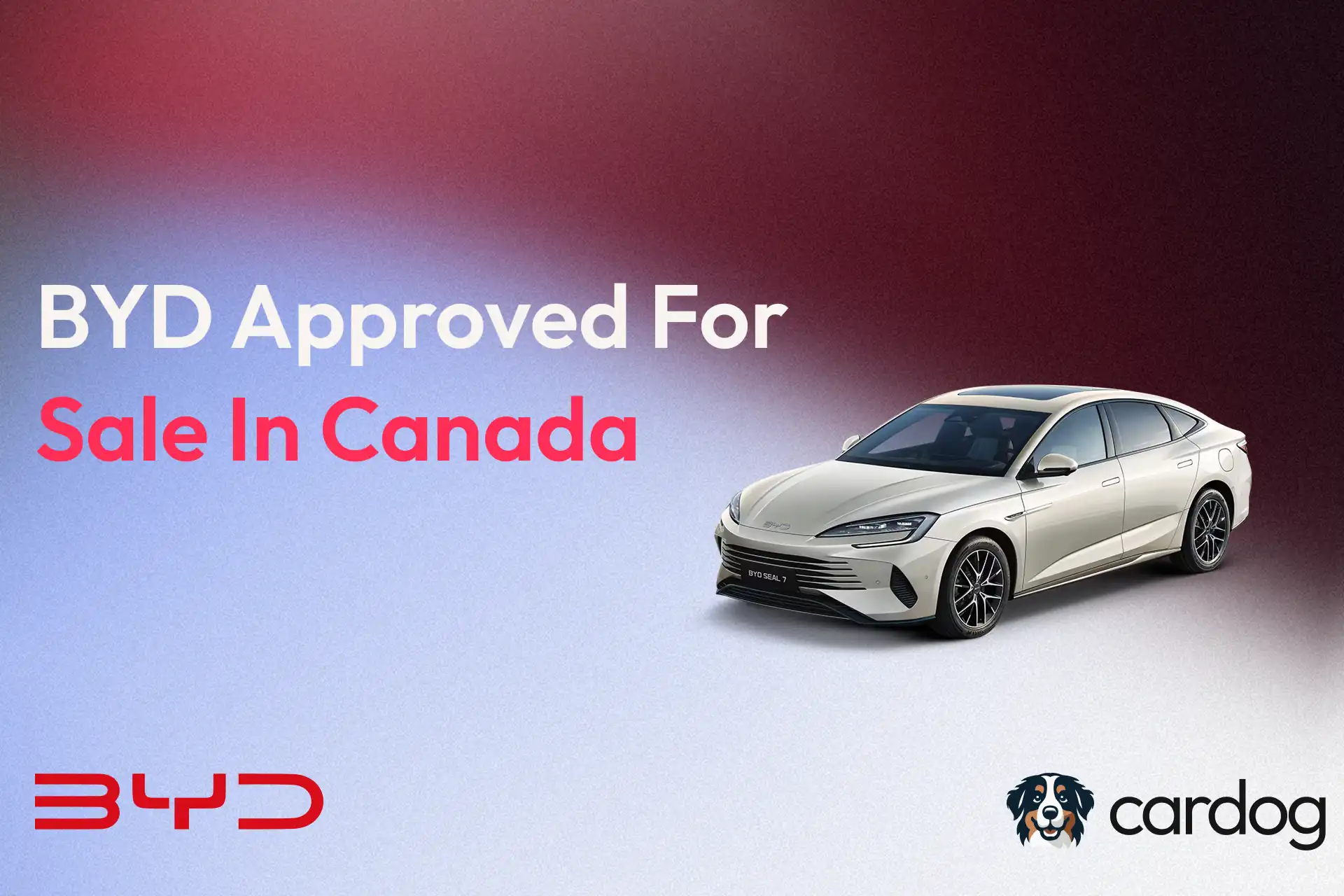
The debate over Chinese EVs in Canada has a missing piece: BYD is already listed in Transport Canada's Appendix G registry. Not pending. Not waiting. Already approved.
While headlines focus on tariff negotiations and politicians argue about timelines, the world's largest EV manufacturer has had regulatory pre-clearance for passenger car imports sitting in a public database. The gate everyone assumes is closed has been open for years.
BYD Canada Status
Transport Canada Appendix G
Approved Facilities
Regulatory Pathways
Source: Transport Canada Registry
What we found in the data
We pulled Transport Canada's Appendix G registry—the public CSV file that lists every foreign manufacturer authorized to import vehicles into Canada. BYD appears seven times across two corporate entities:
BYD AUTO CO., LTD. is listed for passenger cars from two manufacturing facilities:
- Shenzhen (headquarters): 3007 Hengping Road, Pingshan
- Xi'An: No. #1 West Qingling Ave
BYD Auto Industry Company Limited is listed for commercial vehicles:
- Buses (city, school, and shuttle variants)
- Trucks (both under and over 4,536 kg)
The passenger car listings are the significant ones. This means BYD's Shenzhen and Xi'An plants—which produce vehicles like the Seagull, Dolphin, Seal, and Atto 3—are already cleared for Canadian import under the Appendix G framework.
Annual Quota
49,000
Tariff Rate
6.1%
First Half (Mar-Aug)
24,500
Permits Open
Mar 1
Why this matters
In our previous analysis of the Chinese EV timeline, we outlined three regulatory pathways for foreign vehicles to enter Canada:
- Appendix G pre-clearance — The fast lane for scale imports
- Case-by-case (CBC) authorization — Slow, paperwork-heavy, one VIN at a time
- National Safety Mark — Requires Canadian manufacturing
We noted that Transport Canada paused new Appendix G intake for passenger vehicles in 2025. This led many to assume Chinese manufacturers would need to start from scratch—years of regulatory groundwork before any volume imports.
But BYD isn't a new applicant. They're already in the registry.
The pause affects new applications. It doesn't revoke existing listings. BYD's passenger car authorization appears to predate the pause, meaning they have standing to import vehicles through the Appendix G pathway that other Chinese manufacturers lack.
What BYD can do now
With Appendix G listing, BYD can:
- Import vehicles at scale with streamlined oversight (not case-by-case)
- Work directly with Canadian dealers without individual VIN authorization
- Leverage existing compliance documentation rather than starting fresh
What they still need:
Tariff resolutionResolved: The quota system is now active—6.1% tariff on 49,000 vehicles annually starting March 1, 2026- Dealer network partnerships
- Service and warranty infrastructure
- Marketing and consumer awareness
The regulatory pathway is clearer than the public narrative suggests. The blockers are commercial and political, not regulatory.
Timeline
Pre-2024
BYD listed in Appendix G
Aug 2024
100% surtax announced
Jan 2026
49,000 quota deal announced
Feb 25, 2026
Official quota rules published
Mar 1, 2026
Import permit applications open
Q2-Q3 2026
First retail deliveries
2027+
Volume imports
The competitive advantage
This Appendix G standing gives BYD a structural advantage over every other Chinese EV manufacturer trying to enter Canada:
Geely (owner of Volvo and Polestar) could potentially route vehicles through existing subsidiaries, but pure Geely-branded EVs would need their own authorization.
SAIC (MG), NIO, Xpeng, and Li Auto would all need to either:
- Wait for Appendix G intake to reopen
- Use the slow case-by-case pathway
- Establish Canadian manufacturing (years away, if ever)
BYD can move faster. When the tariff-quota system activates—reportedly allowing 49,000 Chinese EVs annually at 6.1% duty—BYD is positioned to capture a disproportionate share simply because their regulatory homework is already done.
What to watch next
The signals that matter:
-
Quota allocations — The quota system activates March 1, 2026. 24,500 vehicles available first-come-first-served for the first six months. Watch which OEMs file permits first.
-
Dealer network moves — Are Canadian dealers signing agreements with BYD? Quebec and BC independents are most likely to move first.
-
Vehicle certification — Individual models still need CMVSS compliance documentation. Watch for BYD model names appearing in Transport Canada databases.
-
Port activity — RO-RO (roll-on/roll-off) car carrier ships departing Chinese ports for Vancouver or Halifax. The logistics precede the headlines.
BYD operates its own car carrier fleet—unusual for an automaker. These aren't chartered vessels; they're BYD-owned ships purpose-built for vehicle transport. When one sets course for Canada, it's not speculation.
BYD Car Carrier Fleet
Track live positions on MarineTraffic
BYD operates its own RO-RO fleet — unusual for an automaker. When these ships head to Canada, it's not speculation.
The bottom line
The conversation about Chinese EVs in Canada has been framed around "if" and "when." But for BYD specifically, the "if" question was answered years ago when they secured Appendix G listing.
The remaining questions are commercial:
- How quickly can they establish service infrastructure?
- Which dealers will take the risk of carrying an unfamiliar brand?
- Will consumer sentiment in Ontario—where political opposition is strongest—differ from Quebec and BC?
And one political question: Will the government modify or revoke existing Appendix G listings under pressure from domestic automakers?
That last scenario is possible but would set a significant precedent. Retroactively removing regulatory authorization from a manufacturer who obtained it legitimately would signal that Canadian trade policy is unpredictable—a message with implications far beyond the auto sector.
For now, the data is clear: BYD has regulatory standing that other Chinese manufacturers don't. When the tariff wall comes down—even partially—they're first through the door.
This analysis is based on publicly available Transport Canada registry data. The Appendix G CSV is updated daily and can be independently verified.