Best Toyota Camry Years to Buy: Expert Guide with Market Data
Best Toyota Camry Years to Buy: Expert Guide with Market Data
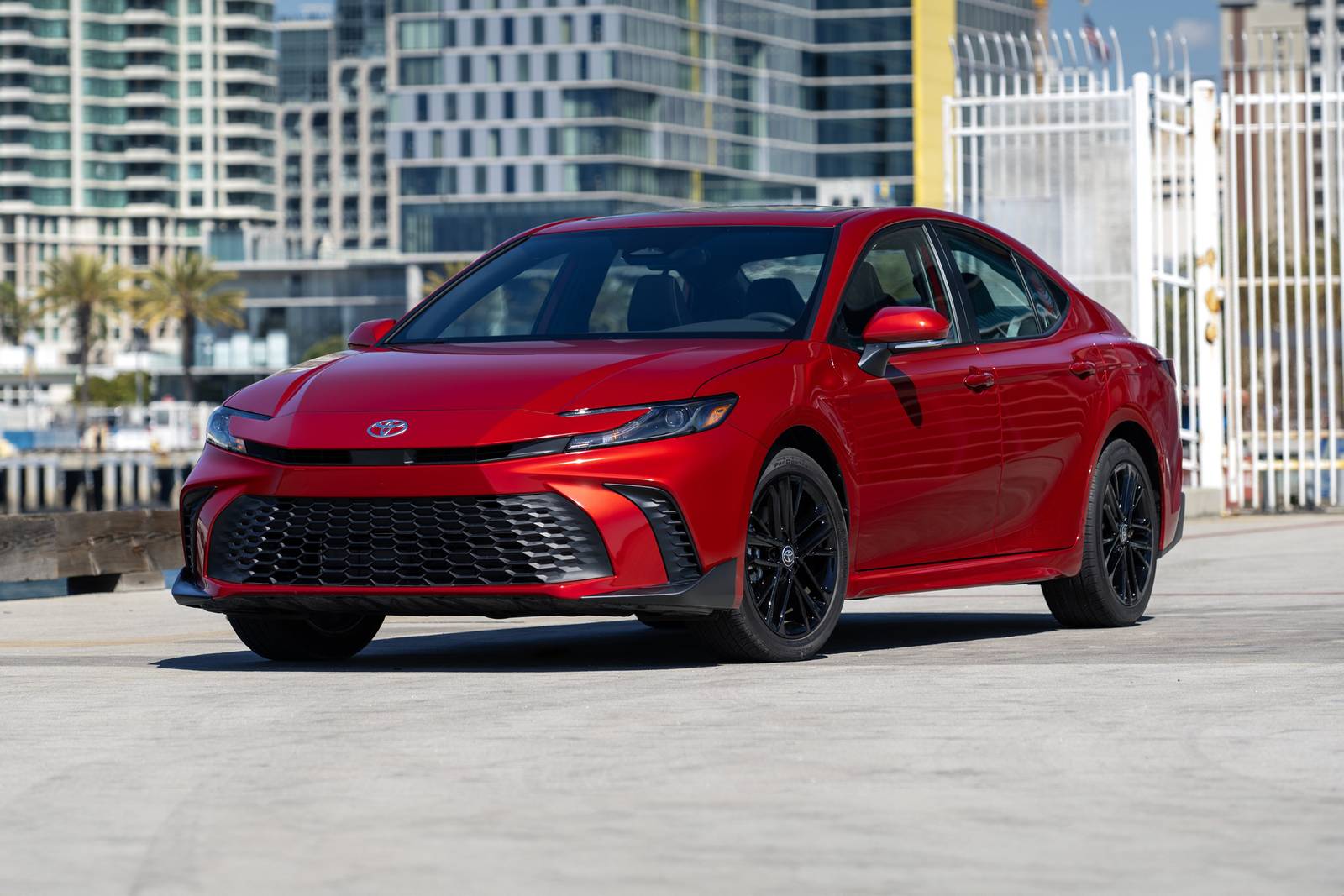
The Toyota Camry has been America's best-selling sedan for over two decades, earning its reputation through bulletproof reliability and practical design. But not all Camry years offer equal value. With currently 2,538 active listings in the market averaging $26,847, choosing the right model year can save you thousands while ensuring years of dependable service.
This guide analyzes real-time market data, reliability patterns, and ownership costs across Camry generations to identify the best Toyota Camry years to buy in 2025. Whether you're shopping for a modern hybrid commuter or a value-driven older model, you'll find data-backed recommendations to guide your purchase.
Quick Answer: Best Toyota Camry Years to Buy
Top Picks for 2025:
- 2018-2020 (8th Generation): The sweet spot for value and reliability. 2018 models average $23,173 with 113,575 km, offering proven dependability at accessible pricing.
- 2021-2024 (8th Generation refresh): Modern features with peak reliability. 2022-2023 models provide excellent value, averaging $29,604-$32,230 with relatively low mileage.
- 2012-2017 (7th Generation): Budget-conscious excellence. 2015-2016 models average $16,194-$17,269 and deliver Toyota's legendary durability at entry-level pricing.
Avoid: 2007-2009 models (excessive oil consumption issues), 2002-2003 (transmission problems), and early 1997-2001 models (sludge-prone engines).
Toyota Camry History and Generations
The Camry's evolution from conservative family sedan to modern, sophisticated daily driver spans eight generations, each bringing meaningful improvements in safety, technology, and efficiency.
Key Generations:
- 6th Generation (2002-2006): Established the Camry as a reliability benchmark but suffered from early-2000s Toyota engine issues.
- 7th Generation (2007-2011): Grew larger and more powerful but inherited oil consumption problems that plagued the 2AZ-FE engine through 2009.
- 7th Generation Refresh (2012-2017): Resolved major engine issues, introduced better styling, and became one of the most dependable used car options available today.
- 8th Generation (2018-2024): Complete redesign brought engaging styling, improved handling on the TNGA platform, and standard Toyota Safety Sense. The 2021 refresh added updated infotainment and refined powertrains.
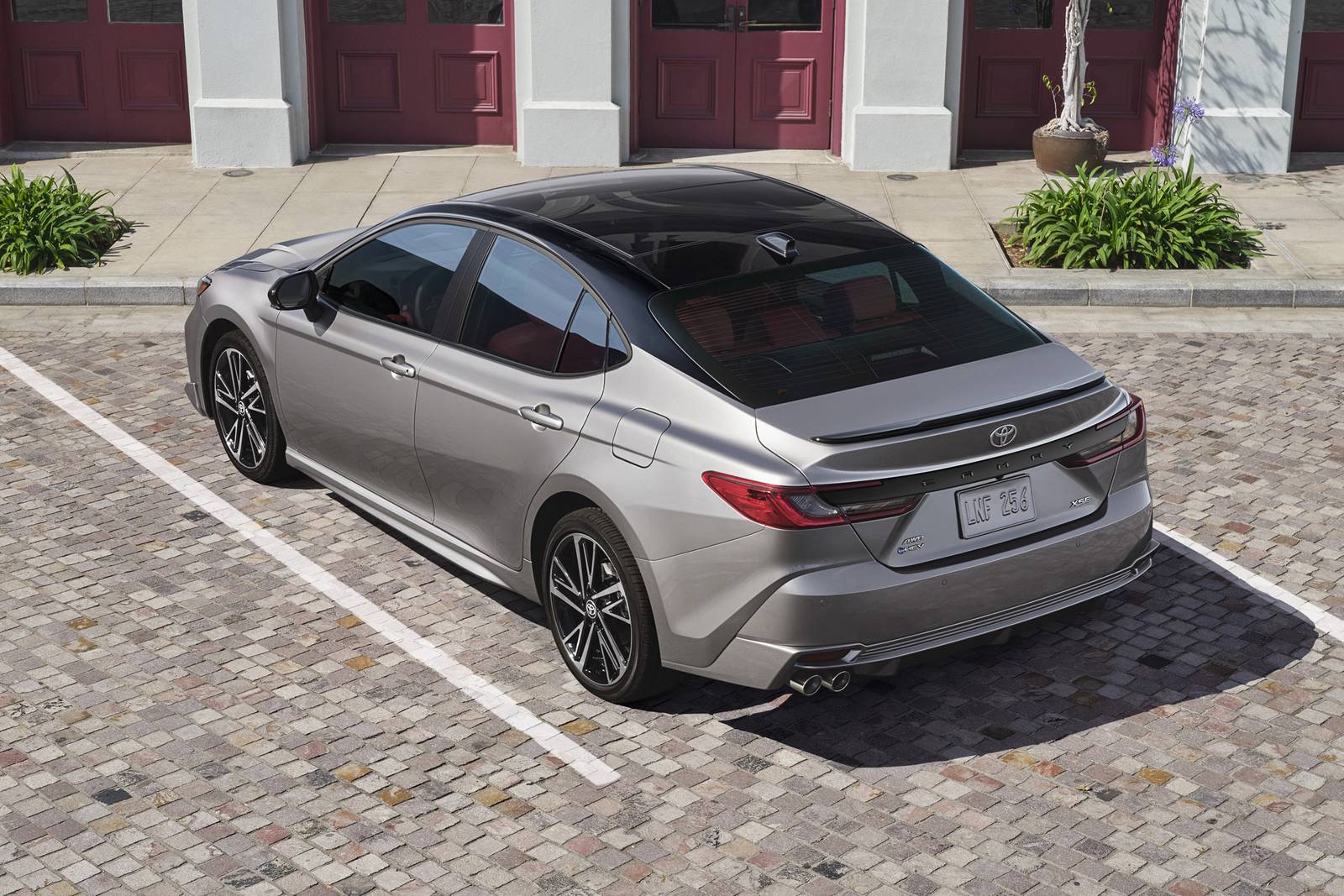
- 9th Generation (2025+): All-hybrid lineup with fourth-generation hybrid technology, representing Toyota's commitment to electrification.
Understanding these generational shifts is crucial because reliability improvements and problem resolutions often coincide with major redesigns and mid-cycle refreshes.
Best Toyota Camry Years to Buy: Detailed Analysis
2018-2020: The Value Sweet Spot
The early 8th generation Camry represents exceptional value for used car buyers. With 511 active listings across these three model years, there's ample inventory to find the right combination of trim, color, and price.
Why These Years Excel:
- Proven TNGA platform: Toyota's New Global Architecture delivered improved handling dynamics and a more engaging drive without sacrificing ride quality.
- Standard Toyota Safety Sense 2.0: Every model includes pre-collision braking, lane departure warning, adaptive cruise control, and automatic high beams.
- Refined powertrains: The 203-hp 2.5L four-cylinder and available 301-hp 3.5L V6 offer responsive performance with excellent fuel economy.
- Strong reliability scores: Consumer Reports rates these years among the most reliable midsize sedans, with particularly strong marks for engine, transmission, and electrical systems.
Market Data:
| Year | Listings | Avg Price | Avg Odometer | Price Range |
|---|---|---|---|---|
| 2018 | 187 | $23,173 | 113,575 km | $11,333-$33,225 |
| 2019 | 121 | $24,139 | 105,121 km | $13,888-$34,926 |
| 2020 | 203 | $25,697 | 87,465 km | $15,500-$38,888 |
The 2018 model offers the best entry price, while 2020 commands a premium for lower mileage and being the final year before the mid-cycle refresh.
Best Trim Choice: The SE trim (536 listings) offers sport-tuned suspension, paddle shifters, and aggressive styling at a reasonable price premium. If you prioritize comfort, the LE (151 listings) delivers exceptional value with all essential features.
2021-2024: Modern Excellence
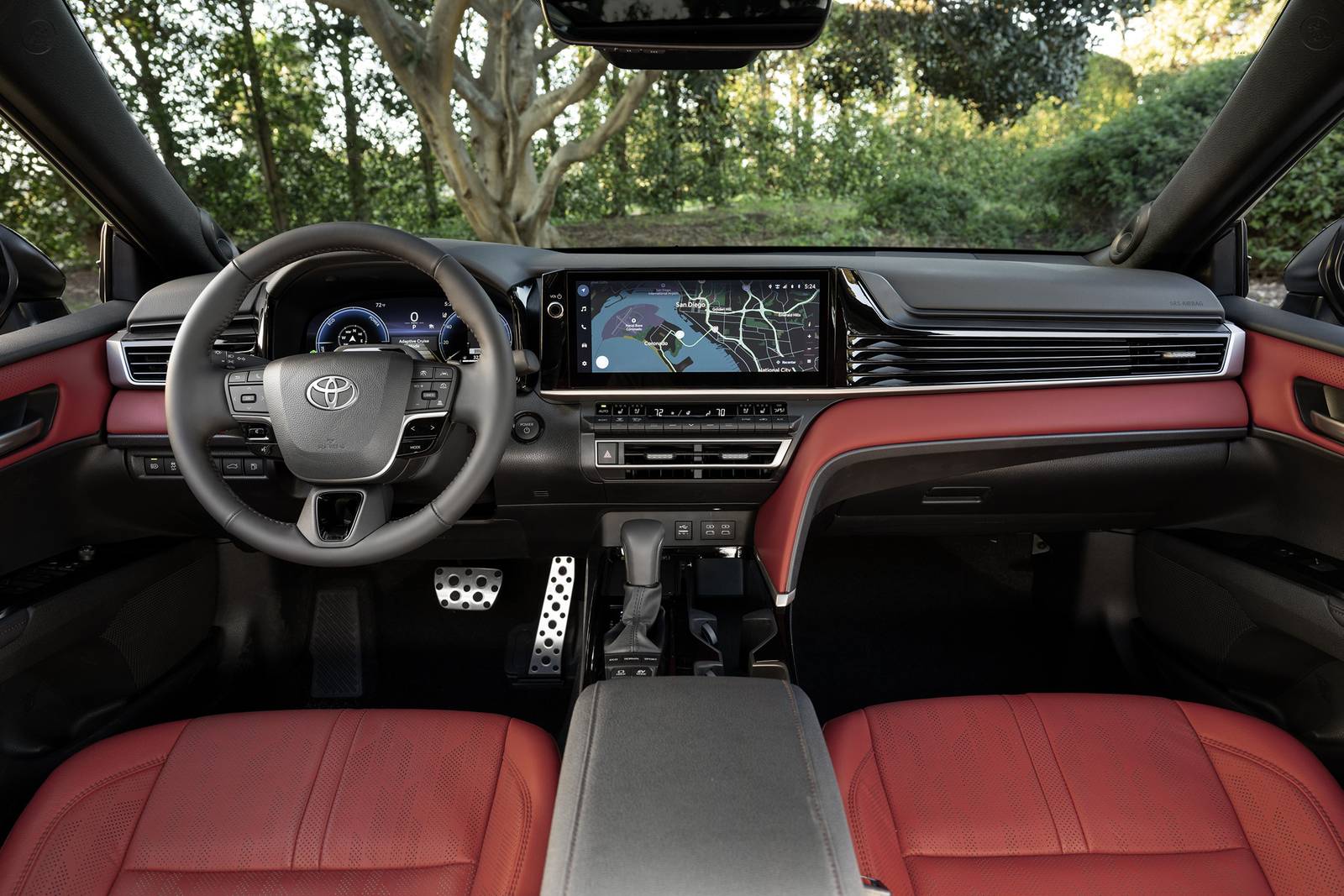
The refreshed 8th generation Camry brought subtle but meaningful improvements, making these some of the best Toyota Camry years for buyers who want near-new features without new car depreciation.
Key Improvements:
- Updated multimedia: 9-inch touchscreen with Apple CarPlay and Android Auto became standard across most trims.
- Enhanced Safety Sense 2.5+: Added intersection turning assist and emergency steering assist.
- Refined styling: Revised front and rear fascias modernized the look without dramatic changes.
- Improved hybrid efficiency: The 2021+ Camry Hybrid achieves up to 52 MPG combined, making it one of the most efficient non-plug-in sedans.
Market Data:
| Year | Listings | Avg Price | Avg Odometer | Hybrid Availability |
|---|---|---|---|---|
| 2021 | 195 | $27,439 | 93,866 km | 24 hybrid listings |
| 2022 | 278 | $29,604 | 73,185 km | 55 hybrid listings |
| 2023 | 350 | $32,230 | 60,504 km | 72 hybrid listings |
| 2024 | 240 | $34,599 | 45,126 km | 29 hybrid listings |
The 2022-2023 model years represent the sweet spot in this range, offering modern features with enough depreciation to provide value compared to 2024 models. With 628 combined listings, inventory is strong.
Hybrid Consideration: If fuel economy is a priority, the Camry Hybrid adds only about $3,000-$5,000 to the purchase price but can save thousands in fuel costs over ownership. The 2023 Camry Hybrid averages $36,752 across 72 active listings.
2012-2017: Budget Champion
For buyers prioritizing affordability without sacrificing Toyota reliability, the late 7th generation Camry is hard to beat. These years resolved the oil consumption issues that plagued earlier models while maintaining simple, easy-to-maintain mechanical systems.
Why These Years Shine:
- Resolved engine issues: The 2012 refresh updated the 2AR-FE engine, eliminating the oil consumption problems of 2007-2011 models.
- Simple, proven technology: Less complex infotainment and fewer electronic systems mean fewer potential failure points and lower repair costs.
- Abundant parts availability: As some of the most common cars on the road, parts are inexpensive and widely available.
- Strong depreciation curve: These models have already absorbed most depreciation, offering excellent value retention for future resale.
Market Data:
| Year | Listings | Avg Price | Avg Odometer | Value Rating |
|---|---|---|---|---|
| 2012 | 41 | $11,784 | 174,546 km | Excellent |
| 2013 | 21 | $13,158 | 153,494 km | Very Good |
| 2014 | 41 | $13,051 | 156,297 km | Excellent |
| 2015 | 67 | $16,194 | 134,511 km | Outstanding |
| 2016 | 50 | $17,269 | 132,646 km | Outstanding |
| 2017 | 80 | $19,601 | 110,733 km | Very Good |
Best Buy: The 2015-2016 models offer the best combination of modern safety features (standard backup camera), reasonable mileage, and affordable pricing. With 117 combined listings, finding a well-maintained example is realistic.
Toyota Camry Years to Avoid
While the Camry generally maintains Toyota's high reliability standards, certain model years have documented issues that make them less attractive purchases.
2007-2011: Oil Consumption Problems
The early 7th generation Camry, particularly 2007-2009 models, suffered from excessive oil consumption due to defective piston rings in the 2AZ-FE four-cylinder engine. While Toyota extended warranties for affected vehicles, many are now outside coverage windows, leaving owners responsible for expensive engine repairs or rebuilds.
Specific Issues:
- 2AZ-FE engine: Burns excessive oil (sometimes 1 quart per 1,000 miles), requiring frequent top-ups and potentially engine damage if not monitored closely.
- Build quality concerns: This generation marked Toyota's quality nadir, with various trim pieces and interior components showing premature wear.
- Transmission hesitation: Some owners report sluggish downshifts and delayed throttle response.
Market Reality: While prices are low (2009 models average $11,120), the risk of major engine work outweighs the savings. Pass on these years unless you can verify the engine has been replaced or rebuilt.
2002-2006: Transmission and Sludge Issues
The 6th generation Camry, while generally reliable, has two significant problem areas that affect specific years.
Known Problems:
- Transmission failures (2002-2004): The U140/U240 transmission can develop internal clutch pack failures, leading to slipping, harsh shifts, or complete failure. Rebuilds cost $2,000-$3,500.
- Engine sludge (2002-2003): Inadequate oil change intervals combined with design flaws led to sludge buildup in the 1MZ-FE V6 engine, potentially causing catastrophic failure.
- Dated safety: No stability control, limited airbags, and poor crash test scores by modern standards.
Current Market: With only 22 listings for 2002-2006 models averaging under $6,000, the market has already priced in these reliability concerns.
1997-2001: Age-Related Issues
While the 4th generation Camry built Toyota's reputation for durability, examples are now 24-28 years old. Age-related deterioration of rubber components, electronics, and safety equipment makes these risky purchases despite low prices.
Consider This: Any savings on purchase price will likely be consumed by necessary maintenance and repairs. For the same total cost of ownership, a 2012-2014 model offers significantly better safety, efficiency, and remaining service life.
Current Market Pricing and Trends
Understanding broader market dynamics helps you time your purchase and negotiate effectively.
Overall Camry Market:
- Total active listings: 2,538 (robust inventory provides buyer leverage)
- Average price: $26,847 (varies significantly by year, trim, and condition)
- Condition split: 368 new, 2,170 used (85.5% used market)
- Most common trims: SE (536 listings), LE (151), XSE (145)
Price-to-Mileage Correlation:
Camrys demonstrate predictable depreciation patterns. Low-mileage examples command premiums, but normal-mileage vehicles often represent better value:
- Under 50,000 km: Premium pricing, typically 15-20% above average
- 50,000-100,000 km: Sweet spot for value; vehicles are broken in but have substantial life remaining
- 100,000-150,000 km: Budget-friendly options; mechanically sound Camrys regularly exceed 300,000 km with proper maintenance
- Over 150,000 km: Deep value territory; excellent for cash buyers comfortable with higher-mileage vehicles
Seasonal Patterns:
Sedan demand typically peaks in spring (April-May) and fall (September-October) as families shop before weather extremes. Winter months often yield better negotiating positions as dealers prioritize SUV and truck inventory.
What to Look for When Buying a Used Camry
Even the best Toyota Camry years require thorough inspection before purchase. Focus on these key areas:
Mechanical Inspection:
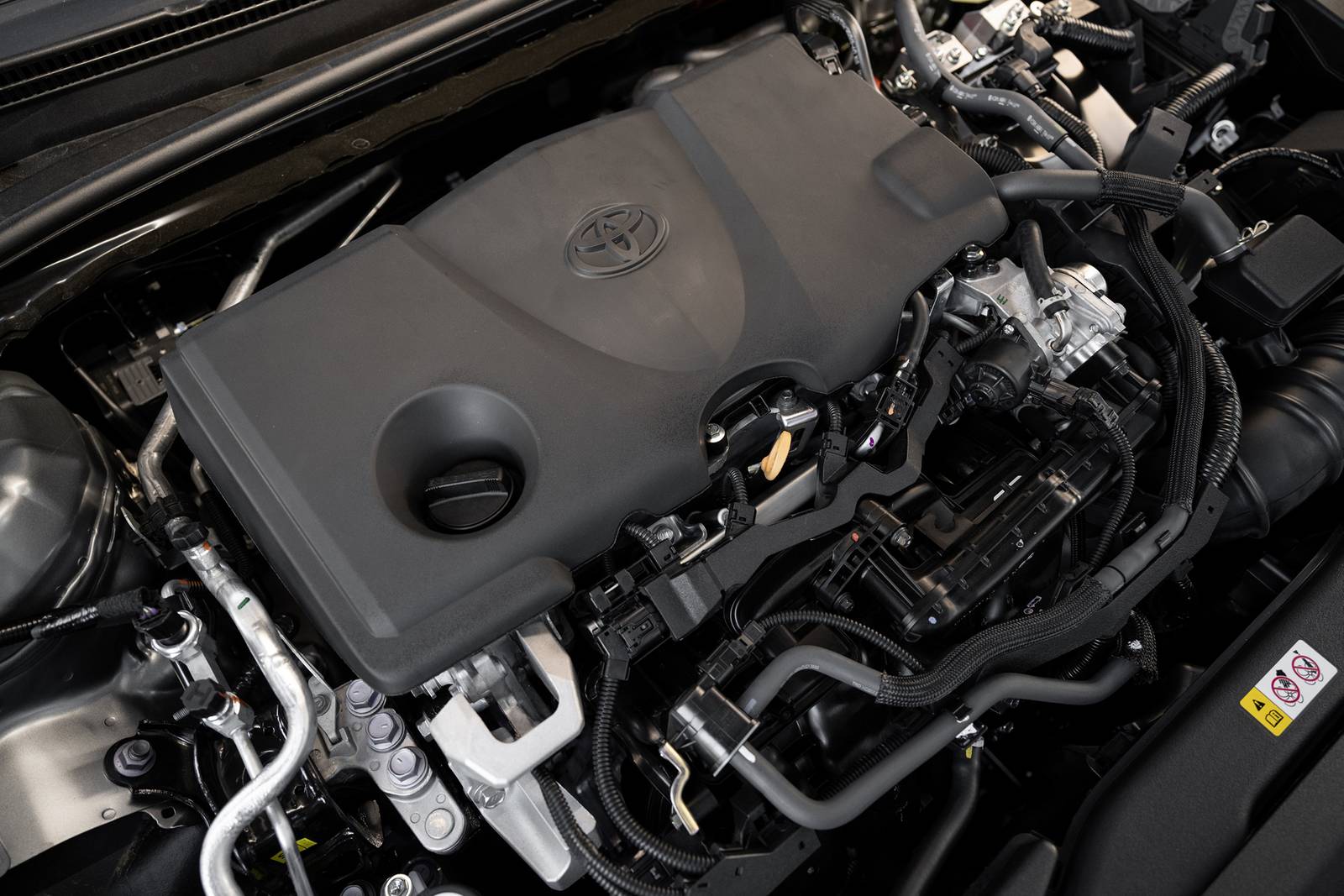
- Engine oil level and condition: Check for low oil or dark, sludgy appearance. Run the engine and look for blue smoke from the exhaust, indicating oil consumption.
- Transmission behavior: Test drive should include highway merging and low-speed stop-and-go. Shifts should be smooth without hesitation, slipping, or harsh engagement.
- Suspension and steering: Listen for clunks over bumps (worn struts/shocks) and feel for vibrations or pulling (alignment, tire, or wheel bearing issues).
- Brake performance: Pedal should feel firm without pulsation. Squealing may indicate worn pads (normal wear item) but grinding suggests rotor damage (more costly repair).
Service History:
- Regular maintenance records: Consistent oil changes every 5,000-8,000 km are crucial for long engine life. Missing records aren't disqualifying but warrant closer inspection.
- Major service completion: 100,000 km service typically includes transmission fluid, coolant, and brake fluid changes. Verify these have been done.
- Outstanding recalls: Toyota's website lets you check recall status by VIN. Most recalls are completed free at dealerships, but verify before purchase.
Technology and Features:
- Infotainment functionality: Test Bluetooth pairing, navigation (if equipped), backup camera, and all audio sources.
- Climate control: Both heat and A/C should reach temperature quickly. Weak performance may indicate refrigerant leaks (A/C) or heater core issues (heat).
- Safety systems: If the vehicle has Toyota Safety Sense, verify all systems activate without warning lights or errors.
Body and Interior:
- Accident history: Obtain a vehicle history report (Carfax, AutoCheck) to identify previous damage. Frame damage significantly affects value and safety.
- Rust and corrosion: Check wheel wells, rocker panels, and undercarriage, especially in regions using road salt. Surface rust is manageable; structural rust is problematic.
- Interior wear: Excessive wear on seats, steering wheel, or pedals may indicate higher use than indicated by the odometer.
How Cardog Simplifies Your Camry Search
Finding the best Toyota Camry years to buy requires analyzing hundreds of listings, comparing prices, reviewing histories, and timing your purchase. Cardog's AI-powered platform handles this complexity instantly.
Enter your preferences—budget, mileage range, specific years, preferred trims—and Cardog analyzes real-time market data across thousands of vehicles. Our intelligence layer identifies:
- Market-beating prices: Listings priced below comparable vehicles in your area
- High-value opportunities: Well-maintained examples with strong service records
- Red flags: Accident history, title issues, or concerning maintenance gaps
- Negotiation leverage: Data showing how each listing compares to market averages
Explore available Toyota Camrys: